
Making Mistakes with Money

Control Board for Maytag Dishwasher

Control Board for Maytag Dishwasher

This story has almost nothing to do with running, but it does have something to do with learning life lessons.

Our Maytag dishwasher stopped working.  It was only about four years old, but one day recently I tried to start it.  It was full of dishes and silverware, soap tab in the soap holder, ready to go.  The start button did nothing.  It would not light, click, nothing happened.  My first thought was that the circuit breaker had tripped, as has happened in the past.  I grabbed my flashlight and headed to the basement.  In the far corner, I opened the panel cover and took a look.  All of the breakers seemed to be intact.  I clicked a few, just to check, and went back upstairs to look at the dishwasher.  All the other lights and appliances were working, but as I recalled, the dishwasher was on a separate breaker.  Never mind that, it still wouldn’t work.  The front panel has two sides, one, on the left, which controls starting the machine and setting the cycle type.  On the right, things like sterilize, heated dry and other options are available.  I pressed the right side buttons and to my surprise they responded.  So, in fact, the breaker was not the problem as electricity was getting to the machine.

Time for a confab with my wife over what to do.  Our first thought was that repairing appliances is expensive, and rarely worth the money.  It usually is cheaper to replace the appliance unless one happens to have paid up front for a service contract.  Of course, those are only usually good for three years anyway, and we didn’t have one, so this was not pertinent to our discussion.  Although, we brought it up.  Should we have gotten one?  Well, we didn’t so why mention it?  But how can it be so expensive to fix the machine, when most of it is in good shape?  With the marvel of YouTube, it is easy enough to search what to do when the dishwasher won’t respond to ones caresses.  The problem is, one is faced with an entire algorithm to go through to figure out where the problem is.  This requires special screw drivers, electric meters, and the time to mess with it.

My wife called a repair man.  He had been at our house before, to fix our dryer, and to work on an old refrigerator, which we ditched shortly after he worked on it.  We still have the dryer.  He came over a few days after we called and did a service call for diagnostic purposes.  I was not at home, but spoke with him by phone afterwards.  He charged $143 for the combined visit plus diagnostics.  He said the control board was bad, needed to be replaced and that would cost a bit over $400.  Adding that to what we already spent on the service call, I decided I could replace this thing myself, and we would have a working machine and still not pay as much as it would cost to replace.

I went back online and looked for a control board, which is a circuit board, a computer which runs the dishwasher.  To my surprise, this was not a cheap item.  I wound up ordering one from Sears Parts Direct for $180.  There was a $10 shipping fee as well.  There were a few places cheaper, although not much, and this way I could be sure it would be the correct part, since we bought the dishwasher from Sears.  Completely tangential to the story of how I learned what I learned, our part did not arrive as planned.  It was supposed to be shipped by UPS.  We received a tracking number.  I checked online and saw it left the Sears distribution place and was headed to Horsham, PA.  This was about a week after we ordered the part.  Then, every day I checked, it was just sitting, or so it seemed, in Horsham, PA.  Meanwhile, expecting it to jump on a truck at some point, I purchased the special Torx screwdriver set and electric meter I would need to deal with this little job.

One day, the tracking information changed.  There was a notation that UPS had turned the parcel over to our local post office, and it would be delivered by the coming Friday, in three days.  Hallelujah! While hand washing dishes is quaint, and a way to have a joint activity with one’s spouse, we wanted to move on.  I found myself rinsing the same plate and coffee cup over and over to not have to wash too many items.  Of course, Friday came and went with no package delivered.  Back online I went, and found there was a USPS tracking number.  Clicking on that, I saw our package wound up somewhere in Cincinnati, Ohio.  There was a little subscript saying it was sent to the wrong post office, and a correction would be made.  Another week went by, and the message from the USPS had not changed.

I finally called Sears Parts Direct and told them of my plight.  They responded quite appropriately.  I was able to speak with a representative without a single menu item to get through.  He looked up my tracking numbers and saw the same thing I did.  He said he would have another part sent out right away, this time directly by USPS, and he would remove the shipping fee from our original order.  Sure enough, five days later my part arrived.  It was packed a little haphazardly, but it was there.

The next day, don’t want to rush into a job like this, I recruited my wife to check the dishwasher while I went in the basement to turn off the circuit breaker.  After finding the right one, I proceeded to make the switch.  It wasn’t too difficult to disconnect all the cables but one did have to keep them straight.  I installed the new circuit board, put everything back together, then flipped the circuit breaker back on.  As you might have guessed, nothing had changed.  The buttons on the right side of the panel worked, but the on/off button was dead.  Either the problem was with the front panel, or my new circuit board was defective.

At this point I decided not to throw more good money after bad, as the saying goes.  A few days later, my wife and I headed out to Sears and bought a new dishwasher.  We got a nice one, a Bosch, which is super quiet and cleans like crazy.  It cost a bit more than our old one, and had to be professionally installed, but it was completely worth it.  Life is back to, no better than, what it was before.  We can have a normal conversation in the kitchen with the dishwasher running and it doesn’t interfere at all.

So, what did my tuition for this lesson get me?  I learned it is expensive to try to repair an appliance, which I already knew, but had to learn again.  I also learned I can do it if I know what the problem is, but figuring that out is the hard part.  I also learned what a Torx screwdriver is, and I now have one that ratchets if ever I need it again.  Perhaps I’ll pass it to one of my children in my will.
Seizing up the Muscles

Christine, one of our Sunday morning regulars, asked this morning, “How do I get rid of muscle cramps?”  Sounds simple, and surely there is a scientific explanation and answer, right?

No one knows.

That’s the answer.  At least, no one who has done the research and looked for a cause, and has evidence to support their conclusions has an answer.  In an excellent article by Kevin Miller, Marcus Stone, Kellie Huxel, and Jeffrey Edwards, sports physiology scientists, titled “Exercise-Associated Muscle Cramps,” (Sports Health. 2010 Jul; 2(4): 279–283), and provided through the National Institutes of Health, the subject of muscle cramps in athletes is reviewed in depth.

There are myriad theories and cures for this vexing problem.  Most of the theories and suggested cures are based on hunches, anecdotes and guesses.  The most common thoughts about why muscle cramps occur in athletes have to do with dehydration and loss of electrolytes.  The thinking goes that if one is dehydrated, meaning a loss of free water in the body, and loss of electrolytes such as sodium, potassium and magnesium, the nerve terminals to muscles are over-sensitized leading to cramps.

Another leading theory is based on neuromuscular interactions.  This theory states that, in overworked muscles, excitatory impulses and inhibitory impulses are not in balance, and the excitation of muscle fibers wins out.

The report mentioned above goes into detail about these theories, looks at the research that has been done in these areas, and the reasons that these theories are not clearly supported by the research.

Most muscle cramps in athletes occur well into a workout or race, or occur after the end of the event.  There is a period during which muscle cramps occur after the event is finished called the “cramp prone state”, and until this period is finished, which may be eight hours or longer, the athlete is still susceptible.  While some cramps may be minor, and not interfere with performance, often the cramps can be debilitating.  Many cures have been tried over and over, with only anecdotal evidence to back them up.  Sports drinks containing (minimal) electrolytes, pickle juice, mustard, bananas, oranges, cold therapy, hot therapy, massage and TENS (trans-cutaneous nerve stimulation) have all been used.  But studies looking at hydration status, electrolyte status and all the above mentioned cures have failed to show statistical improvement in study groups.  Known to work to relieve a cramp, but not for prevention, stretching will stop the cramp.  However, that is a temporary solution, and not one that will prevent a cramp the moment activity is resumed.

I have been plagued with cramps, mostly of the legs and thighs, throughout my athletic career, starting from when I swam as an eight year old.  In my experience, the cramps are less likely to occur the better condition I am in.  When I was a competitive swimmer, the early part of the season was the worst, but as my training went on, they were less and less a problem.  Now, as a runner, and mostly with long distances, I find the muscle cramps hit me very consistently during a marathon, usually around the sixteen to eighteen mile mark.  This is in spite of maintaining good hydration, using salt or drinking electrolyte drinks, and supports the contention that these factors don’t play a role.  My best marathon performance, in which cramps definitely played a very minor roll, was the one where I had trained the best and most consistently.  There are plenty of good reasons to stay well hydrated of course, which have to do with other body systems.  Running in the heat and humidity causes excessive fluid losses, raises core body temperature as the body has trouble getting rid of excess heat, and can lead to hyperthermia and affect kidney function.  Overhydration by consuming too much water to replace losses, can cause hyponatremia, meaning too low sodium levels, which is equally serious.

Kevin Miller, the lead author of the article mentioned above, wrote a simplified version of myths regarding muscle cramps and what to do about them, called “Exercise-Associated Muscle Cramps: Debunking Five Myths”.

While research into the reason for muscle cramps and the treatment has not provided an answer, he makes sound suggestions on how best to avoid them.  If you wish to have a more complete understanding of the research and conclusions, his paper is a good source, and provides many references on which it is based.  I hope your runs are as cramp free as possible.  Happy running.

Animals on the Run

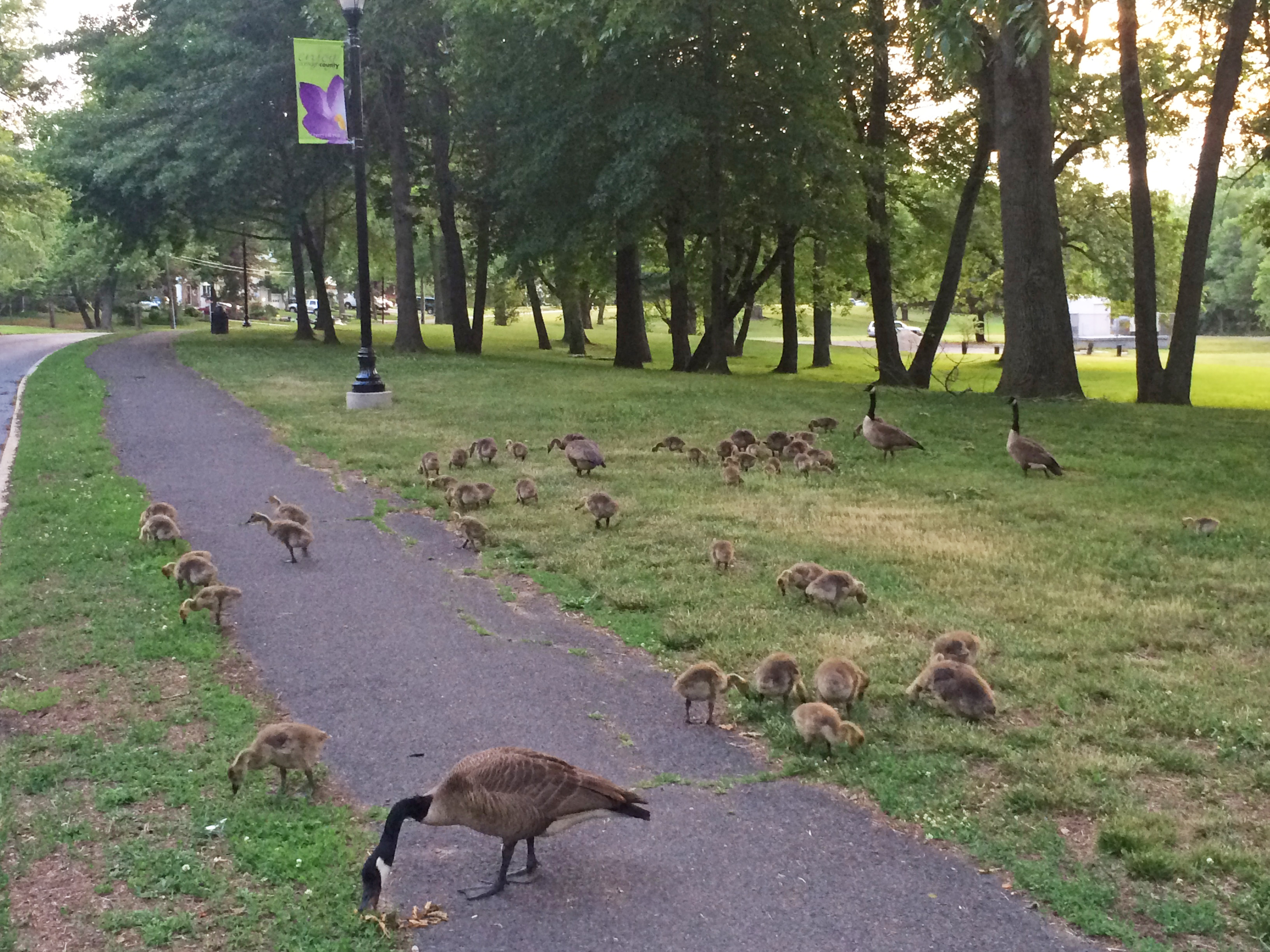
Saturday mornings, my friend Brandon and I usually head out from his house for an early morning run around our local park, the Cooper River Park in Camden County, New Jersey.  We don’t have to go too far before we run into the most populous animals in the region, the so called Giant Canadian Goose.  These animals have learned to call New Jersey home, and long ago gave up their instinctive migratory pattern.  The reason they stay is that life here is pretty good for them.  According to state biologists and naturalists, they thrive on fresh water, grazing areas of tender, mowed grasses, and areas where they have a wide view of potential predators.  They like safe areas to make nests, which they make on the ground, with the goose laying five or six eggs, nesting for 30-35 days in April, and with the gander keeping guard.  All the eggs begin to develop the same day, and hatch the same day.  Once the goslings are out of the shell, they are taken right to the water.  The geese gather multiple nests-full of goslings together, making a very attractive grouping of thirty or forty goslings being watched over by the multiple parent geese of the broods.  It is sort of like how it takes a village to raise a child.  Apparently, our parks and lawns have created ideal places for these formerly migratory birds never to want to leave.  This is just one of numerous species we encounter on our runs.

Non-plussed geese and gosslings along the trail. (courtesy Sue Hamilton)

Non-plussed geese and gosslings along the trail. (courtesy Sue Hamilton)

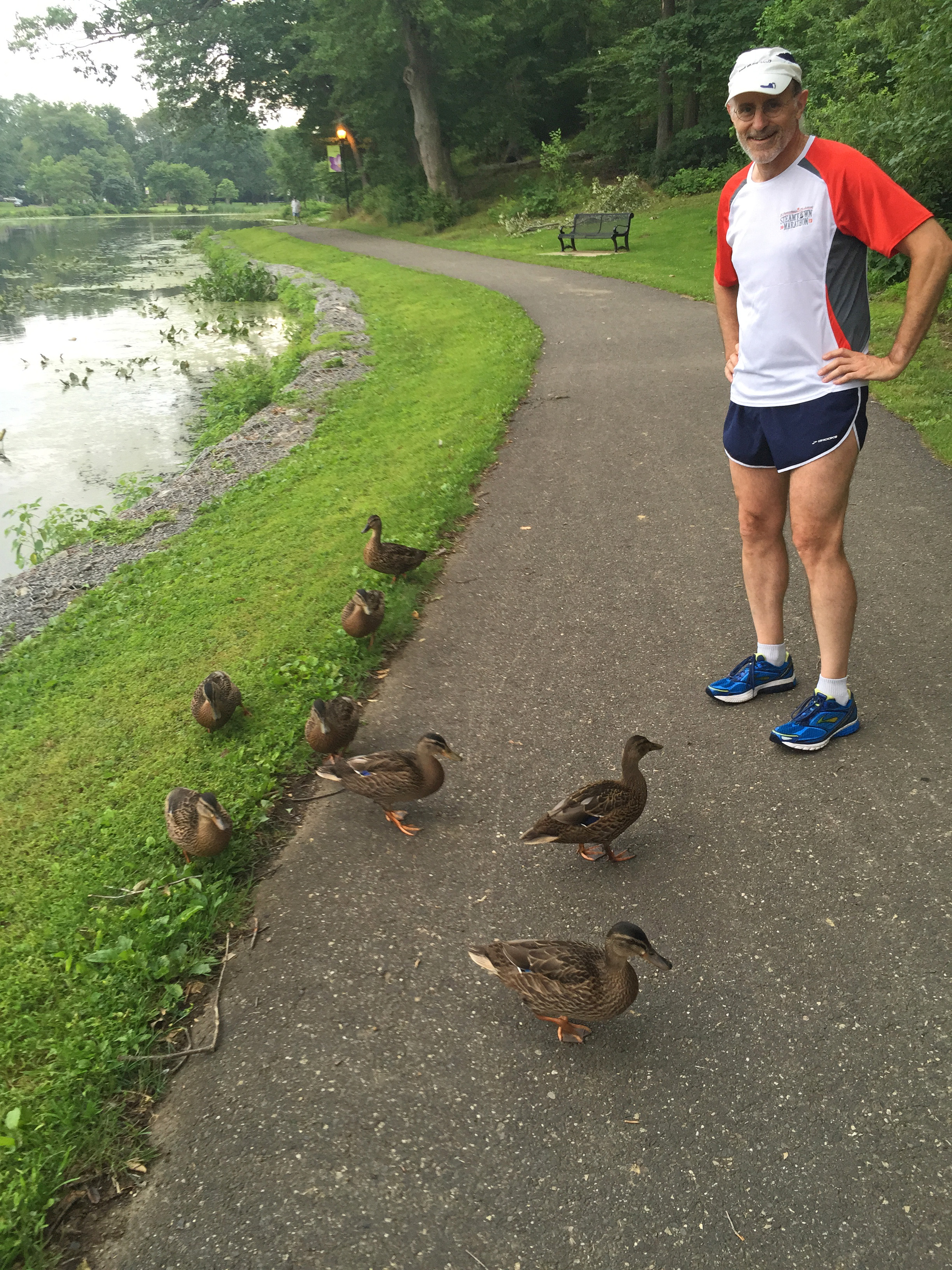
Geese can be annoying.  They are crowding our parks, cover the trails with goose droppings, and hiss at us as we run by, indicating it’s their park now.  Counter to the geese, much fewer in number, and generally a pleasant natural site are our local ducks.

Ducks looking for a handout at Newton Lake Park

Ducks looking for a handout at Newton Lake Park (courtesy Brandon Hamilton)

I’m not sure of the particular species of these ducks, but I believe they are American Black ducks, common throughout the greater northeast.  Known as a dabbling duck species, meaning they tip bottom side up in the water to find food, they are fun to watch as they feed in the ponds.

Another very common site is the squirrel.  Now, everyone knows squirrels, and they do seem to be everywhere.  Our particular South Jersey squirrels are the Eastern Grey Squirrel, known by their genus Sciurus, a portmanteau of Greek, skia (shadow) and oura (tail), meaning that it is in the shadow of its tail, per the Wikipedia article.  They have adapted very well over a large geographic area, and even have pushed out other squirrel types in places such as the United Kingdom and Australia.  Closely related, but much harder to see for more than a few tenths of a second, are our local Eastern Chipmunks.

Chipmunk gathering seeds.

Chipmunk gathering seeds.


I see them mainly along heavily wooded trails in the local parks, darting across the trail to hide in dense roots and ivy.  They live in extensive burrow systems underground, where they store food, and have many entrances and exits.  I also see them darting out from overgrown ivy in my backyard to gather seeds that have fallen from our bird feeder.

A variety of turtles and frogs occasionally poke their heads out, or send a croak out along our lake side trails.

A little larger in the animal kingdom, and certainly more rare as a sighting, is the local red fox.  There are two species of fox in New Jersey, the red and the grey.  I’ve never seen a grey fox, probably because they live in the woods and rarely show themselves.  The red fox we see every now and then, early in the morning, trotting along the side of the water in our local park, looking for rodents.

Red fox.  Wonder what he is thinking....

Red fox. Wonder what he is thinking….

White Tailed Deer have become extremely common around us, which is a bit puzzling to me.  Living where I do in New Jersey, these animals had to cross some major highways, such as the New Jersey turnpike, I295 and US 130 to get to us.  I guess we are seeing the deer that got pushed out from the more desirable locations, or just a population that enjoys suburban living.

Some does have antlers, but this looks like a buck to me, with a fawn.

Some does have antlers, but this looks like a buck to me, with a fawn.  (from Rutgers website)

On a run through a local park not long ago, early in the morning, I was startled by a small herd of six deer bounding across my trail in a wooded area.  According to Rutgers School of Environmental and Biological Sciences, the deer population in much of the northeast was almost gone around 1900.  This was due to a combination of hunting and natural predators.  Since then, there has been an explosion in the population, due to lack of predators such as wolves and cougars, lack of space for hunting, and increasing habitat in populated areas.  As with any part of an ecosystem, balance is important.  An acceptable herd size is good for forest edge regions.  Too many deer, though, can cause a spiral of decline of forests, as the underbrush is eaten out, leading to lack of saplings, lack of cover for birds and many small animals, and lack of leaves falling from the decreased tree population.  For runners, I’ve yet to hear of someone hit by a deer, but deer also carry the scourge known as the deer tick, a tiny biter which can pass on Lyme disease as well as other illnesses.  Watch your legs in grassy areas.

Looking up, one of the hardest birds to spot is the woodpecker.  In our area, we frequently hear these birds rat-a-tat sound from high in the trees along the trail.  But, the sound is tough to locate, so without spending some time standing still, not what we usually do on a run, we usually don’t spot these birds.  Most likely, we are hearing the tap of the red-bellied woodpecker, the most common in our area, or we could be hearing the marvelously named yellow-bellied sapsucker.

Red-bellied woodpecker (not red-headed, that's another type which is much rarer)

Red-bellied woodpecker (not red-headed, that’s another type which is much rarer) (from NJ Audobon Soc.)


Yellow-bellied sapsucker.

Yellow-bellied sapsucker. (from NJ Audubon Soc.)


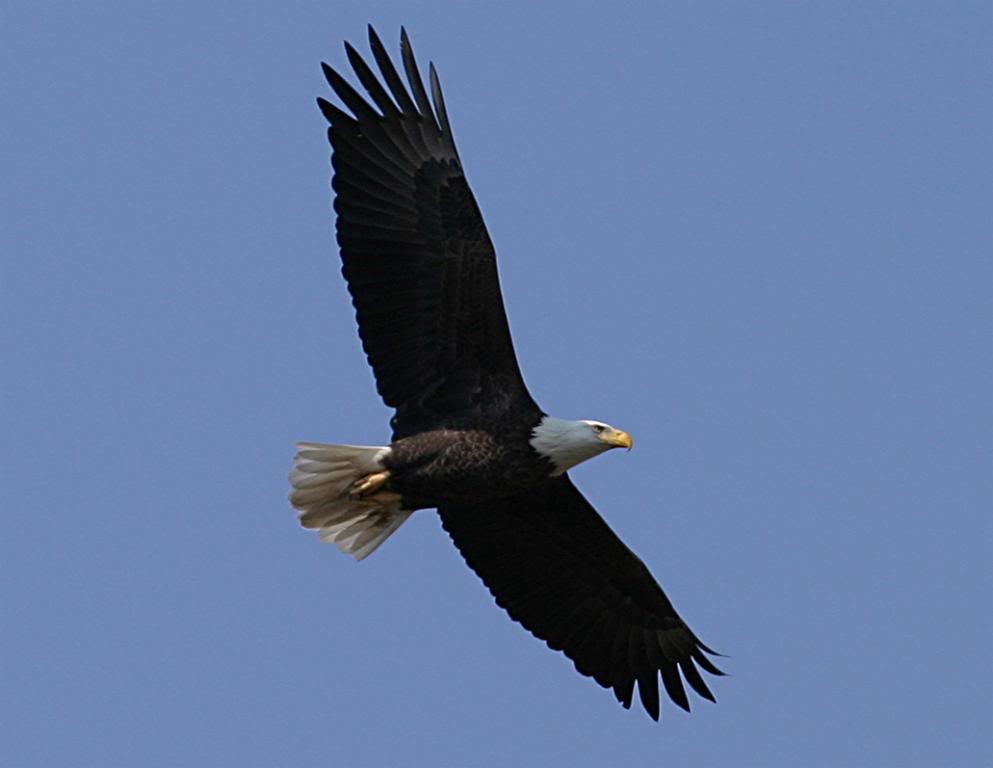
The ultimate wildlife spotting while on a run, in my opinion, was when I was running early Sunday morning a few months ago.  What first appeared to be a large hawk took off from the high branches of a sycamore tree.  As it made a wide, arcing turn, though, we could see it was no hawk.  It was a bald eagle.  I had heard there was a bald eagle nest in this area, but this was the first and only time I have seen one.  It was a beautiful sight, and we followed it with our eyes as it headed along the park lake.

Bald eagle photo (taken from free photos from photobucket)

Bald eagle photo (taken from free photos from photobucket)

There are many other birds and land animals we encounter on our runs.  There are blue herons, red-winged blackbirds, groundhogs and an occasional snake.  On runs outside my own territory, there have been many animals I have spotted, including beavers, skunks, and others.  No bears, fortunately.  I enjoy spotting these animals on the run, and it’s part of the joy of running outdoors.  Very few animals, other than homo-sapiens, are spotted running on a treadmill.

Explain Tango

I recently returned from my first trip to Buenos Aires, accompanied by my wife, Kathleen, an ardent tanguera, and another couple, Roger and Claire, both tango devotees of the highest order.  I will attempt to explain tango.

Not an easy thing to do.  I think it’s like trying to explain Argentina.  That’s where tango began.  It’s why it is called the Argentine Tango.  It is a social dance, since people who dance tango gather at milongas and ask others, not the “one who brung ya”, to dance.  Mostly men ask women, with a certain glance known as a cabaceo, to which the woman responds with a nod, or turns her head away.  This allows two dancers spotting each other across the room, then making their way across the dance floor to each other, assuming the embrace, then starting to dance, with few or no words said.  The music is of three basic styles, called tango, milonga or vals.  Yes, it can get confusing.  One goes to a milonga to dance tango, and might dance to a tango, or a milonga or a vals, which is a waltz, but not danced like a waltz, but like a tango but with a few syncopated steps thrown in.  If a couple want only to dance with each other, that is okay, but they are sat with other like-minded couples.  If the thought is to dance with others, one needs to sit separate from one’s mate, and be available.

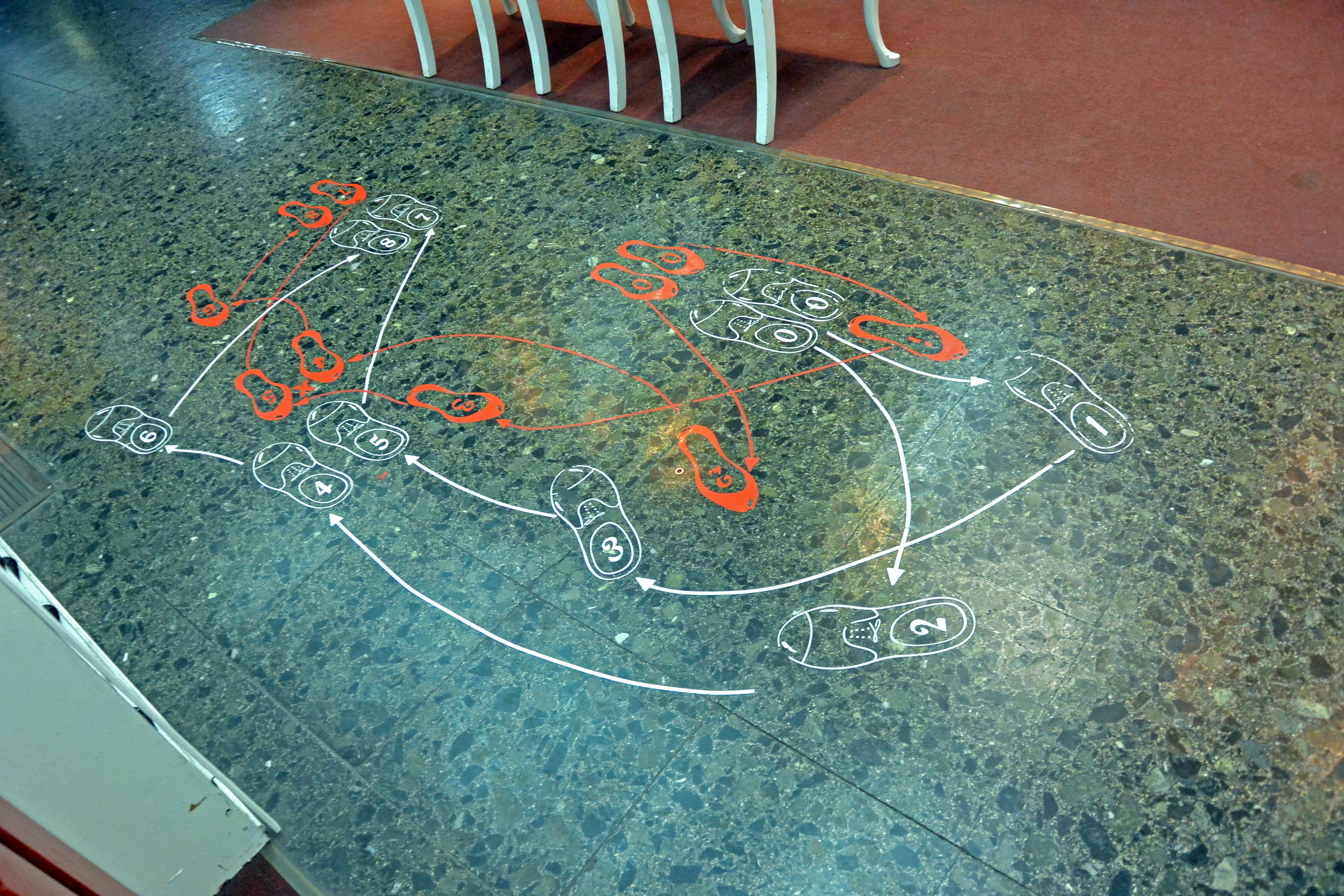
Basic tango steps as documented on the floor of a tango shoe store.

Basic tango steps as documented on the floor of a tango shoe store.

Learning tango is like learning another language.  The vocabulary consists of different progressions of movement, and the communication is between the leader and the follower.  In general, the male leads and the woman follows, but men can follow, women can lead, and men can dance with men, women with women.  But a leader and follower are still essential parts.  Done well, it can be quite beautiful, but everyone needs to start at the beginning, so entry-level tango is necessary.  In fact, when one attends a milonga, which is what the gathering of people to dance tango is called, it usually starts with a lesson.  The lesson is taught by masters of tango, who show basic steps very slowly, building on one turn into the next, and then the students try to emulate.  Good teachers will watch all the students and closely interact with them until they get the movement being taught.  They also encourage the students to frequently change partners, so they get the opportunity to learn how different leaders lead, and different followers follow.  Some followers need a very strong lead and move like a barge, while others are like cutting horses; give them a bit of a nudge and they’re off into a crazy boleo or some other risky maneuver.

Practica:  teachers demonstrating for class, to be followed by time to practice without.

Practica: teachers demonstrating for class, to be followed by time to practice without being too formal.

Tango started sometime around the mid-1800’s, in Buenos Aires and Montevideo.  While the origins may be obscure, it seems the early dancers were mainly men, sometimes dancing with each other, sometimes with prostitutes in the poorer neighborhoods of Buenos Aires.  It caught favor with a classier crowd, and towards the end of the century into the early 1900’s it became very popular.  The bandoneon, an accordion-like instrument, was adopted from Germany and became a basic part of tango.  The popularity of the dance spread, first to Paris, then other parts of Europe, New York and eventually world-wide.  But the only true capital, and the place where tangueros and tangueras go to experience the essence of tango is Buenos Aires.

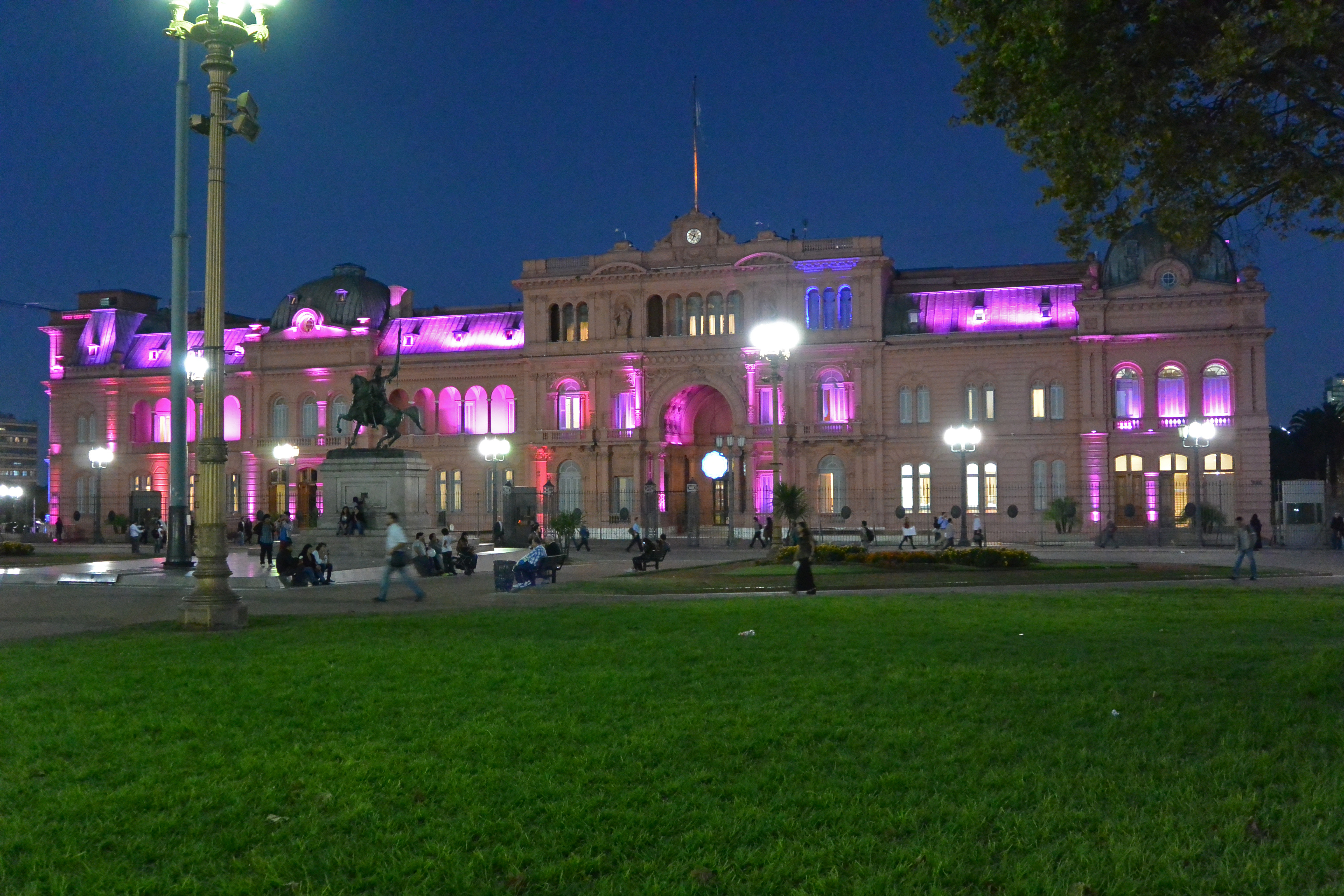
La Casa Rosada, or Pink House, home of the office of the president of Argentina.

La Casa Rosada, or Pink House, home of the office of the president of Argentina.

The music of tango has certain style and sound that make it unique.  For straight tango, it has a very strong rhythm with two or four beats per measure, and a pronounced down beat.  There is usually no percussion, although the bandoneon or the bass can be used to keep the rhythm. The music can change tempo, giving dancers the opportunity for dramatic acceleration or slowing, even pausing.  The most famous tango song, and the one which is often used to wrap up a night at a milonga, signalling the last dance, is called La Cumparsita.  It was written by Gerardo Matos Rodriquez, an 18-year-old Uruguayan from Montevideo, in 1916.

Tango in Argentina has gone through periods of decline, then resurgence several times.  But now it is a world-wide phenomenon, one can find milongas most nights in most major cities, and it is popular with more people now than ever before.  The mystery, though, is what drives the desire to spend years, huge amounts of money, and great amounts of frustration to learn tango.

It is a dance of intimate contact.  It is danced chest to chest, sometimes with a bit of separation, in salon style, and sometimes pressed up against each other in close embrace, feet and legs a bit outward, moving in concert in milonguero style.  This is with any partner one happens to lure to the dance floor.  The intimacy is counteracted by the serious nature and intent of the dancers, in other words, if you are enjoying that close contact, you must not show it.  But, the milongueras know.

Milonguero style, or close embrace.

Milonguero style, or close embrace.

It is also a dance of strict lead and follow, requiring close attention on the follower’s part, and very clear intention on the leader’s part.  The leader must maintain the proper posture and embrace, without using force, to let his follower know what to do.  The leader must also get cues from the follower, to allow her time to respond, to pivot, or to perform embellishments.  The signals are conveyed chest to chest.  It is a dance requiring a connection between two people which is unlike any other social interaction.  Songs are played in groups of three, or sometimes four, called a “tanda”, and are of the same type, tango, or vals, or milonga.  Once a connection is made, one is expected to dance the entire tanda with the partner, then switch partners.  Between songs, the partners may make light conversation, then wait as the next song starts.  They will often wait until a minute or so into the song before starting dancing.  Between tandas, a bit of utterly non-tango music is played, such as swing, or cha-cha, and the dancers chuckle, briefly showing they may know how to do those dances, too, before getting to the next tanda.

Afternoon tango at Confiteria Ideal, a classic tango venue.

Matinee (until 9:00 PM) tango at La Confiteria Ideal, a classic tango venue in Buenos Aires.

Tango has it’s own verbal language.  There’s abrazo, boleo, cadena, desplazamiento, entrada, fanfarron, gancho, lapiz, molinete, ocho, planeo, and many more, all in Spanish, all which one must learn as part of learning the dance.  Naturally, the tango teacher comes from Argentina, speaks mostly or only Spanish, so one either gets with the language or is totally confused.  Tango dancers enjoy learning this secret language known only to them.  The Spanish words by themselves are common, but what they mean in the dance is the key.

Making shoes for tango.

Making shoes for tango.

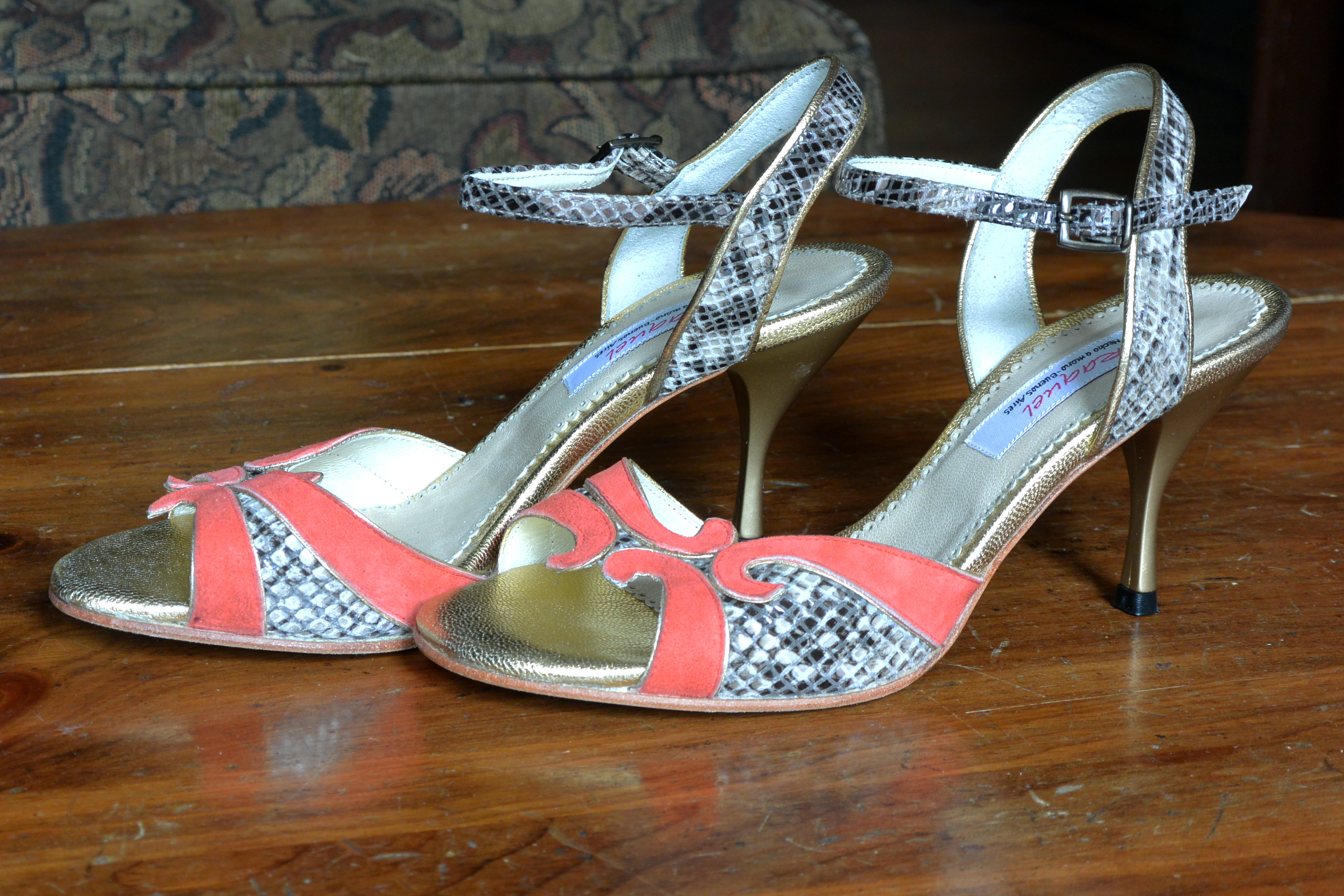
Particularly for women, there is the excitement of the shoes.  Tangueras (the ladies) get absolutely obsessed by the tango shoes, stylish high heels costing hundreds of dollars, built by hand in the shoe salons of Buenos Aires.  If a woman enjoys tango, she may go to Buenos Aires for the sole purpose of buying shoes.  Of course, they need to fit just right, and be supportive for dancing in addition to making the other women furious with envy.  We spent one afternoon chasing this dream on our recent trip.  The address of the salon led us to a tall, narrow building on a busy street with a locked door and the typical push button list of occupants.  There was no sign indicating a shoe salon, and no labels on the brass plate with the buttons to show which one to press.  We were wondering if we were in the right place, when another customer came up, pressed the right button and got buzzed in.  She indicated we were indeed in the right place.  The building inside was old with a very high ceiling and elegant, but with the look of an office building.  The elevator was a classic ancient elevator, tiny with glass doors.  There was room only for our wives and the other customer, so my friend Roger and I ascended the stairs and met the women on the third floor, which was, English style, three flights up.  Through the unmarked office door we went, and were greeted by a young woman in charge of her shoe salon.  She had samples on shelves around the waiting area, with thin leather straps, colorful combinations of prints and designs, and very long slender heels.  Several other women were there trying on shoes.  This is the ultimate in shoe buying experience.  We went to several other shoe salons during the trip that were not so secretive, but this one topped them all.

One of Kathleen's new pairs of tango shoes.

One of Kathleen’s new pairs of tango shoes.

Tango starts and ends very late at night.  The typical time table starts with a lesson around 9:30-10:30.  The milonga itself does not start until 11:00 PM, and goes until 4:00 AM.  The better dancers don’t even show up until 1:00 AM, and stay until the end.  So if you like to sleep in late, rise say at noon, and hit the dance floor around midnight, tango is for you.  Some people like this.  This life is not for the hard core early riser, the sunrise worshiper, the early to bed, early to rise type.  Nope.  This is for the person whose life runs on their time, who likes to consider dinner at around 10:00 PM, and uses the later morning hours for a good sleep.

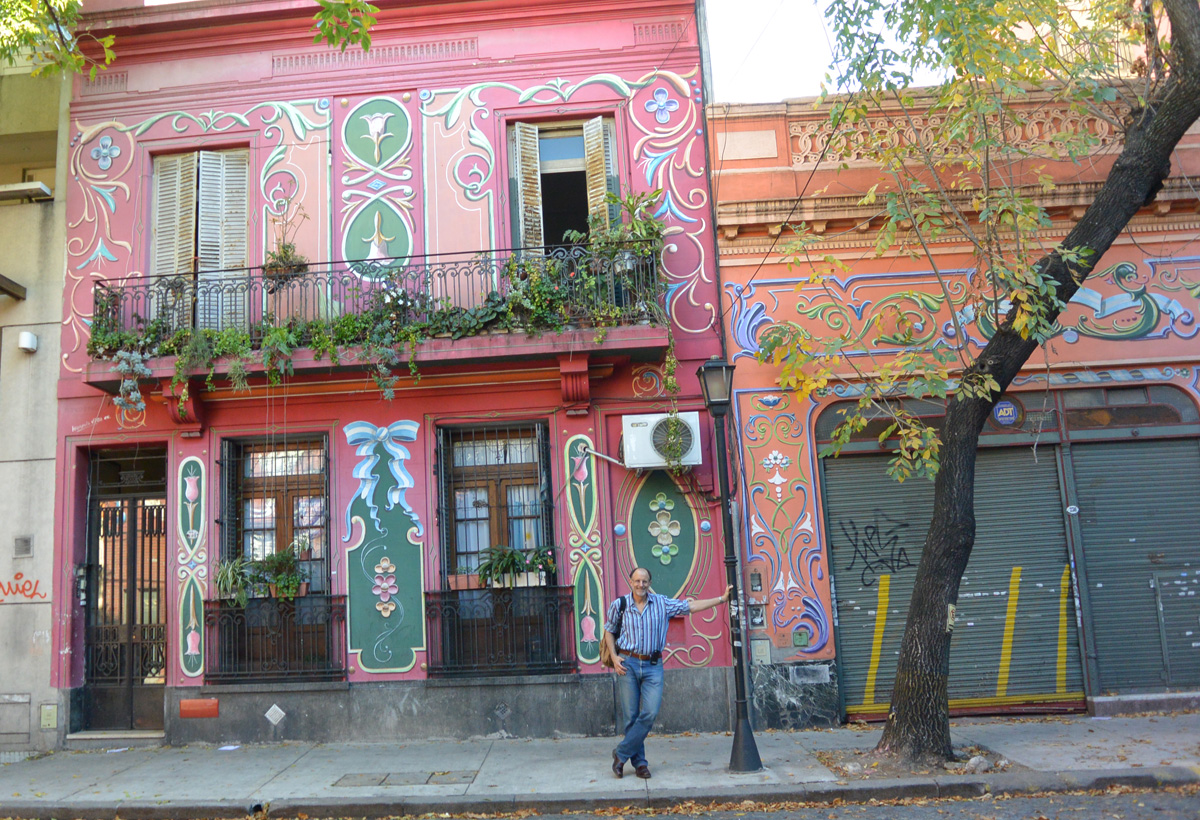
Learning tango may take years, and a lot of dedication, but it offers the excuse, if one was needed, to go to Argentina and experience the dance in its element.  Certainly, Buenos Aires has much to offer beyond tango.  The various neighborhoods are very colorful, with beautiful architecture, and a style of painting in many areas known as fileteado.

Building with fileteado painting in Palermo

Building with fileteado painting in Palermo

There is San Telmo, the oldest barrio in Buenos Aires, characterized by small cafés, bodegas, book shops, art galleries, antique shops and elegant old buildings.  It is where we stayed in a very unique apartment while in Buenos Aires.  La Boca, where many Italian immigrants from Genoa settled, has typical tourist shops, and the old port.  Microcentro is the central business district, with office buildings, shopping, restaurants and hotels.  There is a pedestrian-only street in Microcentro called Calle Florida, jammed with shops and shoppers, also young men quietly calling out “cambio”, (“change”), seeking to have you change your dollars for their pesos.

Street tango performers

Street performers on Calle Florida in Microcentro.

Palermo is a chic, upscale barrio, with earth-friendly but costly cafés, expensive clothing stores, and lots of bikes.  It is a very pleasant area to wander in the afternoon, window shopping, and stopping for an espresso, or lunch.  We did not make it to Recoleta on this trip, but it is the highest end neighborhood.   In every barrio, every night, there are several milongas from which to choose.  There is, of course, a smart phone app to help, called “Hoy Milonga”, which will let you know what is happening where.

I will leave you with a link to a video of a typical milonga, but to truly understand tango takes years of practice, lessons, milongas, mistakes, overcoming shyness, brusqueness, close human interaction, embracing the challenge and opening oneself to new friends and relationships.  I am told that once one is bitten by the bug, there is no turning back.  Perhaps I sound a bit on the fence,  but I am enjoying my foray into the world of tango.

Why I Love the Caesar Rodney Half Marathon

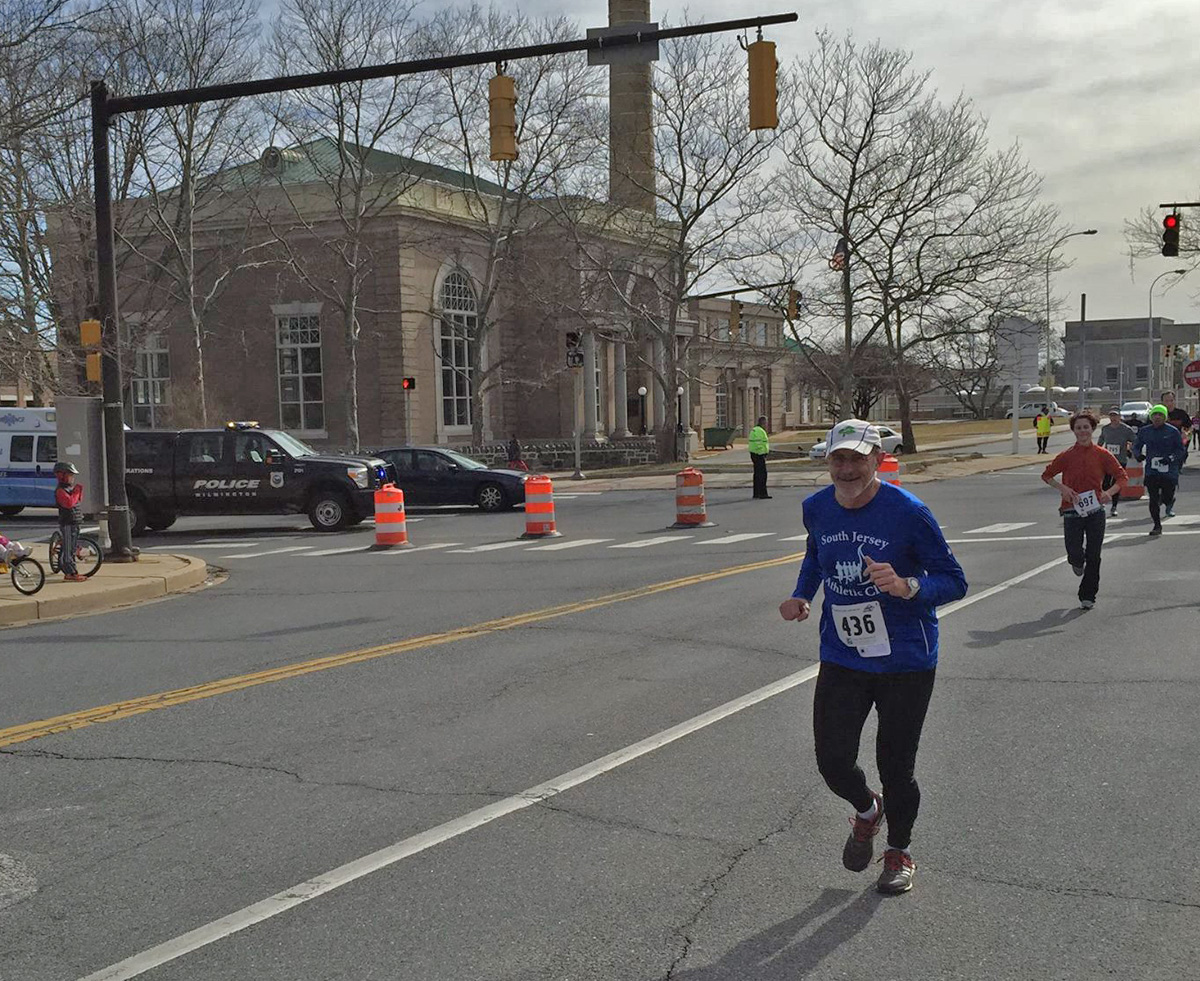
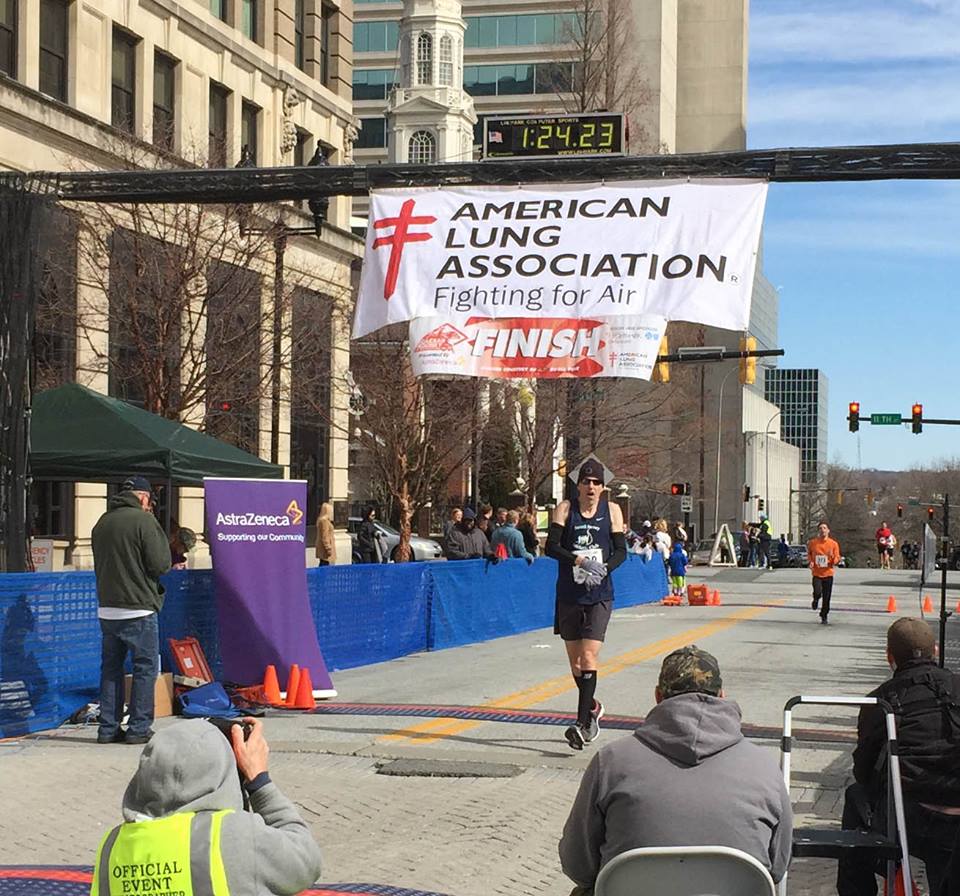
Frank nears the halfway point

Frank nears the halfway point


I have written about this race before, The Caesar Rodney Half Marathon, in which I described the race, its history, and the particularly challenging profile of the course.  In brief, the first half of the race is relatively flat after an initial downhill first mile.  Then, there is a long and sometimes steep, 2.5 mile uphill climb, a number of turns through neighborhoods, then a downhill stint to the final steep uphill 1/3 mile to the finish.

This race is run the third Sunday in March, when chill winds still blow.  In fact, this year, we had a snowstorm all day Friday two days before the race.  Most of the snow on the streets melted the following day when it rose to 50˚F, but then the temperature dropped back to below freezing that night.  For race day, we had gusty winds and temperatures in the low 40’s.

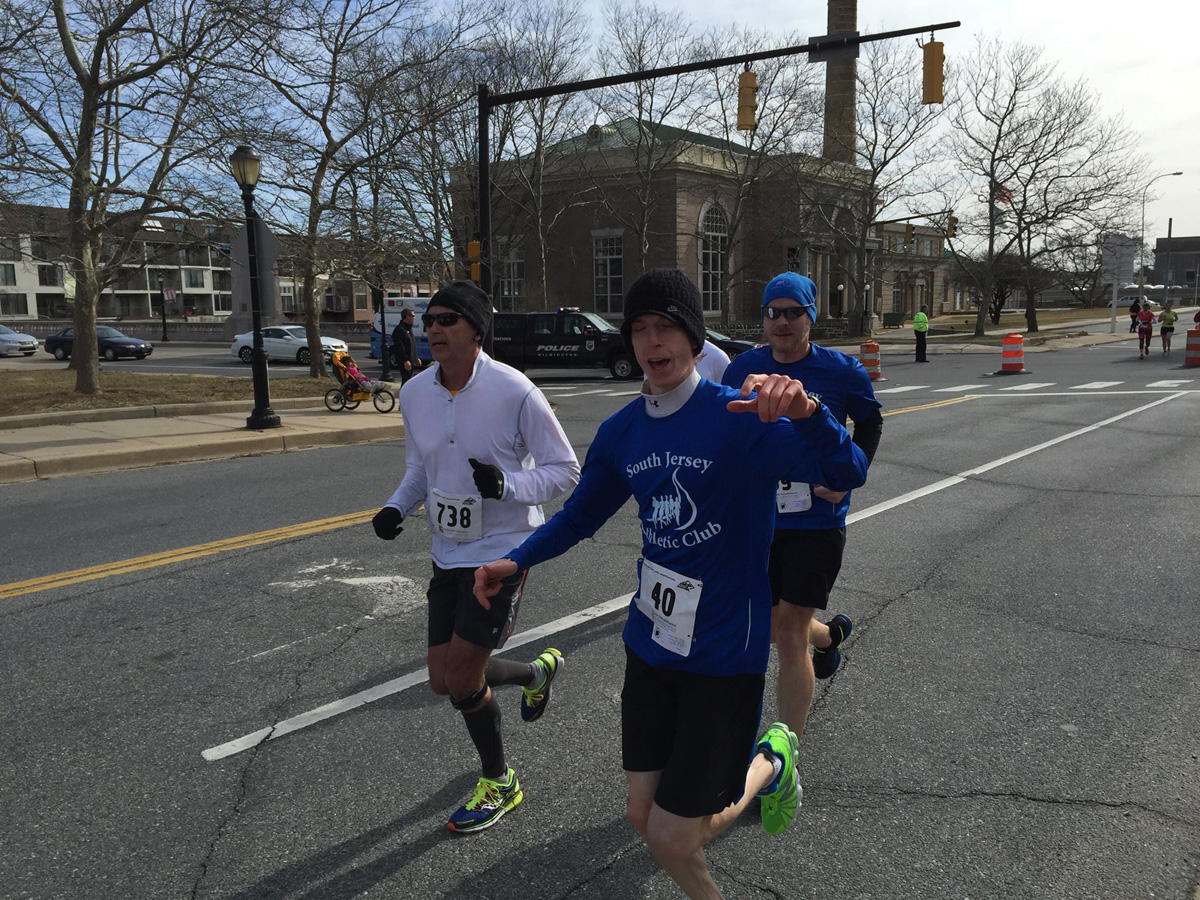
Dan and Brian Ambrose pumping up for the hill.

Dan and Brian Ambrose pumping up for the hill.

What is good about this race?  It is one of the first races of the early spring, meaning to be in shape, one must train through the winter.  So, it encourages fortitude in training when the weather is frigid, daytime hours are few, and the conditions on the ground can be pretty miserable.

It is a race with a history.  It is one of the first half marathons in the country, first run in 1964 when Browning Ross, from Woodbury, NJ, won it in 1:07:24.  It has been run every year since then, making this year the 52nd running.

It is well organized.  Runners are given permission to use the Downtown Wilmington YMCA locker rooms, to store gear, use indoor restrooms, and provide showers after the race.  Few races I know of have that sort of facility available.  Picking up one’s number and race packet is simple and done on the day of the race.  There is a very friendly bag drop manned by volunteers.  In fact, there is a friendly atmosphere throughout, and senior Delaware Senator Tom Carper, former Delaware governor and congressman, former naval air commander during the Viet Nam war, runs the race with the rest of us.

It is for a good cause.  The money raised goes to support the American Lung Association, certainly an easy tie in with running.

From a personal view, this was my first half marathon, and the race I keep returning to year after year.  I first ran it in 2007, missed 2008, but have run it every year since.  Up to this year, I have been kind of stuck in a rut, time-wise.  My times these past years have been fairly consistent:

2007  1:51:59

Brandon at the finish line.

Brandon at the finish line.

2008  Didn’t run

2009 1:49:45

2010  1:49:48

2011  1:49:40

2012  1:53:35

2013  1:49:16

2014  1:49:34

This year I wanted to break out of my rut.  I ran fairly consistently through the darkest days of winter, through slush and cold rain, enjoyed the occasional cold but sunny morning run on the weekends, and was feeling pretty good going into the race.  Still, I had some trepidation.  I know the course, and how challenging it is.  After running it all these years I know every turn, and know when it seems like the race will never end.

So, I lined up with everyone else at the start, and took off feeling good.  One cannot help feeling good in a race which starts heading downhill for a mile.  Of course, the clever among us will recognize uphill is coming.  Instead of feeling washed up as the road headed up, though, I felt I still had some energy in me, and managed to gut out the 2.5 mile climb mid-race.  I cruised back down the hill towards the finish, and my good friend and running partner, Brandon, came back to encourage me on the last mile.  This all resulted in a very satisfying finish of 1:47:56, my best half marathon anywhere.  I finished fifth in my age group, averaging 8:15 per mile.

After the finish, a new half marathon PR for Frank.

After the finish, a new half marathon PR for Frank.

Now, I’ve set the bar higher for myself, and each year get older.  I’ll really have to turn up the training screws next winter.

Arrivederci Winter

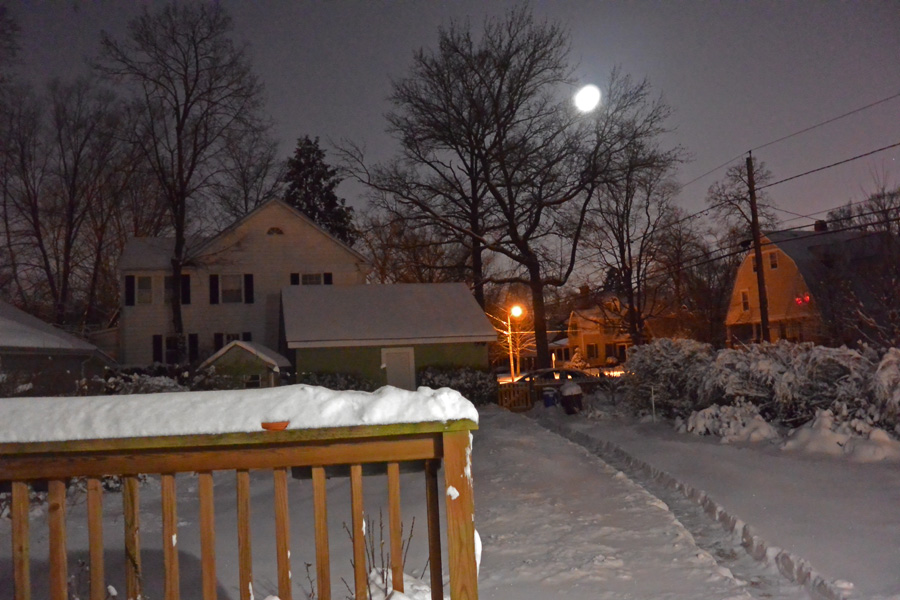
Moon, 4:30 AM, Friday, March 5, 2015.

Moon, 4:30 AM, Friday, March 6, 2015.

The whole eastern part of the U.S. was under the icy clutch of a band of frigid air the last two weeks. This air traveled from the Pacific, over the north pole, through the northern reaches of Canada, freezing Niagara Falls as it crossed the border and settled on our home. When winter comes upon us, everyone wonders, will this be another year of little snow and mild temperatures, or will we get hit with big snowstorms, creating scenes of pathways dug through backyards to driveways, snow piled high in parking lots, plows running up and down our roads, salt spray painting our cars gray-white, and people walking through the snow bundled with layers of clothing, knit caps, and big gloves.

While the weather forecasters got it mostly right this year, they did miss on a couple of occasions, when the snow hit Boston but pretty much missed us in South Jersey.  We managed to get a late winter snow three days ago, in the early days of March, while the temperatures were still in the frigid single and teen digits.  I went for an evening run the day of the latest snowfall.  It was only 7:00 PM, usually a time of the later rush hour crowd irritated and pushing to get home, but the roads were oddly quiet.  Since it had been snowing all day, it seems many businesses closed early.  The snow plows had passed through, but the snow kept falling, so the streets were covered with a thin layer of snow which had not turned to ice.  The combination of fresh snow everywhere, low clouds, and streetlights made for a very well-lit run in spite of the sun having disappeared an hour earlier.  There was a nice, faint crunch under foot as I ran, and the cold air felt good in my lungs.  My run took me past many local small shops and restaurants, all closed for the weather.  With one exception, that is.  The bars were hopping.  I think the bar owners get special attention from the snow plow drivers cleaning their parking areas.  Perhaps they need to pay a little extra for this but I’m sure it is worth it.  Teachers can’t get to the schools, but they make it to the bars.  Office workers get in late and sent home early, but they can make it to the bars.  Doctors, lawyers and dentists close early, no patients or clients are braving the slick roads to make their appointments, but they all make it to the bars.  The last few miles of my running route I pass about ten bars and every one of them was doing business like it was St. Patrick’s day already.  There is a quaintness about bars in the depths of winter.  It’s dark outside, the windows are frosted over, and one sees the profiles of the people inside all animated and lively.

In my house, we retreated to the front part of the house where the den with the fireplace is. The back half is beset with all sorts of problems. We live in an old Victorian, and the original design did not account for living in the 21st century. Bathrooms and appliances have been added over the years, and in spite of best intentions, cold air manages to sneak in like a cat burglar, freezing the water within. This past week, as the temperature dipped to a cruel zero, streams of that dense cold air moved in and around our old pipes, freezing some and leading to a couple of burst pipes.  This year, I had the foresight to at least turn off the inflow to these pipes so the damage was minimized, but we’ve had to wait until the thaw before we could fix them.

This weekend, though, brought a break in the icy pattern.  As we clicked over to daylight saving time, temperatures soared to 52 degrees.  The sun shone brilliantly, melting the patches of ice on the sidewalks.  Constant rivulets of water flowed down the street as the snow melted.  And people are out getting all their usual weekend errands in, not sure how to deal with a day when the only cover up needed is a light jacket.

Now we can start thinking about getting the garden ready for planting, cleaning up the debris that conveniently was covered up by the snow, and watch the road crews fixing all the treacherous potholes which have multiplied the last few weeks.  I’m sure in a couple of months we’ll be baking in premature heat, barely remembering how cold it got and stayed this winter.  Before that happens, I’d like to have a few more fires in the fireplace, have a reason to wear long tights and two layers on top when I run, and feel the cold air filling my lungs.

A Slog through the Slush

Here’s how the conversation, via text, went:

It’s all slush and big puddles out there do you think we should run?  And it is raining, too.

Sorry, just saw this.  Let’s go for it.  We won’t know till we try

Okay.  I am just getting ready now.

Take your time driving over.

That was at 6:45 this morning.  The snow, rain, freezing rain, and sleet had started the night before.  I was out with friends in Philly, and late at night, heading for the train, we marveled at the enormous size of the snow flakes falling steadily.  With the temperature close to freezing, they turned to slush as they hit the ground.  This morning, I stayed in bed as late as I could but still make a 7:00 AM start to my morning run.  My running partner and I had the above conversation and so I was committed to the run.  I was relieved, since I didn’t want to be the one to make the call, knowing this would not be our best run of the year.

We had to gingerly pick our way from his front door out to the street, not wanting to start running with cold, wet feet.  The road had not been plowed, and while the “inches” of snow were not that much, it was all wet and forming large pools of ice slurry.  We started off very slowly, running along areas cleared by tire tracks, being careful not to slip as we went downhill towards our loop around the park.  We had to run in the street rather than the multi-use path, which was completely covered by this slurry.  As we ran, we picked up the pace a bit.  Along the Cooper River, the geese were out in force, coping with the conditions without a problem, as far as I could see.  Approaching the far end of the loop around the park, the path was one large slush puddle, which we muddled through.  Now my shoes were wet, and my feet cold.  On the far side of the park, the road was narrowed by construction.  We had to run along on the road, with cars passing us closely and spraying ice and frozen water on our legs.  I think it was partially on purpose, since not all the cars came that close.  We moved over to the construction zone, running in ruts created by a truck that had gone through recently.  As we ran we were able to have a nice conversation, since the forced slow pace made talking that much easier.  We talked about running in the winter, and also about the play I saw last night at the Lantern Theater.  The play, called “Doubt, A Parable”, by John Patrick Shanley, takes place in a Catholic School in the Bronx, in 1964.  The story is that of an older nun, the principal of the school, suspecting the priest of having sexual relations with one of the boy students.  The story gets complicated when one hears the boy’s mother’s side of her son’s life.  The play takes only ninety minutes with a single act, and seems to leave out some crucial inner thoughts of the four characters.  One critic I read afterwards suggested the second act was when the audience discussed their feelings about the play.

Our run finished with a long uphill climb and then a flat last mile, still with the skies gray, and our feet cold and wet.  But accomplishing our seven miles, and then warming up with a change to dry socks and shoes, a dry shirt, and a hot cup of coffee was very satisfying.

A parable is a short narrative about individuals meant to be an example of a larger truth.  So, this narrative I relate to you shall also be short, and meant to convey that even when nature is uncooperative, getting out and doing is better than holing up and not doing.


It’s all about that pace.

It’s all about that pace, ’bout that pace, no hustle.

It’s taken a little time for me to settle after my last marathon experience.  The short of it is, I cramped up at mile 16.5, and after a brief rest and another half mile, I wasn’t able to continue.  This was to be my tenth marathon, and I hadn’t quit any before, even when suffering mightily.  So what was different this time, and what went wrong?

There are many marathon training programs out there.  Runner’s World Magazine, Jack Daniels, Hanson, Hal Higdon, and others specify when to start training, how often to run, how far to run, and at what pace for one’s abilities.  Generally, one starts about sixteen weeks ahead of M-day, progressing in miles and longest run as the weeks progress.  The basis for this is the way our muscles and heart accommodate to the demand of steady running for three to four hours.  That kind of endurance, unless one is particularly exceptional, requires a long build-up.  Things can go wrong the day of the marathon.  Weather can be awful, a virus can lay out a runner, but if one has not put in the training, a perfect day will not make up for that lack.

For me, the training for my latest marathon, Philadelphia, November 23, 2014, started on time and rather well.  I had a good base, coming off a half marathon in Nice, France, at decent time in late April, and the 10 mile Broad Street run in early May in Philadelphia.  I’ve always designed my own training program, since sticking with one of the popular plans is just impossible due to my work schedule.  I also was working with a new marathoner, helping her train for her first marathon.  We had our long runs planned out for every Sunday, a mid-week ten mile run, and other training runs in between.  Paces were mixed up, and routes changed so that we would not fall into automaton behavior that comes with repetition.  My first slip up came about seven weeks before the marathon.  We were doing one of my favorite long runs, 9 minutes at a 9 minute per mile pace, then 1 minute at a fast pace, generally about 7’45” per mile, for a total of 14 miles.  One does need to keep an eye on the watch, and the pace, to get things right.  Done well, the miles fly by, and the run is energizing.  I think my eyes were too closely focused on the watch.  At about eleven miles, along a dirt path being graded for paving, I hit a rock with my toe and fell hard and fast.  I came down on my right side, connecting my chest, shoulder and head to the ground.  Fortunately, nothing was broken…I think.  I may have broken a rib but it wasn’t displaced and so since nothing would be done about it, I didn’t have it x-rayed.  That little incident slowed my training down, and made the next couple of weeks a little difficult due to soreness.  About five weeks before the marathon, we had a 20 mile run planned. It actually went very well, and I think if I had to run the marathon that very day, it would have been a good run.  After that, two weeks of very busy late nights at work completely blew apart my final weeks of training.  With two weeks to go, we went out for a 21 miler.  The conditions were nearly perfect.  The temperature started in the mid 40’s (F) as we headed out in the pre-dawn light.  The first bothersome event was that my new Adidas shoe was causing a great deal of pain where the tongue of the shoe meets the foot.  The tongue on these shoes is minimal, and the underlying tendon in my foot was being rubbed, causing the pain.  At around the 10 mile mark, I ran to my house to change shoes, while my ingenue marathon training partner waited a few minutes.  That done, my foot felt better.  We continued on, but at 17 miles a familiar and very annoying feeling sprang up in my calves and quads.  I was starting to get cramps in my leg muscles.  I am quite a sight when this happens, taking on the stride of John Cleese of Monty Python fame doing his silly walks sketch.  Not so funny for me, though, and I could not continue.  My training partner was doing well, and continued on to finish her 21 miler, the longest she had ever gone in one run.  I, on the other hand, hobbled back to our home base, unable to run, and in pain.  After walking the mile back, my legs did start to calm down, but the day and the run was shot.  I was very concerned that this might be my fate at the marathon in two weeks time, and I seriously considered not starting.  I had a chat with one of my marathon advisers, an experienced marathoner named Brandon, with whom I regularly run Saturday mornings.  With one week to go, I really didn’t get in the usual taper, because the three weeks before were so poor.  Brandon said he felt I could slow the pace and make it through the race.  He said it would be a shame to not run after putting in the many weeks of preparation.  With that encouragement, I started the marathon the following Sunday.

I thought about just doing half.  The official half marathon had closed weeks earlier, so I couldn’t drop down as a registered runner.  I felt if I kept my pace reasonable, around a 9 minute mile, things would be okay.  I did feel quite fine through the first half, and the Philadelphia marathon route is a very nice one.  It starts along Ben Franklin Parkway, with thousands of spectators lining the start, and Mayor Nutter giving hi-fives to runners as they pass the start line.  The route goes through Old City to Delaware Avenue, down to South Philly, then up along South Street to Chestnut and through Center City.  Crowds with clever (or not-so-clever) signs cheer on the runners.  The frat boys at Drexel bang on pots and shout out to the runners.  The route winds along to the Belmont Plateau, and past the Please Touch museum, then down hill to West River Drive along the Schuykill river and back to the Philadelphia Art Museum at the half.  At this point, the runners doing the half peel off and head to their finish line along the Ben Franklin Parkway, which is where I should have headed.  Thinking I could muster on, and not feeling bad, plus averaging around 8’45” to that point, I kept going, making the turn around the front of the museum to head out Kelly Drive towards Manayunk.  It is a route I have done six times before, sometimes suffering with leg cramps and having to walk, sometimes cruising through, and once, doing well enough to make my Boston qualifier.  This time, at mile 16.5, the cramps set in.  I tried to slow down and keep running, but it was just impossible.  I moved off the course, and like some soldier going AWOL in an old movie, removed my number from my chest.  I started walking back towards the start line, which was about 3 miles away.  I should have quit as I turned in front of the museum, so the walk would have been much shorter.  After walking for 5 minutes, my legs felt better, and seeing all those other runners streaming by me I put on my number again, got back on the course, and started to run.  Well, that didn’t last very long.  I got about a half mile when my legs seized up again.  This time I decided to quit for good.  I moved off the course, this time leaving my number on, and walked back towards the start.  Shortly, a volunteer driving a golf cart-like vehicle, already carrying two other runners, stopped to pick me up.  I got in, and the young man next to me offered me the Mylar blanket he had around his shoulders.  He was very thin and fit-looking, not the kind to quit a marathon I thought.  But he had a similar problem to mine, and had to stop.  He insisted I take the blanket against my protests, as he appeared to have far less insulation than me.  He wouldn’t take it back, so I kept it.  Shortly after getting in the cart, I had to get right back out.  My legs were seizing up, and there was no way to stretch them out in the cramped seat.  So I was resigned to the long walk back.  Along the way, I passed another fellow DNFer, about my age, who had quit due to ankle pain.  As I walked I thought about my justification for stopping and not mustering on.  I felt that I had made the right decision, to not hurt myself further, recover, and live to run another marathon another day.

I got back to the art museum, and made my way around the outside of the course to the bag pickup.  Several people told me “way to go”, and “good job” as I made my way through the crowd, giving me the feeling of a complete charlatan.  It was crowded, and I didn’t want to take the time to explain, but I simply put my head down and decided it would be best to not recognize these well wishers.  I made it into the bag area having to enter through an exit guarded by police, since the security around marathons is way up these days.  Once I picked up my bag, I had my cell phone.  I phoned my wife, who had been monitoring my progress on her phone.  Up to that point, I was pretty calm and collected.  As I spoke to her, though, I completely broke down, as the emotion of quitting hit me.  The rational me had left as the feeling of failure overcame.  I like to be seen as the invincible warrior, not the vulnerable person I am.

Since then, I have recovered, both my body and my senses.  I have heard many stories from my experienced marathoner friends of times they, too, have had to quit for various reasons.  I have plans for a half marathon in March, my annual shot at Caesar Rodney in Wilmington, and I am trying to decide which marathon to sign up for in the fall.  I think I want to do an early October marathon, since the training doesn’t run into the problem with short days and the conversion to standard time.  Of course, I may piggy back Philadelphia onto that, since I will have done the training after all….  In the end, it really wasn’t about the pace, it was about the training, and getting it right.  Yes, the pace is important, but not if the training is missing.


Enlightenment versus Romanticism and Marathon Training

Is marathon training a product of the Enlightenment, the age of reason, or is it more a result of romanticism, seeking nature and intuitive feeling?  In the era of the Enlightenment, men, well almost only men due to the circumstances of the time, were not likely to be out running for sport or athleticism.  Descartes did not write, “curro, ergo sum”, or “I run, therefore I am.”  He did write “Cogito, ergo sum”, or “I think, therefore I am.”  Who were the famous people of the Enlightenment?  Sir Isaac Newton stands out.  His laws of motion laid the basis for centuries of physics study and they may say something about running.  A body in motion tends to stay in motion, while a body at rest tends to stay at rest.  A lot can be read into that statement, beyond the mere physics.  One pictures a runner who needs to get out daily and run or his or her day is not complete, versus the person lying on the divan waiting for divine intervention to get moving.  The second law states that the force exerted on an object is equal to its mass times acceleration.  Another way to look at that is the acceleration equals the force divided by the mass, meaning the lower the mass, the greater the acceleration.  So, when you lose weight, and get into running trim, less force is needed to get up to speed.  His third law about equal and opposite actions may be more applicable to ice hockey than running.  Other famous individuals include Baruch Spinoza, Immanuel Kant and John Locke.  They wrote about individual liberties, blending logic, reason and empirical knowledge, and religious freedom.  They represented those who felt selling indulgences was not the way to heaven, which began with Martin Luther nailing his ninety-five theses to the door of the Castle Church in Wittenberg.  I read this as one cannot buy himself into anything that takes dedication, work and time, never mind the implications to organized religion.  Our own Ben Franklin was a great thinker, inventor, writer, politician and leader.  He was not a runner, as far as I can tell.  He was part of the Enlightenment, and his words and works had great impact in his time and forward.  A reading of famous quotes from Poor Richard’s Almanac provides the curious with plenty of sayings to thinku about while running solo on a 20 miler.  Here’s a taste:  “The noblest question in the world is:  What good can I do in it?”  We’ll return to that thought.

How do romanticism and running relate?  Romanticism followed the age of reason, as a reaction to the scientific and industrial advances which seemed to obliterate the beautiful, natural and emotional.  To a scientist, Maxwell’s equations were beautiful, but to Lord Byron, beauty was found in nature, love, turmoil, adventure, and pleasure.  George Gordon Byron, called “Lord” because at age 10 he inherited the lordship of Byron, was born of a profligate father named Captain John “Mad Jack” Byron, a rogue and scoundrel who apparently had anger problems.  Lord Byron, a most famous figure of the romantic era, who wrote “She walks in beauty”, and a wealth of other poems, long poems, satires and tales, was an athlete and warrior.  This was in addition to being a lover, adventurer, cad, and debtor.  He was known for boxing and equestrian skills, and played cricket.  Many other authors, poets, musicians, and artists, including Jane Austen, Delacroix, Wordsworth, and Mary Shelley, who penned “Frankenstein”, defined this era.  Romanticism meant defying order, industrial progress, rigid attachment to religion and social norms, and seeking the whole of natural and human experience.  Does this sound like a marathon runner?  In many ways, I think it fits.  We train under all sorts of adverse conditions, from the sweltering heat of summer to the icy roads of winter.  We train in the dark, and in the rain.  We gather at the local pub to swap running stories while downing pints of beer.  Our goals may be ephemeral, enjoying the training as much as the racing.  We are smitten by the beauty of our co-runners, their form and grace.

When training for a marathon, we are drawn in by plans which prescribe the length, the pace and the frequency of our runs.  There are competing programs, and some swear by one while others will follow a different program.  Some, like scientists in a lab, will try different programs and measure success by the outcome of their latest race.  We use the latest technology of the day, GPS, Garmins, heart rate monitors, and smartphone apps.

Counter to this is the marathoner who just wants to finish the race and is not so concerned about a Boston Qualifier.  This is the runner who gets in the zone, and is focussed on the Zen of the run.  He or she is still facing the great challenge of 26.2 miles, a long run, but who eschews technology and goes for the feel.

Regardless of one’s perspective, what good can we do?  Does running a marathon help mankind or is it a personal indulgence so inwardly focussed to be useless to society?   This question could be fodder for pages of argument, but not here.  I would say it is both a personal indulgence and a way to enhance life experiences for many.  It keeps us fit.  It engages us socially, away from the desk and computer.  With the enormous growth in popularity of marathon running, it has become an economic boon for many cities.  I’ve been impressed and amazed by the support given by the crowds lining the course.  I think marathon runners set a great example of dedication to the supporters, who in turn provide us with encouraging cheers and clever signs to make it across the finish line.  My readers can let me know whether Enlightenment or Romanticism best represents the marathon runner, but ultimately, it is a noble effort.

Note 1:  Lord Byron’s daughter, Ada Lovelace, was an example of Enlightenment wrapped in Romanticism, designing the first type of algorithm used in an early type of computing machine.

Note 2:  the header photo shows Lord Byron’s scrawled name in a pillar in the dungeon of the Chateau de Chillon, where he was inspired to write “The Prisoner of Chillon”, photo by the author.

A Gibbous Moon Doth Shine

As I ran this evening along the path beside the lovely Cooper River, a shining gibbous moon was on the rise.  It seemed to pull me on, moving with me as I ran, never getting closer nor farther.  More than half, but less than full, it presented a beautiful picture in the sky. I got spellbound as I ran, but coming up to a busy intersection, I was snapped back to full alert state.  It was a subtle reminder, though, how the seasons are changing. There I was at 7:30 in the evening, and already the sun had set and the moon was clearly visible.   It has been warm this week, the warmest week of the summer.  I’ve been finishing my runs soaking wet from sweat.  When I take off my socks I can wring out a cup of sweat between the two of them.

The sound of cicadas would be impossible to describe to someone who had never heard one.  It is an unmistakable sound, though, and so typical for this time of year.  It is never one cicada, it is a crowd of male cicadas sending their messages to females that they are present and ready to mate.  The loudness of the song, and its constancy are remarkable.  As I ran along I listened for the much more delightful sound of a cricket chirping, but my search was unsuccessful.  If there was one it was drowned out by the blaring cicadas.

We are in the last throws of summer.  As the evening sky comes earlier, I am reminded that soon I will need to wear a head lamp.  While a definite safety feature, there is not much that is fun about wearing a headlamp.  It creates a sharply demarcated cone of visibility around my feet and a few yards in front of me, but shuts out the rest of the view.  Early morning runs on the weekends, also, will be dark, although made more pleasant by the lack of traffic compared with the evening weekday run.

Eating in the summer is always fun.  The fresh vegetables from local farms, the peaches, the tomatoes, and the small but significant harvest from our backyard garden make summer meals a festival.  My favorite, the blueberries, seemed to last particularly long this year.  I admit to being a blueberry addict.  I bought several ten pound boxes of them at the height of summer, and washed and froze them for my habit year round.

With colder days and longer nights, there is also an urge to indulge.  Football games with beer and nachos, colder temperatures driving up the appestat, and the diminishing supply of fresh garden produce yielding to potatoes, squash and other filling foods makes for a challenge against fitness.  With a marathon coming up in November, and my desire to be fit into the New Year, I must redouble my efforts at this time to stay the course, get in the runs, watch the calories, and not yield to temptations.  On the positive side, though, my hops are ready to harvest, and there will be another good Backyard Homebrew in the making in the near future.

Uncorking Croatia

The Blog of WINES OF CROATIA

RunnersOnTheGo.com

To help enrich the lives of others, we developed RunnersOnTheGo.com to help runners save money on races, running stores, and much more. We also provide the specific local information that makes your travel for business, vacation, or racing as rewarding as possible.

getsetandgo

Travel Blog of a Budget Traveler sharing stories on travel, books & Vegetarian Food

Marc Hemingway

Trying to keep track of my life (and my life on track)

Mid-Life, Mid-Level, Masters Running

Exploring ideas about running to contribute to a more enjoyable pursuit for the mid-level masters runner

therunningtherapist

"One foot in front of the other and one thought at a time"

WordPress.com News

The latest news on WordPress.com and the WordPress community.

retireediary

The Diary of a Retiree