Brandon Runs New York

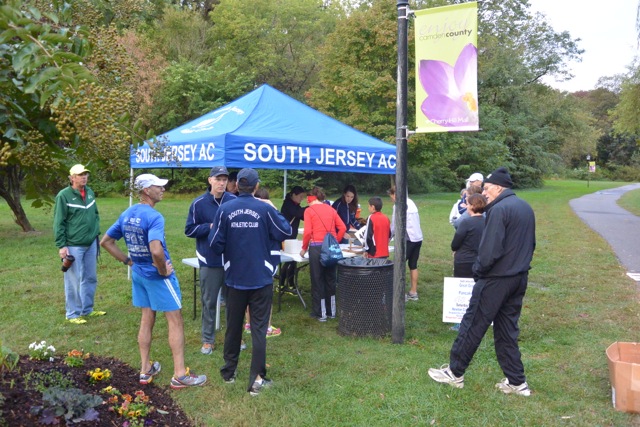
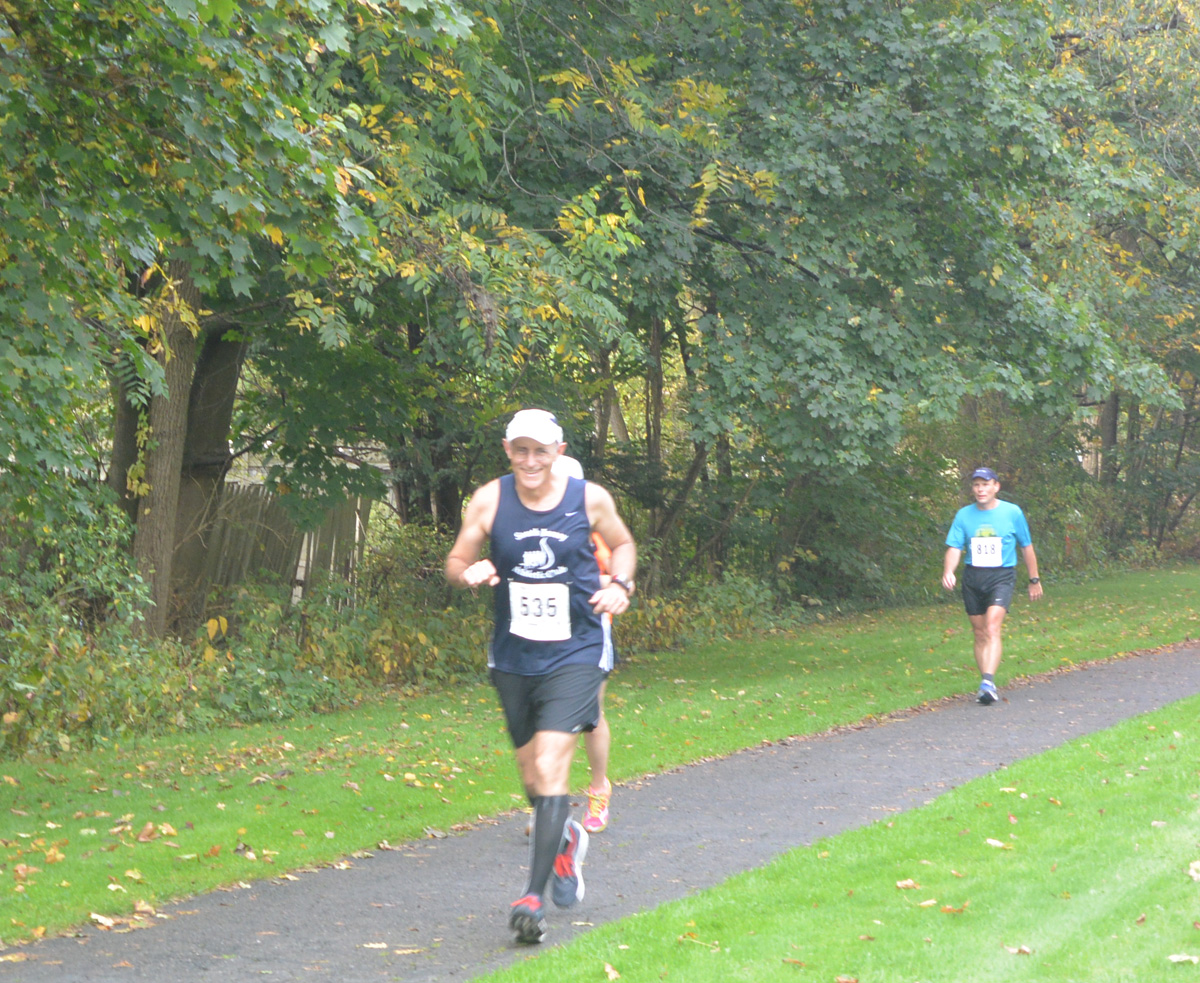
Brandon, in the SJAC jacket, organizing our club's Great Grace race.

Brandon, in the center in the SJAC jacket, organizing our club’s Great Grace race.

People living on the east coast (of the US, for my non-US readers), cannot forget hurricane Sandy.  For some, it was a big storm which didn’t do much damage.  For others along the coastline and in New York and parts of New England, it was a devastating storm from which many have still not recovered,  although it has been a year.  Even if there was recovery, in this campaign season we in New Jersey are constantly reminded of how our fearless governor stood face to face with the storm and chased it away, then went out to help our citizens recover, walking arm in arm with the president.  It made for some strange politics, now replayed as political ads.  It also created mayhem for the New York City marathon, which was cancelled at the last minute.

The New York City marathon started as several loops around central park in 1970, organized by Distance Running Hall-of-famer Fred Lebow.  At the time it had a starting lineup of 125 runners, 55 of whom actually crossed the finish line.  The winner, Gary Muhrcke, finished in 2:31;38, while Mr. Lebow finished in 4:12:09.  Since then it has grown to be the largest marathon run annually, and now traverses all five boroughs.  Staten Island is included by the race starting on the Verrazano Narrows bridge, then it progresses through Brooklyn, Queens, the Bronx, and finishes in Central Park in Manhattan.

Since its start in 1970, it has only been cancelled once, in 2012.  As Sandy hit New York, causing flooding, destruction of houses, buildings, roads and tunnels, electricity outages, and isolation of communities, the Road Runner Club of New York, and Mayor Bloomberg, pushed on, wanting to show the world that the dominant spirit of New Yorkers could overcome anything.  About 36 hours before the race, it was cancelled when the organizers and the mayor recognized the severe impact of the storm on the citizens of the boroughs through which the race would be run.  Instead of using sorely needed generators to provide emergency backup power, these generators were used to heat tents along the route for the runners’ support.  The race was cancelled, and tens of thousands of runners who had gathered in New York were turned away.  Some used their energy to volunteer, helping hurricane victims.  Others, having come from far off points around the globe, returned home, peeved that the race had not been called off before they made the trip.  The sponsors of the race eventually refunded the entry fee to several thousand runners, while others opted for a chance to run in 2013.  My friend and running partner Brandon chose a 2013 entry.

Among several things that Brandon lives for, his beautiful wife and their adopted special-needs son, his faith and his church, running is a very big part of his life.  He ran track in high school, and still relates stories of the races he ran and competitors he raced against.  He has run many marathons, among them multiple Boston Marathons.  He has a tie hanger loaded with Boston Marathon finishers medals on the wall in his living room.  It also displays medals from London and several others, including one from New York.  He ran New York in 1993 at the prime age of 26, finishing with a gun time of 3:02:28.  This was before the modern era of chip timing.

Brandon is a very hard trainer.  He regularly runs upwards of 60 miles per week, mixing long distances at marathon pace, speed work and recovery runs with core training, stretching, and foam roller rolling (for lack of a better term).  Often when I drop by on Saturday mornings for a run, he has a video on in the background of a DVD for core workouts on standby.  The intro shows a woman on a mat raising and lowering her midsection endlessly.  No wonder he enjoys doing core workouts.  Our Saturday morning runs are at marathon pace for me, but a very slow recovery run for him.  He is driven by the fact that our club has some very fast runners who are older than he, and he uses them as a stimulus to keep his game going.  He is also a terrific coach for runners like me who benefit from his years of training and racing experience.

Brandon heads to New York today.  He has plans to take the train to Penn Station, get his number and other swag at the expo, then check in at his hotel.  As he put it, he’ll spend $425 for the privilege of a few hours sleep in a fine New York City hotel, only to have to leave before sunrise to make it to the start line.  Twenty years since he last ran, he has a very good shot at breaking his previous New York City marathon time.  His friends and supporters will be watching the race on TV and on-line, wishing him a great run with the wind always at his back, not too hot or too cold, no stepping in potholes, and a fine finish in Central Park.

GO BRANDON!

Wineglass, Warm and Humid

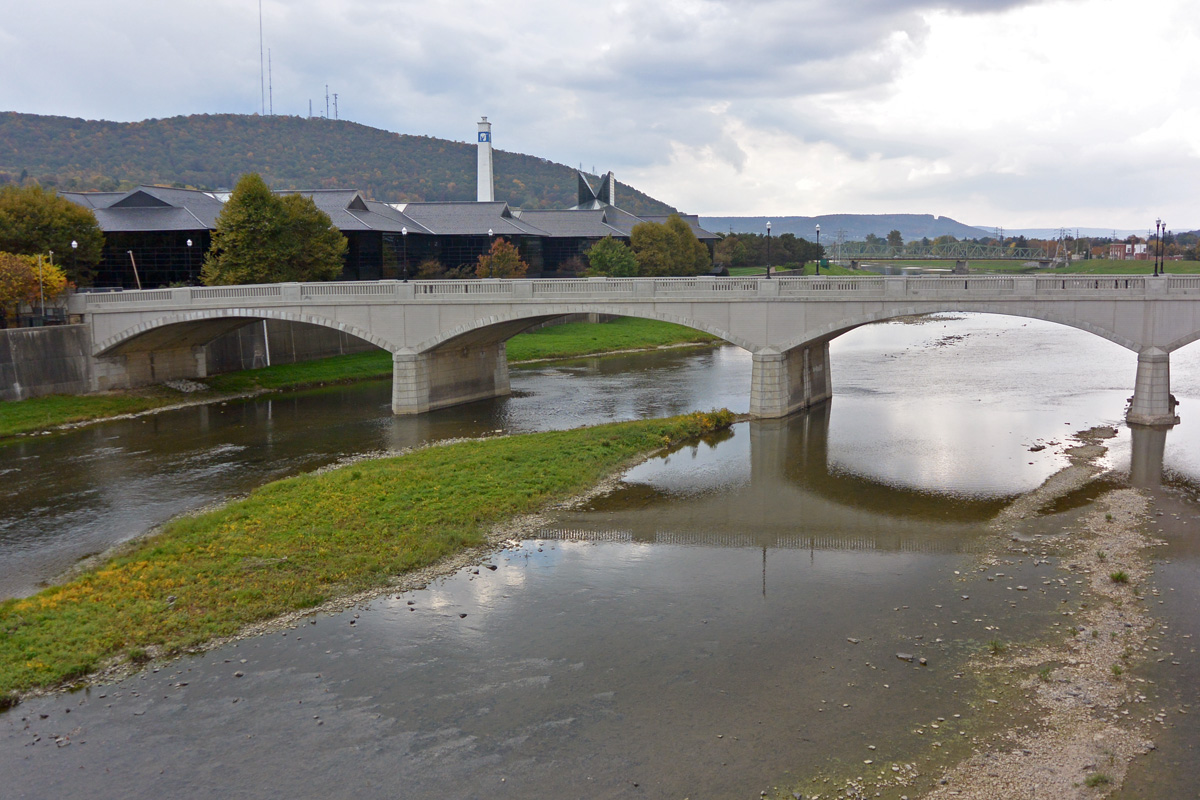
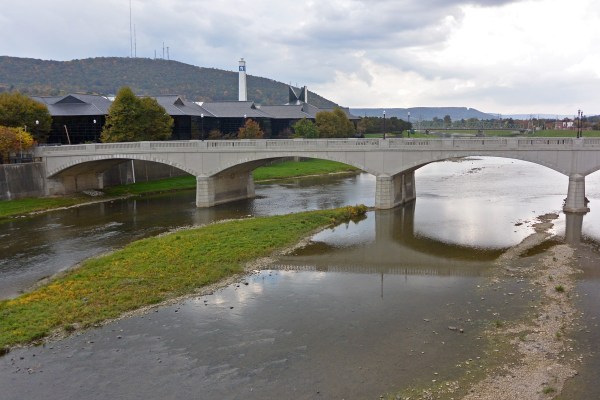
The frequently flooded Chemung River, a tributary of the Susquehanna, in Corning, N.Y.

The frequently flooded Chemung River, a tributary of the Susquehanna, in Corning, N.Y.

I didn’t expect western New York in October to be warm and humid, but then I didn’t know what to expect.  When we train for a marathon, we start months in advance with a plan to build miles and endurance.  This summer, we were slogging through many warm and humid days.  I was hoping for cool and brisk, but that is not the way it turned out.

Our trip up to the Wineglass Marathon, held October 6, 2013, started with a very nice cruise through Philadelphia and up the northeast extension of the Pennsylvania Turnpike.  This in itself is a cause for celebration, knowing what this stretch of highway can be like.  We stopped at Clark’s Summit, north of Scranton, for lunch with a good friend.  On we went further north after lunch, around Binghamton, NY, then westward along the Southern Tier Expressway through Owego and Elmira.  We passed the bridge with the village name of Horseheads chiseled in large letters.  This village has the distinction of being dedicated to the pack horses of Major-General John Sullivan of the revolutionary army.  The bleached skulls of the horses make for an interesting history.  But never mind this distraction,  we were on our way to Corning.

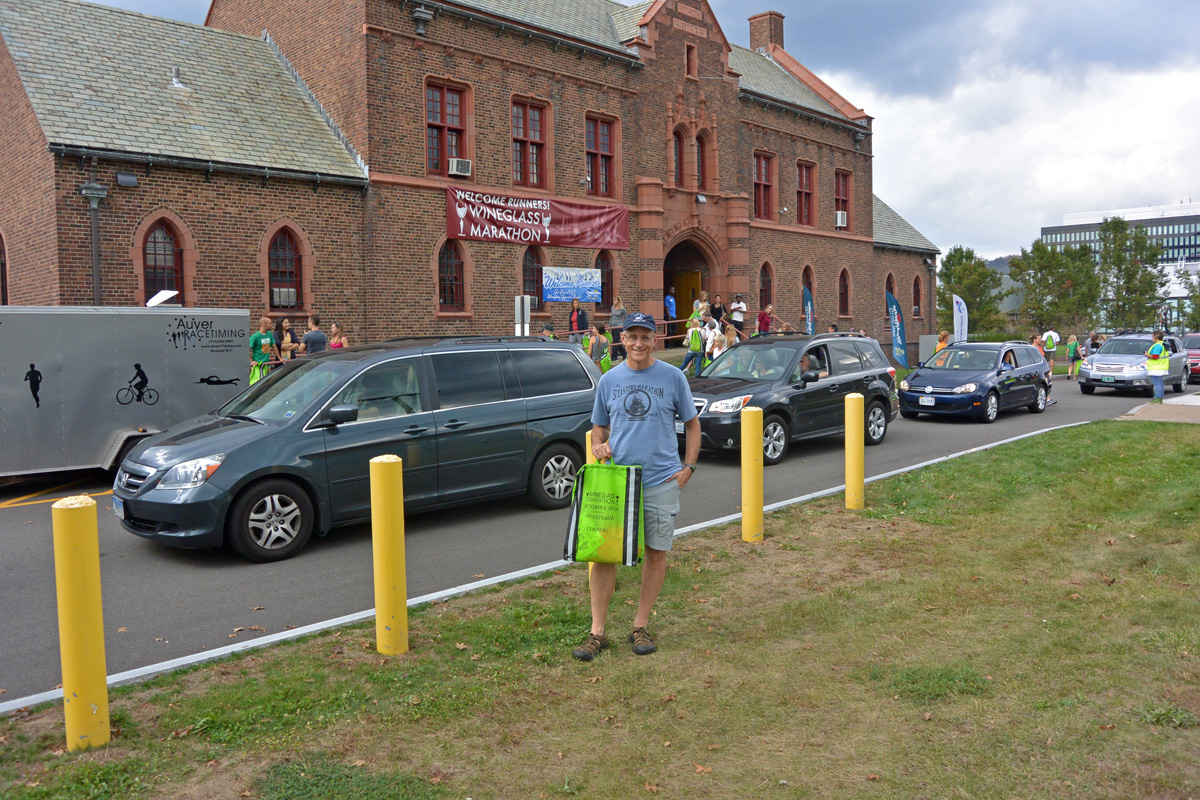
The expo for the marathon is held in the Corning YMCA, in a fortress of an old red brick building.  It is not a big expo, in fact, rather small, but then this is not a huge marathon.  The marathon and the half marathon are capped at 2500 runners each.
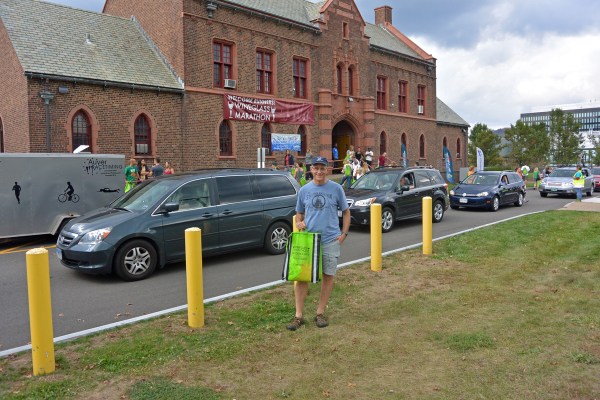
In front of the Corning YMCA, home of the expo.
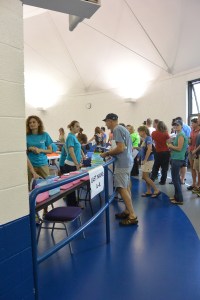
In front of the Corning YMCA, home of the expo.

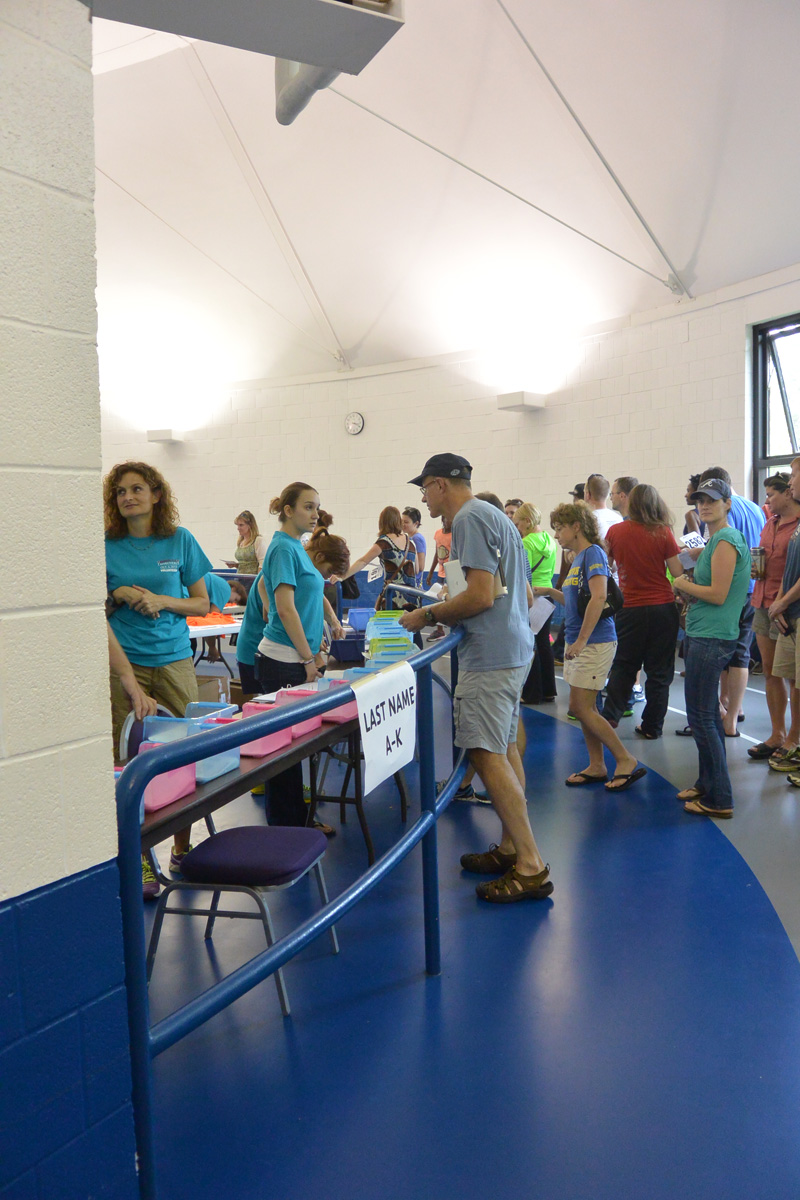
Picking up my number on the indoor track at the YMCA
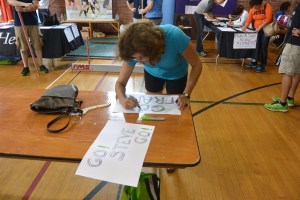
Picking up my number on the indoor track at the YMCA

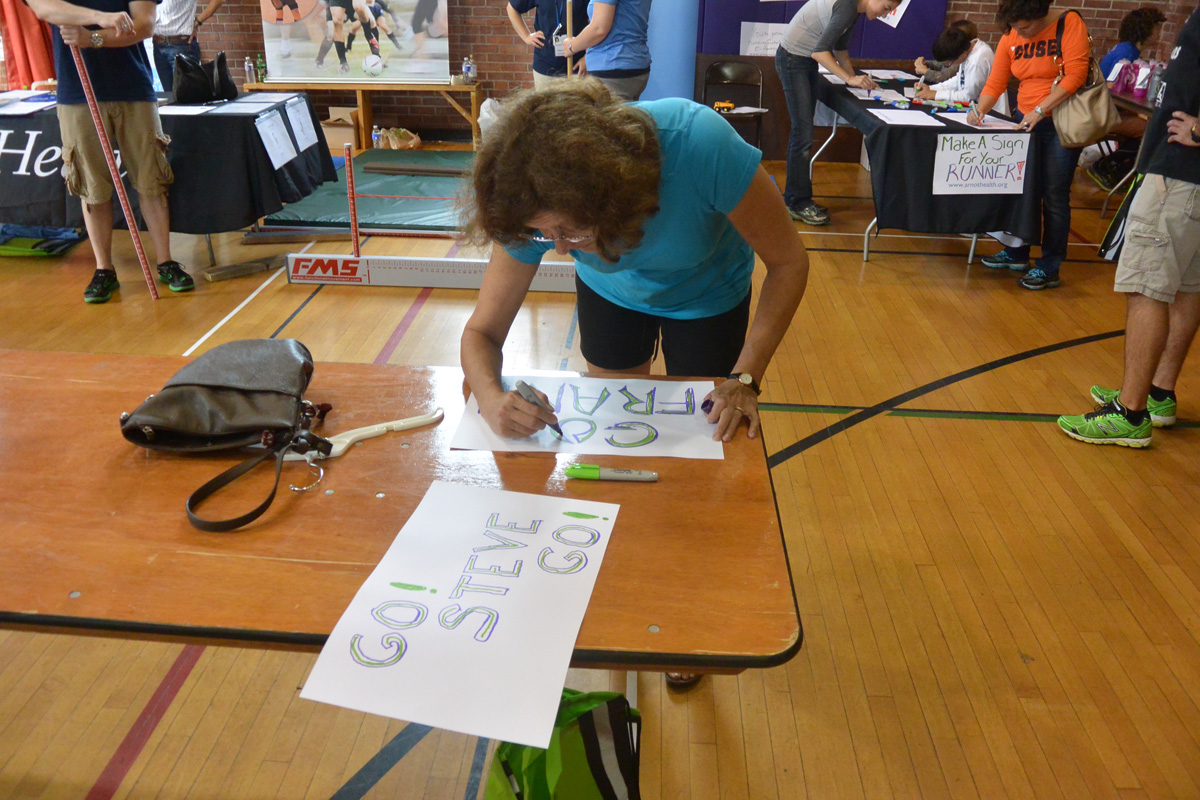
Encouraging signs from my wife for me and clubmate Steve.

Encouraging signs from my wife for me and clubmate Steve.

I picked up my number, and the number of my friend Steve, who was going to arrive a bit late.  The friendly young lady behind the rail took Steve’s word by phone that she could trust me and allow me to pick up for him.  Fortunately, I remembered to check for safety pins, too.

After we picked up our numbers, we headed a little out of town to our motel, the Hampton Inn, of Corning.  I am a fan of Hampton Inns.  They always seem so comfortable and clean, and the complementary wi-fi and breakfast are nice benefits.  We had a little trouble finding the Inn.  We knew the address, but all we could find was a Denny’s and a gas station.  Then, we spotted it.  It was behind the Denny’s a little ways, with absolutely no sign directing one in to the parking area.  No matter, we parked and went to check in.  The pleasant woman behind the desk asked me my name, and then informed me that she did not see my reservation.  Of course, I had made the reservation months ago, and even got an email from the hotel advising us that construction was going on, that there would be noise during the day, and that all of their facilities would remain open.  Another front desk person came over, and they re-examined their records.  As it turned out, the reservation I had made was for two nights starting the night before.  I originally planned to come up Friday night.  Since I didn’t show, they gave away my room and cancelled my reservation.  They informed me they were completely booked, but that they would try to help find me a room in another hotel.  Naturally, the marathoners had booked everything in several miles.  Just as I was getting despondent, and here’s where they really shined, they suddenly realized that one room was not taken.  This was a strange, very large, room on the first floor, close to the lobby, equipped with a board room-like table and chairs, a kitchenette, and a Murphy bed instead of a regular bed.  While all the other rooms had been recently renovated, this room had not, and was in the process of a make-over.  We, my wife and I, were more than happy to take it.  The front desk person even assured me she would remove any charge for my missing the night before.

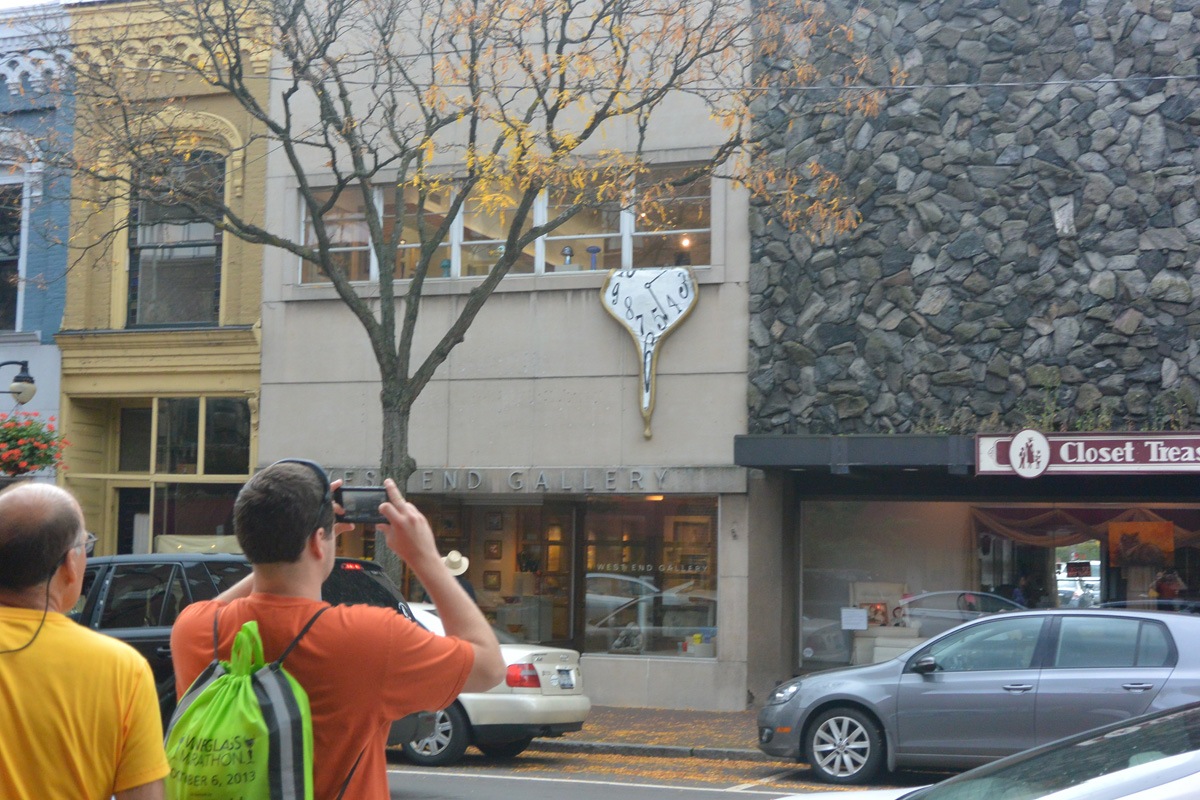
After freshening up a bit, we joined with the other club members staying at the Hampton Inn and headed back to town for dinner.  We found a place to park on Market Street, the main shopping and dining street in Corning.  They have an unusual way of decorating shops on Market Street, with whimsical signage and artwork.
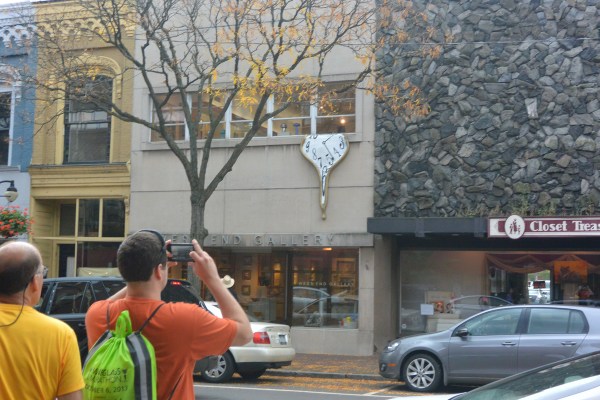
A Dali-esque clock suspended from a second story window.
A Dali-esque clock suspended from a second story window.

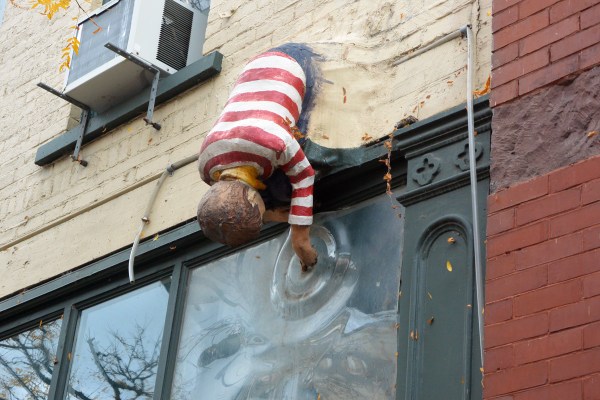
It appears to be a boy dipping his finger in a pond.

It appears to be a boy dipping his finger in a pond.

Steve called a few months ago to the restaurant, Sorge’s, an old, established Italian restaurant in Corning.  He was assured that even though they don’t take reservations, they are a large restaurant which can accommodate a large crowd, and we would not have much of a wait.  As you might expect, Sorge’s was packed, and we were told there would be about an hour or so wait.  We were a hungry crew, and did not want to spend an hour thinking about food, and then another hour possibly waiting for it to arrive at the table.  Right down the street there was a small establishment which appeared to have tables set up for an impromptu dinner.  It was the Palate Cafe and Juice Bar, and they were serving a pasta dinner for the marathoners that night.  We inquired, and it turned out a large party had skipped out on their reservation so they had room for us.  Two in our group, Sara and Brian, wanted a more normal restaurant experience, and chose to return to Sorge’s, but the rest of us settled on the home-cooked style of the dinner at Palate.  It appears Palate specializes in wheat grass juice, and their website has a list of forty benefits and things to do with wheat grass juice, some of which I would never consider.  Check for yourselves if you are curious.
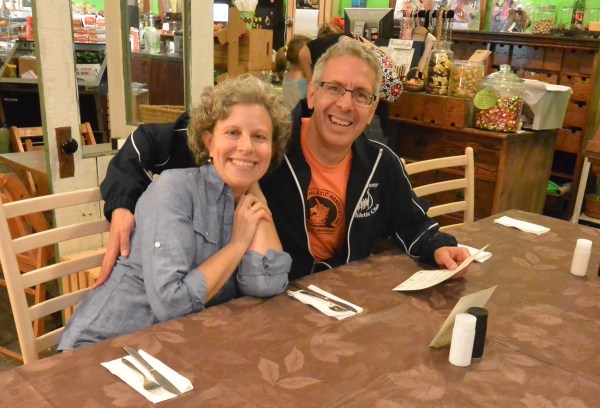
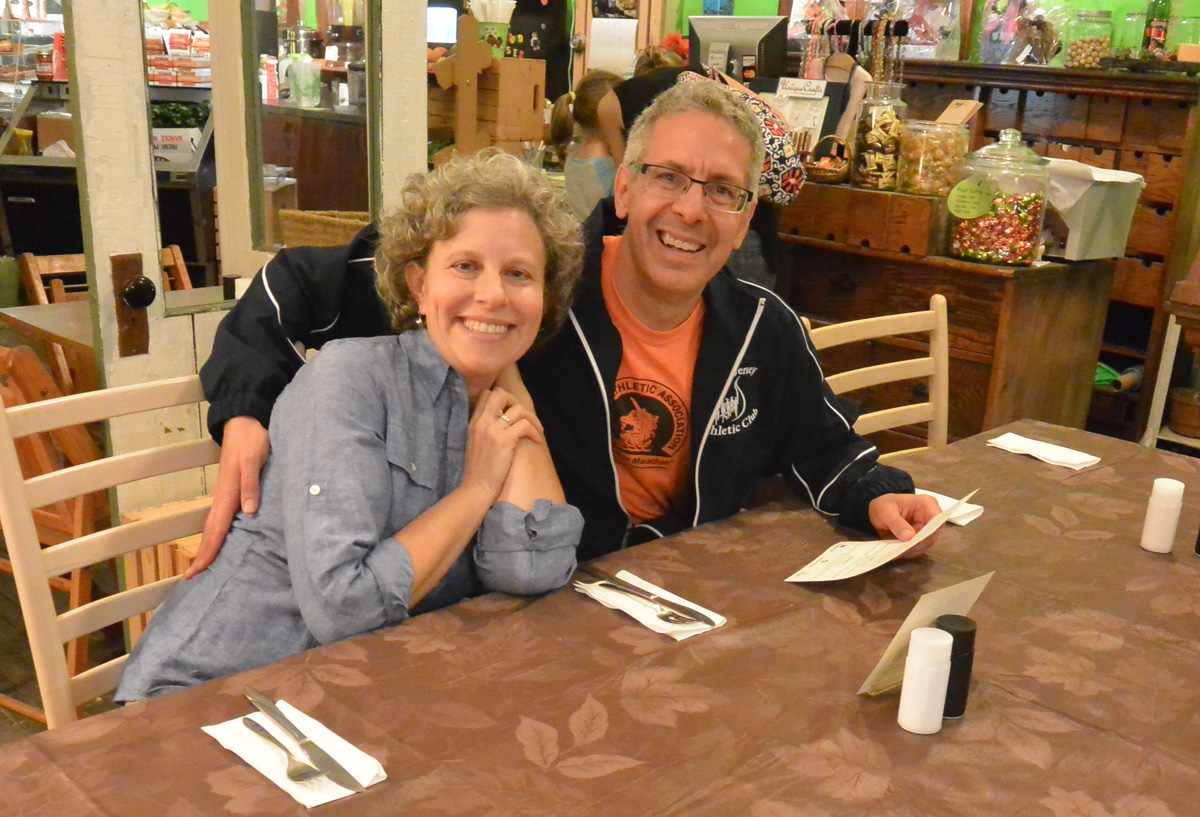
Steve and Caren at Palate Cafe

Steve and Caren at Palate Cafe

Tony, Kat and Frank getting ready to have a pasta feast.
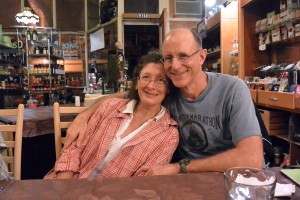
Tony, Kat and Frank getting ready to have a pasta feast.

Kat , my number one supporter, and me, Frank

Kat , my number one supporter, and me, Frank

The dinner at the Palate Cafe and Juice Bar was acceptable, not spectacular, but it was pasta.  We felt we had served our bodies well in the carbohydrate loading department.  It was a family style affair, though, seeing the steaming pots and the rest of the preparation area assembled in a corner of the store usually used for other purposes.  After dinner, we met up at a small bar down the street for a beer, the one beer I would have the night before the big event.  We were definitely out-of-place at this locals hang-out.  There were a few of the regulars standing outside smoking, and Tony seemed a bit intimidated by them, although he’s a lot bigger and stronger than they were.  Inside, the choices for beer were limited, and they definitely focused on the usual, Bud, Miller and Coors.  I asked for a Sam Adams, which was on tap, and without any evil look the bartender poured me one.  I was grateful.  Caren paid the tab for us and we sat at a small table near a group ranging from grandma to young adult-on-iPhone playing electronic darts.  Now they did give us an evil eye or two, having crowded in on their territory.  Our nervousness about the next day started to come out as we sat and drank, thinking about the weather, and the prediction for warm and humid conditions.  After the beer, we drove back to our hotel in relative silence.

Kat and I settled back in our room, the large space intended for meetings, and got into the Murphy bed.  It was no regular bed, with awkward straps holding up a thin mattress.  One had to adjust one’s body so that the hips and shoulders appropriately fit in the hollows created by the straps.  I slowly drifted into dream world, thinking about what to wear the next day.

The morning of the marathon I arose early, waking at my usual 5:00 AM.  I checked the weather on my iPad.  It didn’t look too daunting, with light rain and temperature in the mid 60’s at that moment.  I could hear the rain outside, and it sounded a bit more than “light”.  I decided to go with shorts and my club singlet, and my Saucony compression knee-high socks.  Donning some light cover up pants and a jacket, I headed out to get breakfast, nicely set out for us runners by the hotel staff.  They came in early to set up, since they usually don’t start serving until 6:00.  A number of other runners were there, having a coffee and some oatmeal.  My club mates, Steve, Brian and Tony soon arrived, and we had breakfast.  I went with the oatmeal, too, but Brian went for the pour-your-own waffle, freshly cooked in the waffle iron.  After a bit more conversation and a second cup of coffee, we gathered our stuff and headed out.  Caren was nice enough to drive Steve, Brian and me to the start, in Bath, N.Y., while Tony headed separately for the buses in Corning.  Since he was doing the half marathon, his start was half way down the route from our start.  We gathered up a hill in Bath at a Philips Lighting Company plant.  We were not aware at the time that the plant had closed, laying off 280 workers.  It appears that due to changes in demands in the home lighting industry, this plant made the wrong type of bulbs, and so rather than change the technology in the plant, the company, based in the Netherlands, decided to close it.

The start area was well equipped for the runners.  There were plenty of portable toilets, and UPS trucks were waiting to take our bags to the finish line.  Since the Boston bombing, all running events where bag check is allowed have gone to allowing only clear plastic bags provided by the race.  It’s a bit like making every passenger remove his or her shoes to board a plane, since there was an attempt to set off an explosive in a shoe in the famous “shoe-bomber” incident.  As we gathered for the start, it was misty and a bit warm.  The runners lined up, there was a very nice rendition of the Star Spangled Banner by a local singer, and then we were off.

I get an odd feeling starting a marathon.  I don’t know whether I’ll cramp up or when, whether my training will prevail, or how long it will take me to get to the finish.  One thing on my side, I’ve finished every one of the eight marathons I’ve run to date.  As we headed down the hill I was reminded of last year’s Steamtown Marathon.  That start was a long down hill run, but this one was only about a half mile before the road flattened out.  In spite of the warm, humid conditions, I was feeling alright.  I kept reminding myself to keep my pace in check, and I kept it around an 8’35” pace, according to my trusty Garmin.  I have the 305 model, with a large face which one of my friends referred to as a Dell laptop on my wrist.  It is easy to read on the run, though!

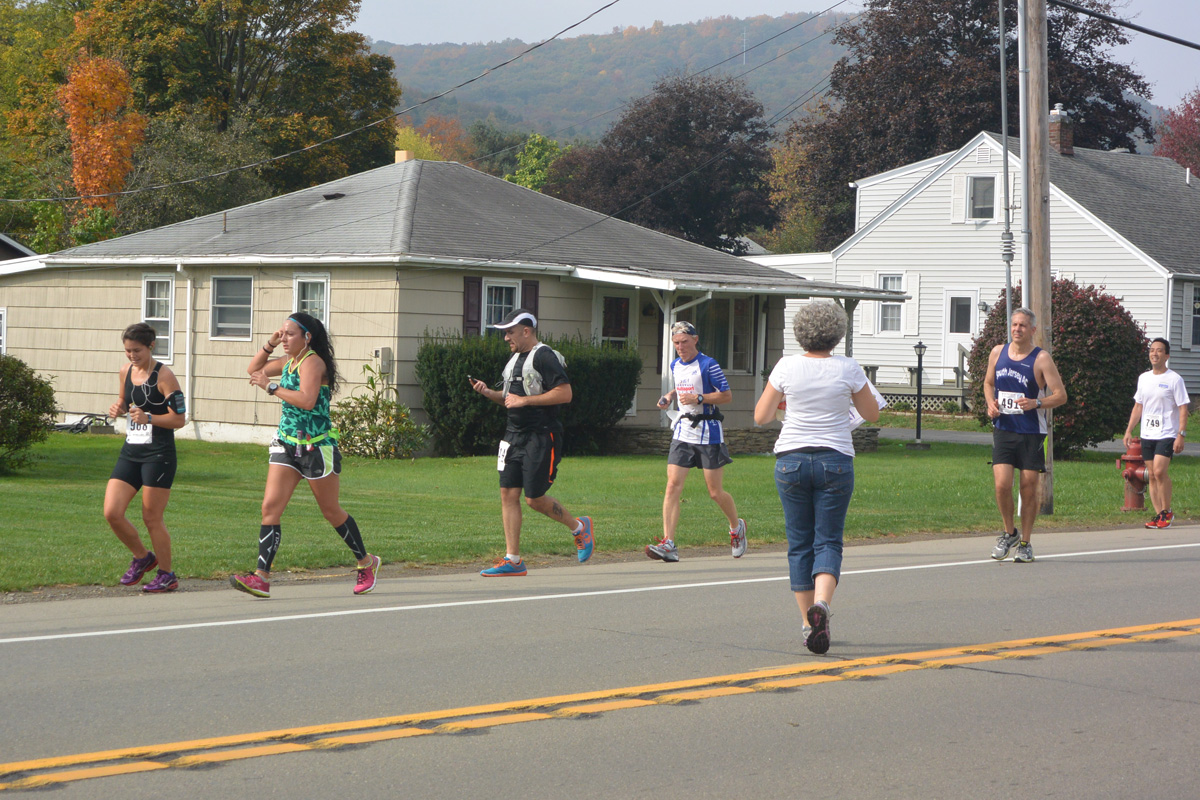
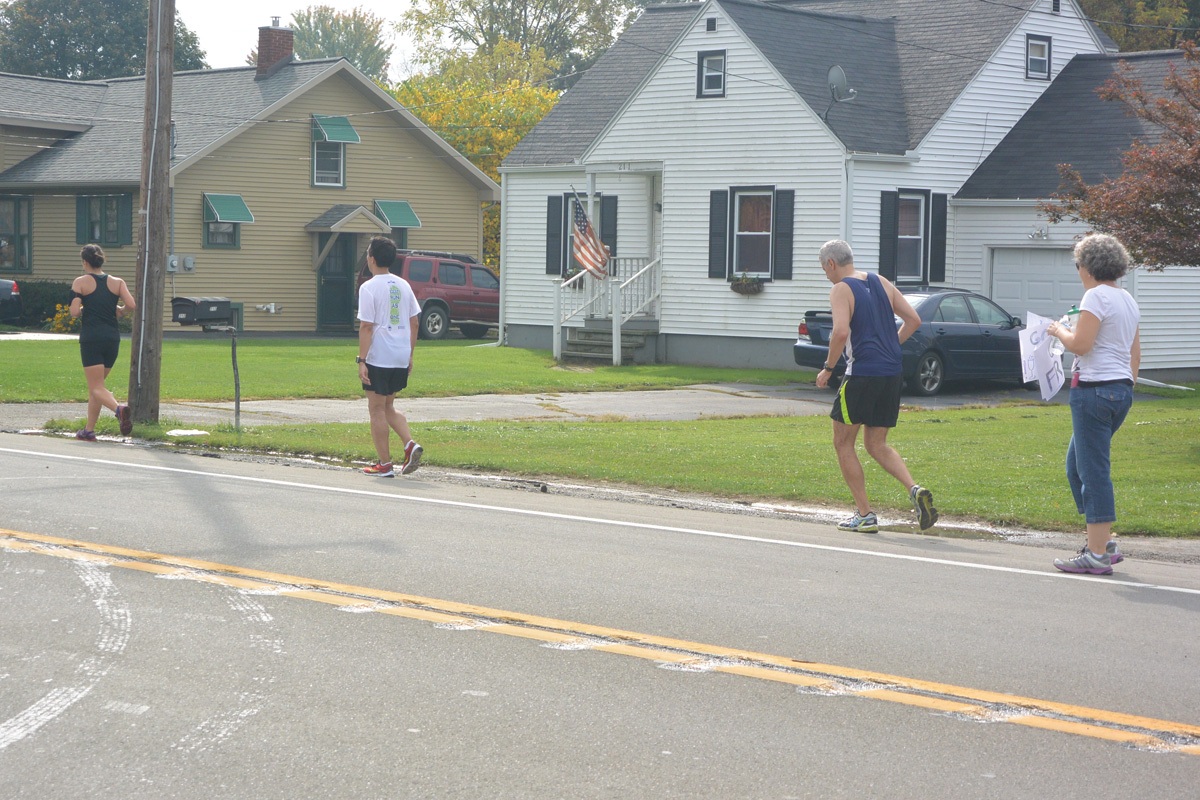
The early part of the race was very nice.  My pace was good, the legs felt good, and the scenery was quite attractive.  We could see the surrounding hills with trees turning colors, and there were ponds reflecting the colors.  We passed through a few very small towns, and some of the locals came out to cheer us on, but they looked a bit sleepy, standing by the side of the road, coffee cup in hand, and not saying much.  Moving on, Steve, running with me, and I were greeted enthusiastically by Caren and Kat, who were driving from cheering stop to cheering stop to give us support.  I stopped for a moment to let Kat get a photo, but she yelled “keep going”, and I did.
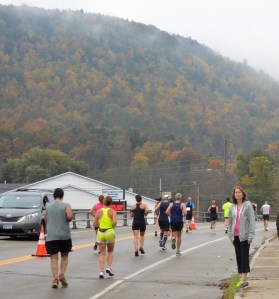
Frank (L) and Steve (R) moving on.
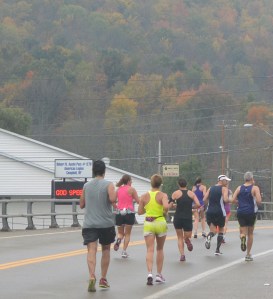
Frank (L) and Steve (R) moving on.

Hey Steve, how much farther do we have to run?

Hey Steve, how much farther do we have to run?

It did occur to me that I was losing a lot of fluid.  My clothing was soaked and clinging to me, there was a constant flow of sweat from the brim of my hat, and it wasn’t raining, so the wetness was coming from me.  I was stopping at every water stop, alternating Gatorade and water, and trying my best to keep well hydrated.  The trick to drinking on the run is to crimp the cup.  That way only a third of it sloshes out of the cup on me and my shoes, and two-thirds goes down the right way.  We got to the half way point still feeling fairly good.  By this time, the crowds had picked up and were very enthusiastic.  After passing through the 13 mile mark, there is a significant hill, but it is the last of the real climbs.  As we got into the second half, I started to feel the first signs of trouble from my legs.  There were little twinges of muscle spasm coming from my calves, and I was getting concerned.  The last time I passed her, my wife held out a water bottle filled with sports drink, which I grabbed and downed along the route.  I also was taking gels, about one every six miles.
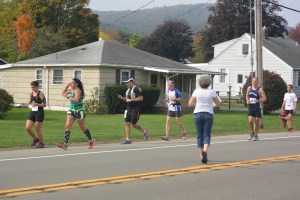
Caren, heading out to give Steve some encouragement.

Caren, heading out to give Steve some encouragement.

She may have been telling him to "be careful, we need you at home".

She may have told him to “be careful, we need you at home”.
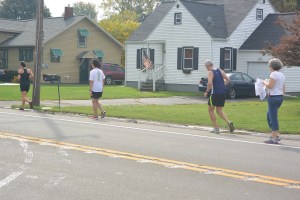
He was looking better just a moment ago.

He was looking better just a moment ago.

Perhaps the photos project the warm and steamy conditions we were facing.  The rubber bands had snapped, the legs had turned to pudding.  By around mile 18, both Steve and I were shot.  In spite of working hard to stay well hydrated, it seemed the loss of sweat, and the inability to get rid of body heat had taken a toll on us, and we both wound up walking a ways.  It really is amazing how much time one loses off one’s goal when the walking starts.  At this point I recognized that my hopes for a Boston qualifier were not going to become reality, so I did what I could to make it to the finish without hurting myself too badly.
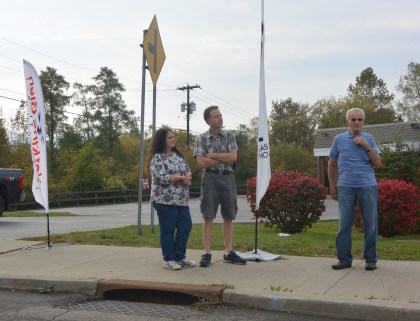
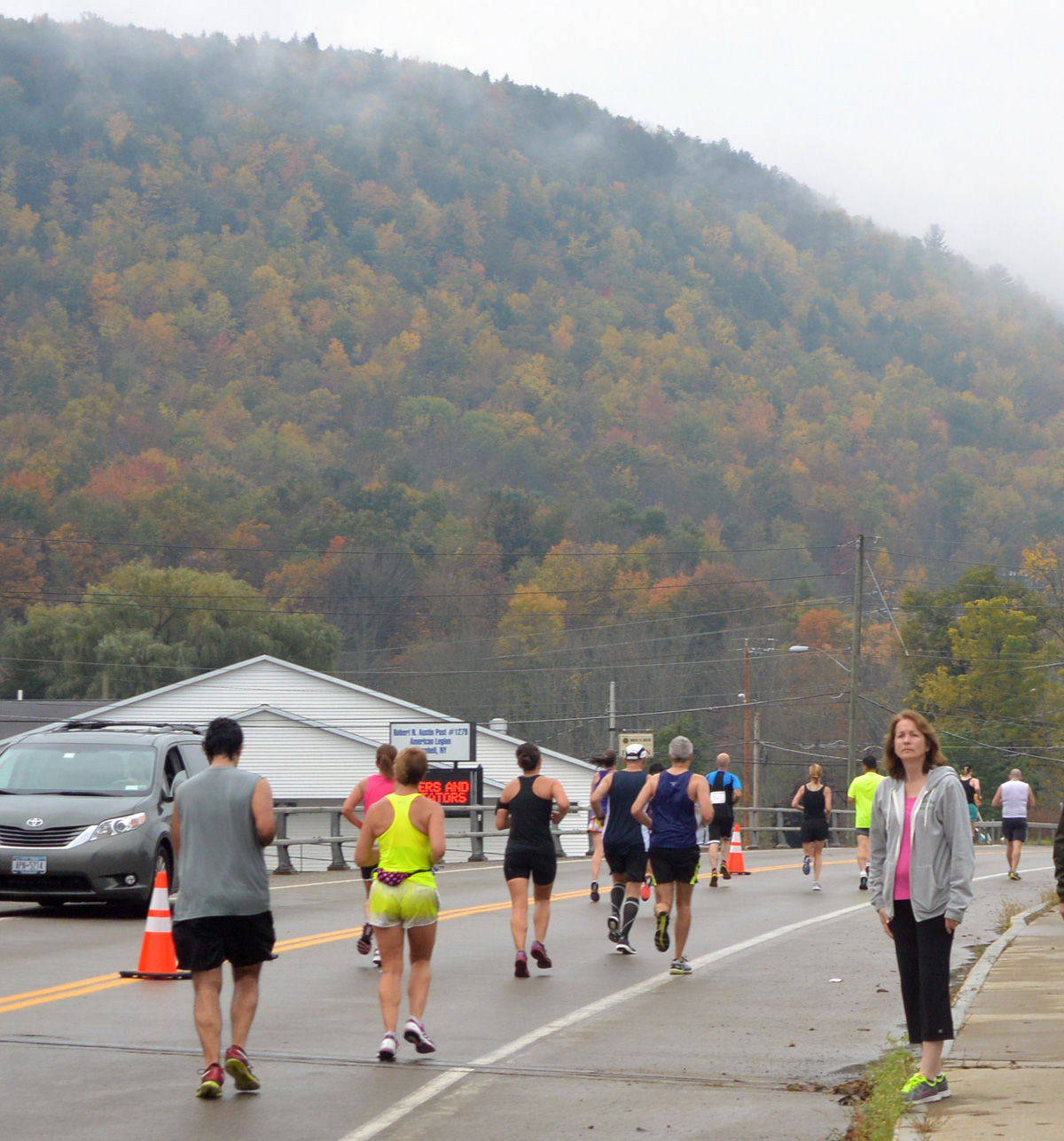
Even the supporters along the route were a bit subdued.

Even the supporters along the route were a bit subdued.

My legs were toying with me.  One moment I was able to run, the next they were cramping up and sticking out to the point I could hardly stand.  I was reminded of Peter Sellers’ arm in his role as Dr. Strangelove, and his “alien hand syndrome”.
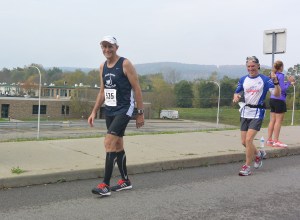
Walking was the best I could muster around miles 18-20.

Walking was the best I could muster around miles 18-22.

After some walking, some more Gatorade, and another gel, I felt revived enough to run again, although I had completely lost my stride.  I was able to manage around a ten minute mile, and I kept trudging along.  I noticed an awful lot of other runners doing the same at this point.  My plan, what I had practiced for, was to pick up my pace at this point to go for a good finish.  That plan will have to wait for another day.
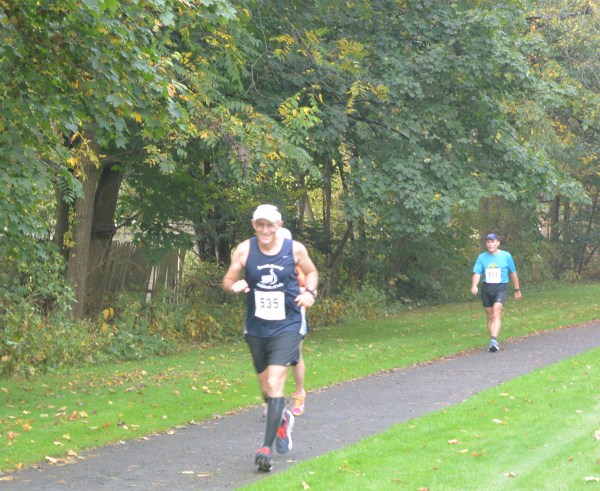
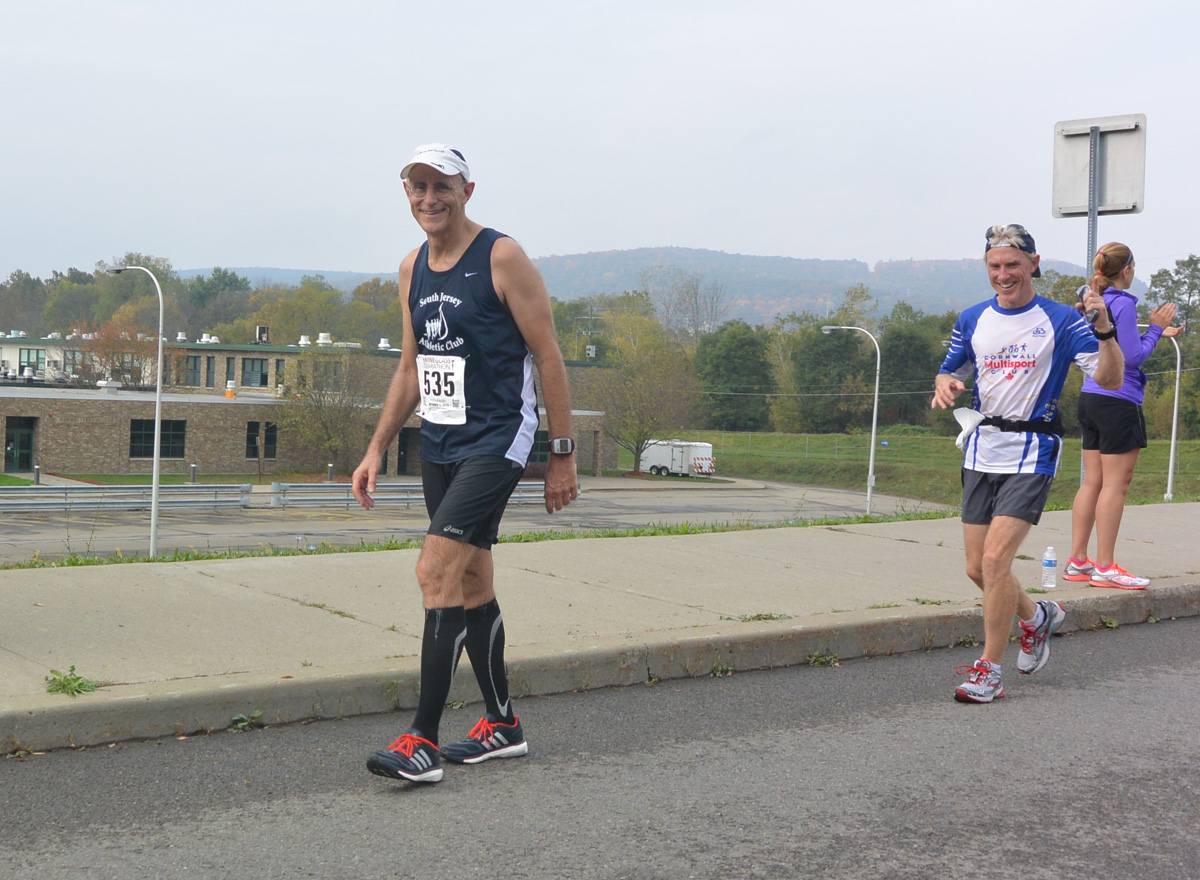
Back to a running stride, and trying to keep smiling.

Back to a running stride, and trying to keep smiling.

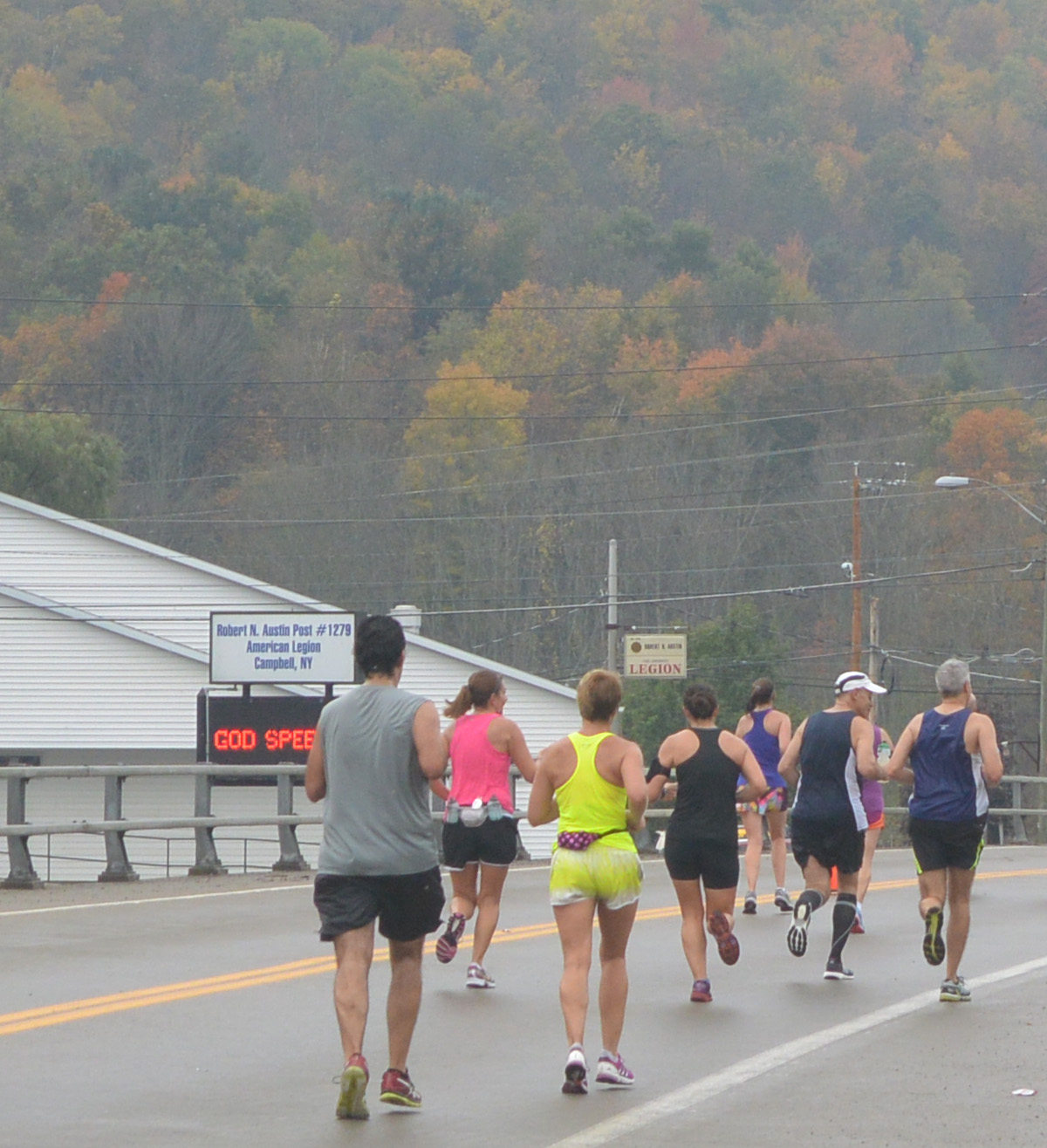
About the last four miles we headed through a park along a bike path, and I could see we were starting to get close to finishing.  The legs, while not working well, were at least working, and I managed to carry through to the finish line.  The last stretch before reaching Market street is over a bridge, with a slight rise.  This gave me cause for concern, but my fears were unnecessary, as I crested the relatively minor hump without incident.  On the other side of the bridge, Tony, having finished his half marathon, was cheering on runners and spotted me.  He yelled “go Frank, you’re looking good”, and it definitely helped.  The finish down Market Street is a very nice finish.  The crowds were out and yelling for us, and I could see the finish line in the distance.  I saw a bank sign with the temperature showing 80 degrees on that last stretch.  As I crossed, it was a great relief to stop.  I needed fluids, and I quickly downed two bottles of water and grabbed a third.  I received my medal, a large glass medallion in purple, hanging from a broad white ribbon.  I walked through the food line, took some broth and a few other items, and met up with Kat, who had spied me on the final stretch.  It was great to see her smiling face at the end of the race, and have her support all along the way.

After the race, we headed down towards the Market Street Brewing Company, where we all met up for lunch.  Brian had turned in a terrific performance, given the conditions, finishing in the 3:34 range.  I had come in at 4:21, and Steve a bit behind that.  We all agreed that the race organization and course were very good.  I would certainly like to do this marathon again.  I just would rather do it when it is in the 40-60 degree range and dry, not 70-80 degrees and humid.  But, one can’t plan that part of the marathon, and you take the conditions as they are.
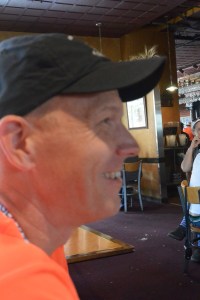
Brian, who turned in a great time.
Brian, who turned in a great time.

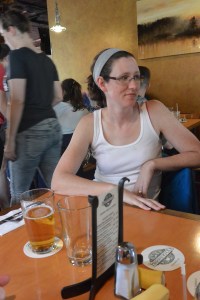
Brian's wife Sara, displaying the sleeveless "T" look for a hot day in October.

Brian’s wife Sara, displaying the sleeveless “T” look for a hot day in October.
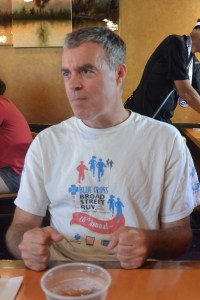
Half marathon man Tony, who will be running Boston this spring.

Half marathon man Tony, who will be running Boston this spring.

Steve, who suffered the most this marathon.
Steve, who suffered the most this marathon.

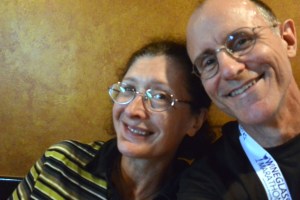
Kat and humble author Frank, two beers down.
Kat and humble author Frank, two beers down.

Wheeling around Western Mass.

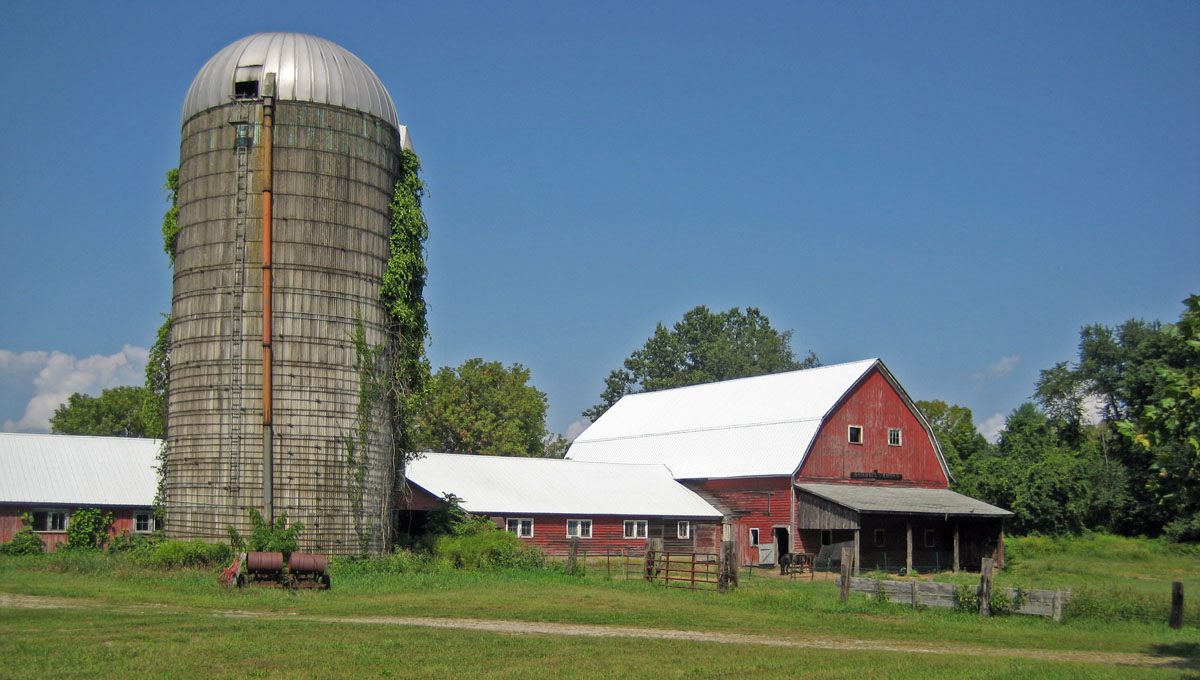
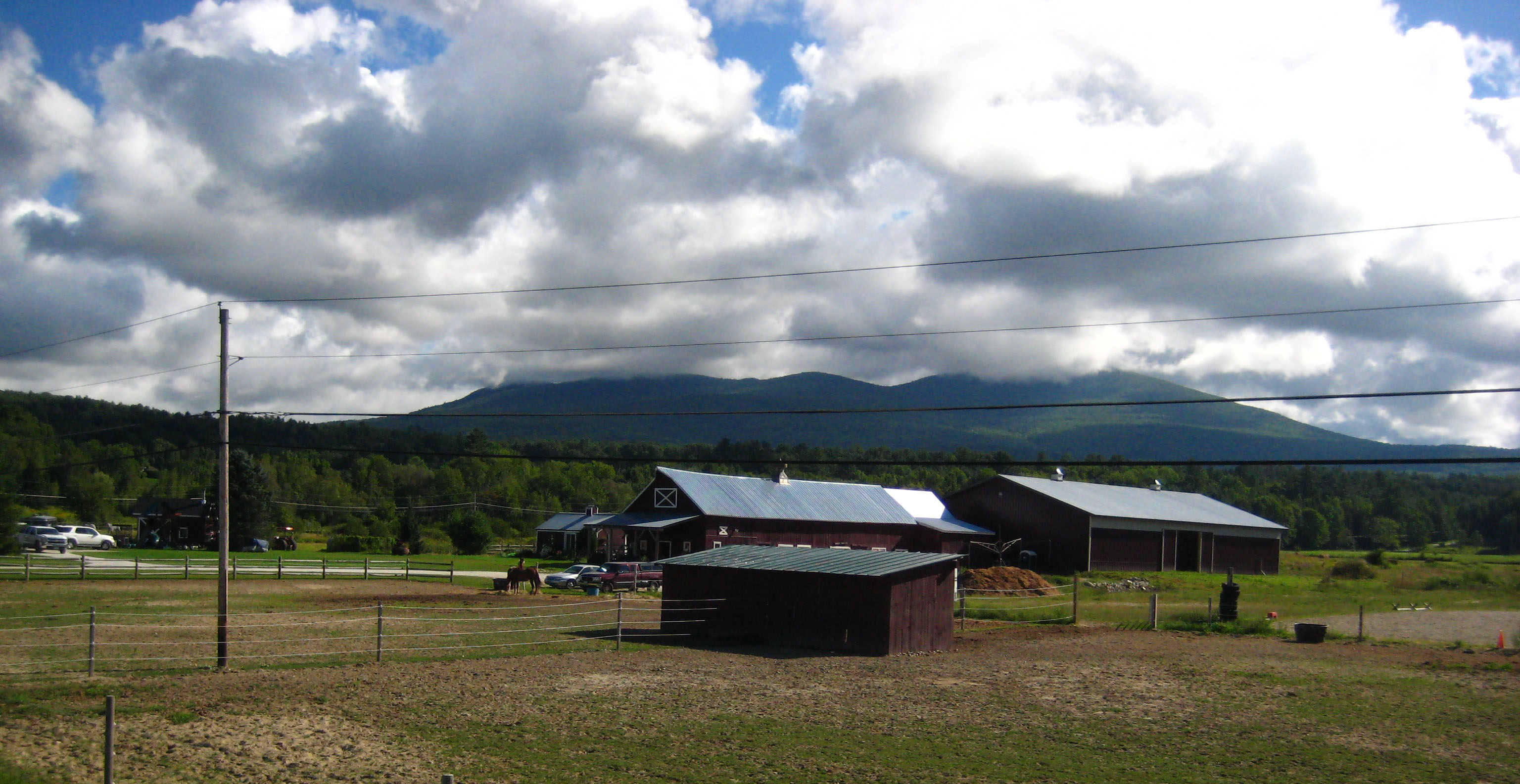
Picturesque New England farm in western Massachusetts

Picturesque New England farm in western Massachusetts

I’ve discovered that running is not bad training for cycling, but cycling does not really cross train one for running. Nevertheless, it is a decent break in the marathon training schedule to take a few days off from running. What better way to maintain some cardiovascular fitness than to spend four days cycling in the hills of Western Massachusetts?
I have been heading up to Northampton, “Noho”, every summer for the last ten years to spend time road cycling with an outfit called Ride Noho. My discovery of this cycling camp experience started with a trip to Italy in 2002, to spend a week cycling at the Italian Cycling Center. This is a cycling camp created by the curmudgeonly George Pohl, who, it was said, knows a whole lot about cycling, but won’t tell you all you need to know. The idea of the camp was to have a home base in one place and take rides in different directions each day. It is based in the tiny town called Borso del Grappa, or “pocket” of (Mount) Grappa, which is at the edge of the Veneto, and at the foothills of the Dolomites. I spent a challenging week there with two of my friends, going on rides up switchback roads into alpine highlands above Valdobbiadene, through narrow paved streets of towns like Asiago, and plummeting back down the mountains to neighboring Basano. Our fellow riders were accomplished road cyclists, most of whom spent some time in amateur racing. George kept the challenge going in the evening during prosecco hour, when we had gathered at the outdoor patio to enjoy a glass of the area’s signature sparkling wine.  George read the menu choices only once, and stared disapprovingly, and silently, at anyone who dared ask him to repeat an option.
Looking for a similar experience of challenging cycling without the expense of traveling to Italy, I discovered Ride Noho. It turns out the creator of this outfit, Aldo Tiboni, had also been to the Italian Cycling Center. Instead of looking for a similar experience, he created one, although, as he points out, without the grumpy attitude. Aldo wanted the same approach, i.e., have a home base and take off on different rides each day.  For a very reasonable daily fee, one is provided overnight stay in a hotel or motel in Northampton, a delicious breakfast at Sylvester’s restaurant, a ride fitted to the abilities of the cyclists, and lunch at another Northampton restaurant.  Dinner is not provided, but Northampton and the surrounding areas, including Amherst, have an overabundance of excellent choices for dinner.

Aldo Tiboni, of Ride Noho

Aldo Tiboni, of Ride Noho

Aldo, the creator of Ride Noho, is a remarkably nice person.  He’s also one mean cyclist.  He seems to live for the ride, at least in summer, when he goes out almost daily with groups of varying skill, taking them on rides through the undulating countryside of the northern and western parts of Massachusetts.  Accompanying him, and providing inspiration for anyone who feels sex or small size is an inhibiting factor, is Elaine, his beautiful and athletically gifted wife.  Elaine is a dynamo disguised in the sweetest demeanor.  She can hang with all but the fastest cyclists, climb as if she’s dancing on the pedals, and keeps a mother hen’s eye on everyone to keep them safe.

Eileen, being the center of attention, deservedly so.

Elaine, being the center of attention, deservedly so. (photo from 2011 trip)

Over the last ten years I’ve had many great rides with Aldo and Elaine.  We’ve done the Cosby ride, the backwards Cosby, the ride out to Shelburne Falls, out past Amherst, and taken a few climbs up the short but steep climb to Sugarloaf Mountain, in Deerfield.  We have done a one hundred mile ride into Vermont and back.  The most memorable rides, though, have been our climbs to the peak of Mount Greylock.

Mount Greylock in the distance

View from afar of Mount Greylock

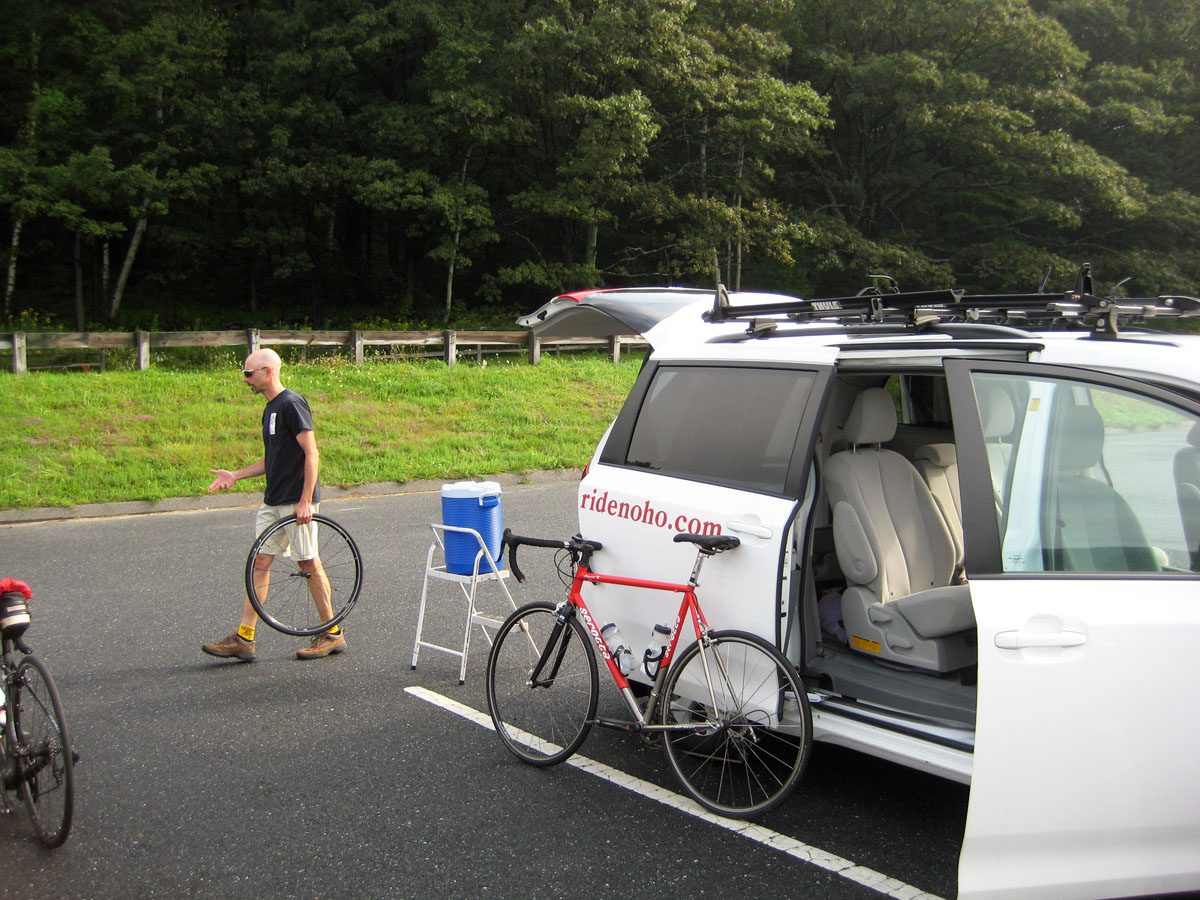
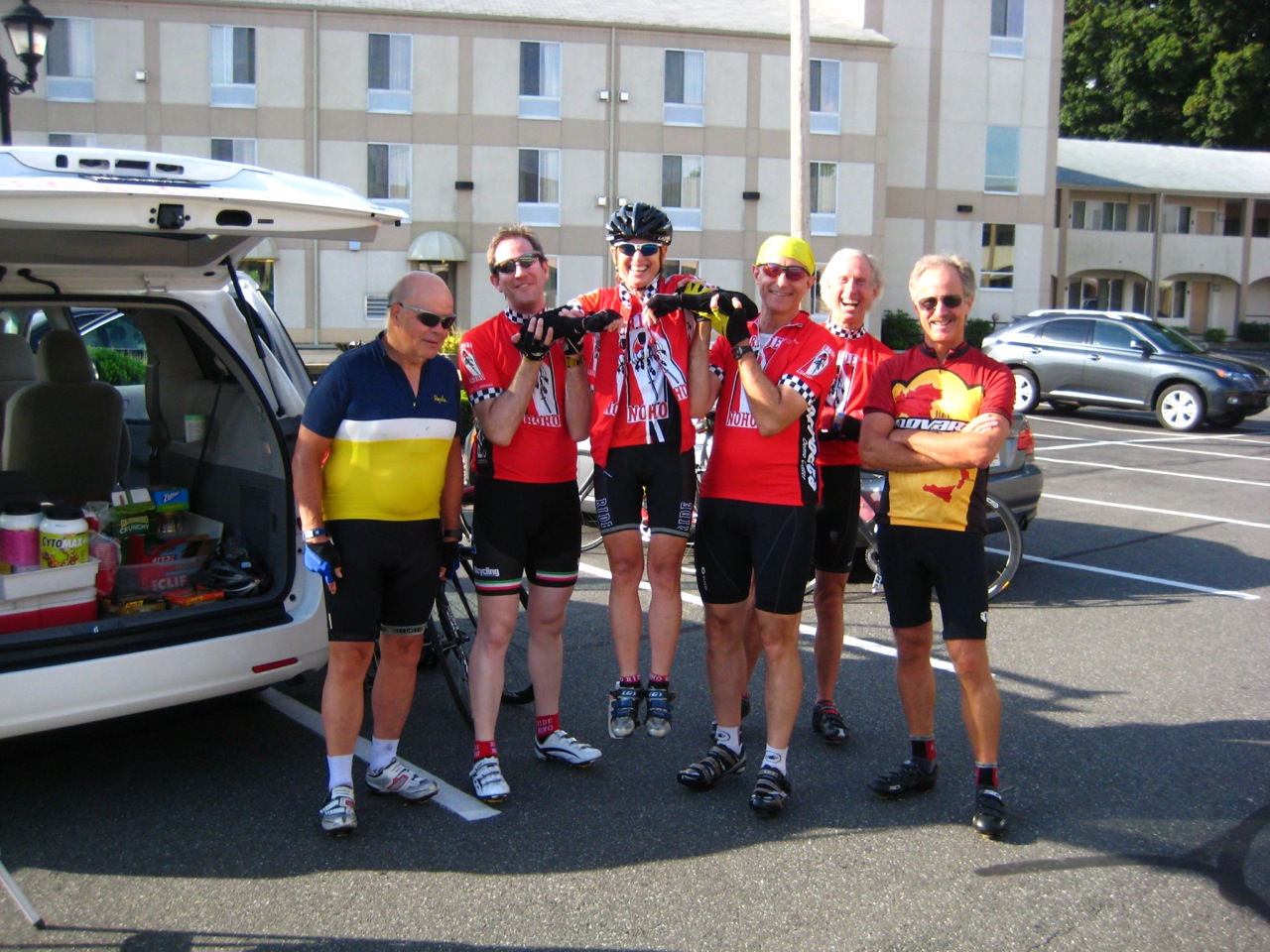
Mount Greylock, the origin of the name is a bit obscure, sits in the upper western part of Massachusetts, in Adams, near Williamstown.  It is the highest mountain in Massachusetts, and has an impressive view from the top extending more than 100 miles.  While it is possible to make a long cycling trip starting in Northampton and finishing at Mount Greylock, or even doing a 100-plus mile round trip, our usual approach is to drive to the ranger station on the southern route up the mountain and start our ride from there.  This past August we did just that.  My friend from college, Keith, who lives near Boston, and I were the only two guests of Aldo and Elaine this week.  We started out early from Northampton with our bikes secure in the rack atop Aldo’s van.  We stopped along the way at the marvelously named “BreadEuphoria” bakery in Haydenville for some coffee and a pastry.  About an hour later we arrived at the ranger station.  Meeting us there was Bob, friend of Aldo and Elaine, and co-leader on many of their rides.  Bob is in his 60’s, eats vegan, and lives an idyllic life in the hills of western Massachusetts, doing what he likes, which is cycling.  On the off chance Aldo has attracted some hammer heads who can really move or climb, Bob is there to work them until they are exhausted, and have gotten their money’s worth.  To Bob, it seems like a walk in the park.

Bob and Aldo

Bob and Aldo, getting their bikes ready for Mount Greylock.

Since neither Keith nor I are in the category of “hammer head”, Bob also serves another function, which is to be absolutely entertaining with his knowledge of the history of the area, his wry sense of humor, and general good nature.

The ride starts from the parking lot of the ranger station with a fast descent down Rockwell Road.  We then do a long route around the base of Mount Greylock, taking on a few hill climbs to get the legs ready, and stopping for a quick restroom break at Williams College in Williamstown.  Each time I have done this ride I have been reminded by my companions what a great art museum Williams College has.  One of these days, I will need to go check it out.  Williamstown is also the staging town for the start of the Long Trail in Vermont, which starts a few miles northeast at the end of Pine Cobble Road.  That’s another of my desires, to someday hike the Long Trail in Vermont.  Leaving Williamstown, we continue on to Notch Road, and the start of the ascent.  From this, the northern approach the elevation starts at about 1200 feet.  The route to the top is about 8 miles, and the summit is at 3491 feet.  The climbing starts quickly and sections of the climb reach the upper teens in percent grade.  One does get a little break from time to time where the road almost levels, but then the climbing starts again.  At around 3200 feet there is a mile of flattish rolling road which is a nice respite before the final climb to the summit.  While not the longest or most difficult climb I’ve done, this ranks up there in the top ten, and has certain characteristics which make it stand out.  It is a particularly scenic climb through natural forest.  The road surface, while pretty good most of the time, does have ruts, ice heaves and warning bumps where hiking trails cross.  Car traffic is light, thankfully.  And the view from the top is very impressive.

We all started together although Bob quickly went off the front, presumably to make sure no earthquakes had taken out sections of the road.  Aldo was behind him, but not by far.  Keith, Elaine and I started together, but I stopped along the way to snap a photo of an odd looking building.

Odd structure along Notch Road, up Mount Greylock.

Odd structure along Notch Road, up Mount Greylock.

Keith and Elaine kept going, while I tooled along, keeping a steady climbing pattern going.  In the saddle at my lowest gear, out of the saddle a couple of sprockets up, then back to sitting kept my climbing going.  Close to the top, I caught up with Keith and Elaine.  While Elaine was just being her protective self, she could very easily have shot up the mountain faster, Keith and I were dragging a bit as we crested the summit.

Near the summit of Mount Greylock.

Near the summit of Mount Greylock.

By reaching the summit, one joins a list of accomplished adventurers and naturists who have climbed the peak before.  This list includes Timothy Dwight IV, president of Yale University in 1799, the writers Nathaniel Hawthorne, Herman Melville, and Henry David Thoreau, and the physician and writer Oliver Wendell Holmes, Sr.  In 1929, a segment of the Appalachian Trail was cut to crest the mountain, and since then a multitude of backpackers have visited the peak.  Intrepid skiers of the 1930’s cut a ski run on the mountain called the Thunderbolt Ski Run.  It almost faded to overgrown obscurity until the late 1990’s when it was cleared of trees and brush.  Now, it is a challenging, steep run taken by skiers and borders who hike up, then descend the ungroomed, unlit, and unpatrolled fast and steep run.

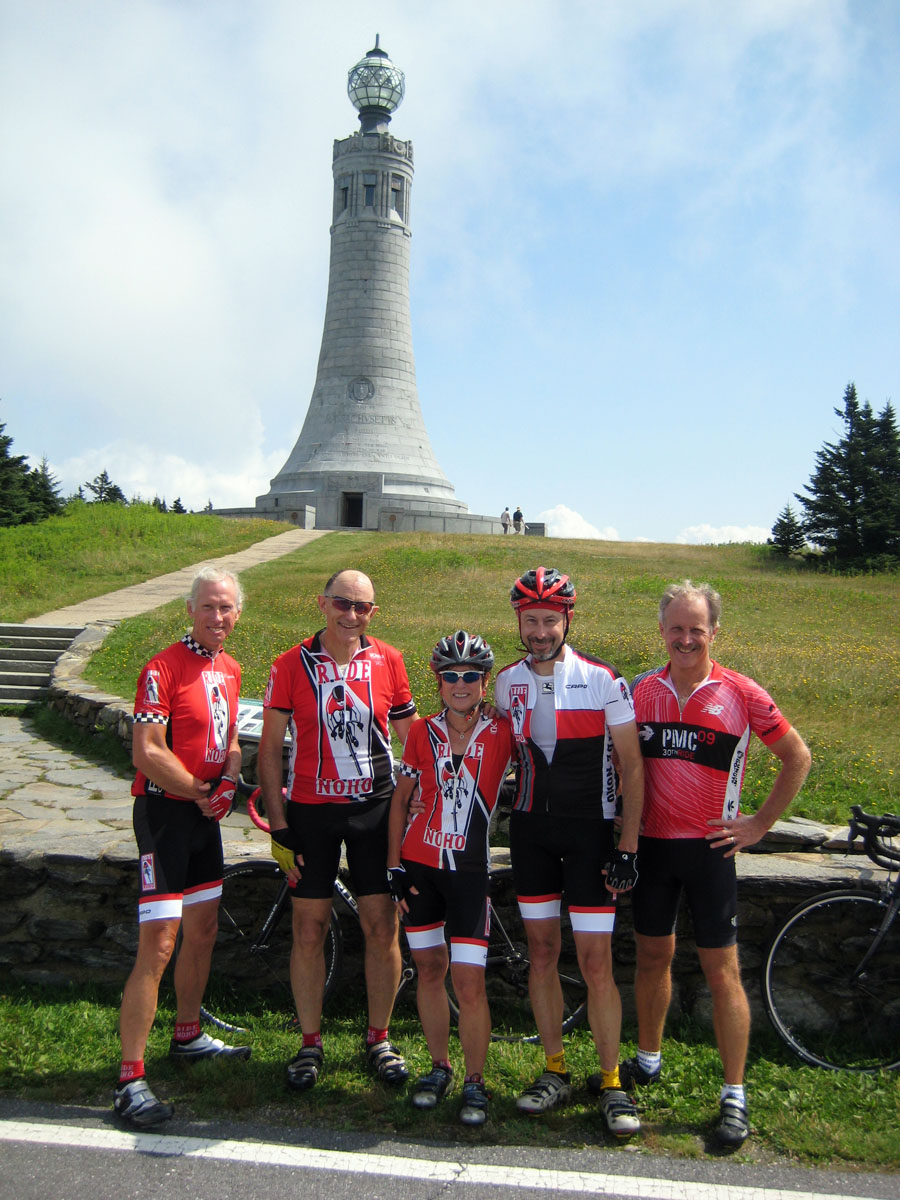
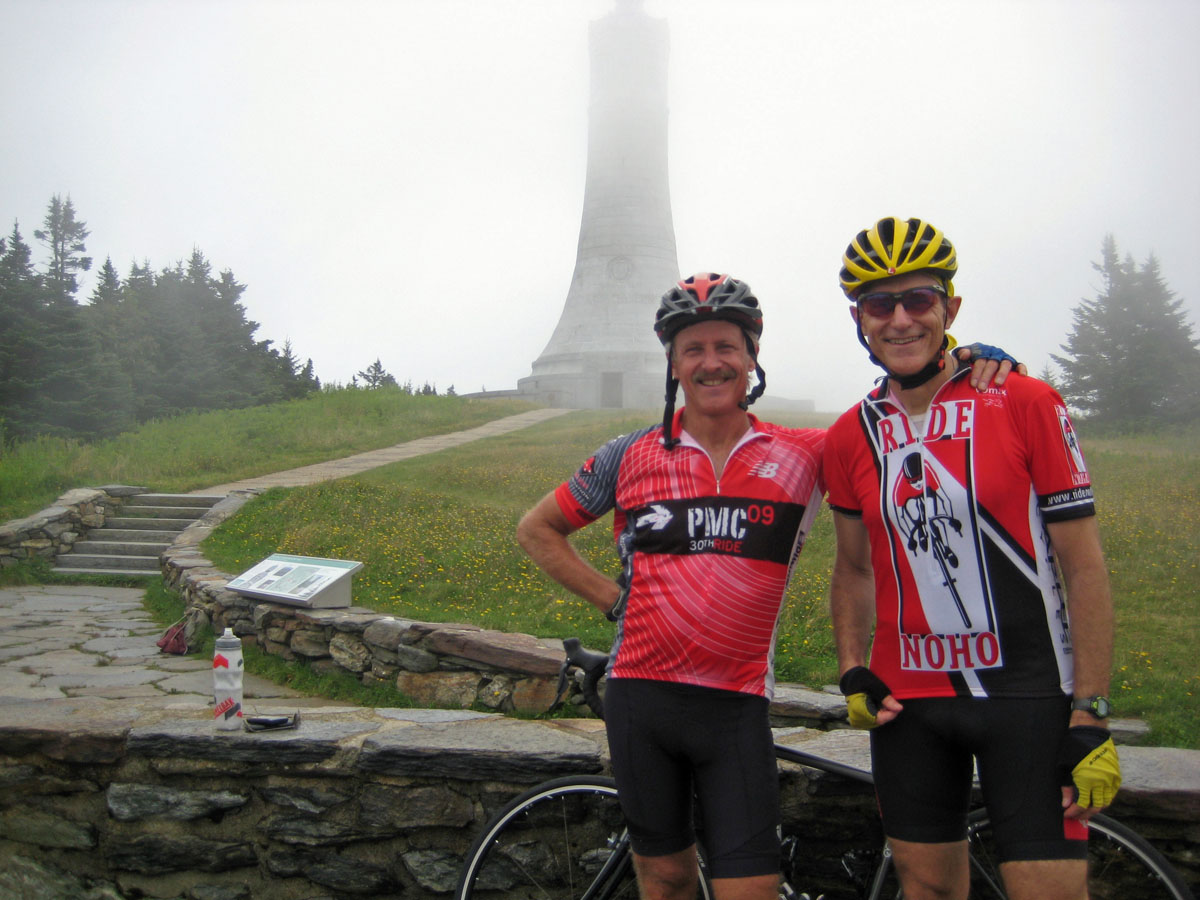
Bob, Frank, Elaine, Aldo and Keith at the summit of Greylock, with the Veterans War Memorial in the background.

Bob, Frank, Elaine, Aldo and Keith at the summit of Greylock, with the Veterans War Memorial in the background.

College friends Keith and Frank at the Greylock summit.

College friends Keith and Frank at the Greylock summit.

View looking east from the summit of Mount Greylock (2010 photo).

View looking east from the summit of Mount Greylock (2010 photo).

The weather at the summit can change quickly.  As we arrived, it was nice and sunny, with a great view.  Moments later we were enshrouded in a fine, chilly mist.  That was our signal to head back down.  The descent is not as screamingly fast as one would like, taking the southern route.  In fact, there’s a bit of a climb half way down, but eventually we made it back to the ranger station.  We cleaned up in the restroom, got the bikes back in the racks on top of the van, said adieu to Bob, and drove back to Northampton.
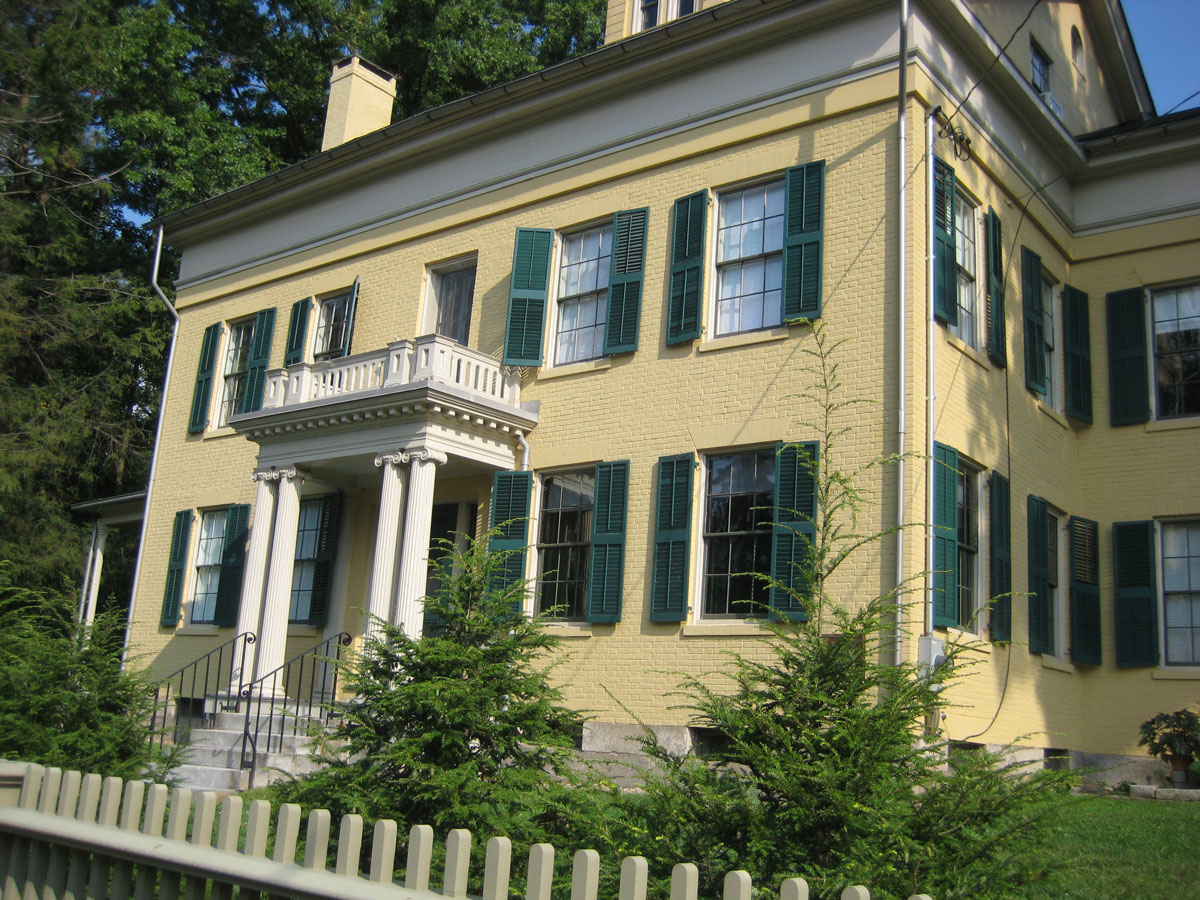
The last two days of our stay this year in Northampton we had two other rides through the bucolic surrounding countryside, including one through Amherst and past the home of Emily Dickinson, famous poet and recluse.  Her house is now a museum dedicated to her life and her works. Again, this is a worthwhile destination for exploring, like the art museum at Williams College, but one for another trip.  Not having read much of her poetry, but being familiar with it, I searched online for a collection of her works.  What I found astounded me, a 3000 plus page collection, only to find that almost all of it was published after her death.

Emily Dickenson House

Emily Dickinson House, Amherst, Massachusetts

The last night in town Keith and I ate at Northampton’s Argentine steakhouse, Caminito, reminiscing about old college days, rides we’d taken, and keeping each other up to date on what career paths our kids, now in their twenties, are taking.

Aldo and Elaine provide an excellent cycling experience with Ride Noho, for all levels of riders.  But my trip to Noho is just as much about getting together with an old friend (or several, when we have a larger group), and unhitching from the stress of daily work.  As for my upcoming marathon, well, we’ll just have to see how it goes.  I’m feeling pretty decent with my training, and I don’t think taking off the four days from the running schedule will seriously impact my performance.

Frank K.

“Experienced” marathoner

It may be hard to believe, but this summer is nearly gone. This means the next marathon is looming larger in the near future. For me and my training partners, that date is October 6, for the Wineglass Marathon in Corning, New York. Having now run seven marathons, I am more aware of what is coming. Standing out most clearly in my mind is recalling how, at some point in most of the marathons I’ve run, I tell myself how utterly crazy it is to torture myself this way. Why would I willingly choose to go through the muscle pain in my legs, the pains in my shoulders, the bleeding, the chafing, and sometimes the near delirium, just to say I had done it? While many in our club have run many more marathons than I, I am starting to get the gist of it.

We have several new runners in our club who are planning to run their first marathons this fall. Some have been running with us on our long Sunday runs, and a couple run on their own but tell me how they are doing. To a person, they ask for little advice, but mostly are quite fixed on their training plans. They all have that holy grail of the marathon runner in mind, the Boston qualifying time. When we (our Sunday group) hear this, like a chorus we say, “just work on finishing”. There is little one can say that helps the naive runner get through their first marathon. We offer the familiar advice of not going out too fast, sticking to a plan, hydrating, eating appropriate numbers of gels throughout the race, and preparing ahead with BodyGlide and bandages. Much of this is relative. What is appropriate hydration for one person may be way under or over for another. How many gels, how often, something other than gels, is pure guesswork.

Some advice is sound and well grounded. It is a good idea not to wear brand new anything, especially shoes, for your first marathon. Even that, though, I’ve ignored, when I wore brand new knee high support socks for a race last fall, not having worn anything like them before, and loved them. How to dress is a tough call. Personal preferences, temperature at the start, where that temperature is headed, sun, clouds, humidity, all figure in to that guesswork. I think I changed my mind about ten times the night before my first marathon. In a race that starts early and goes several hours, conditions can change dramatically. Or, they can stay the same. For my first marathon, Philadelphia, 2008, the temperature never got above freezing. It started in the low 20’s with a bit of wind. The water stops were sheets of ice, not very safe to run, or walk on. The next year, that same race started in the mid 40’s and rose to the low 60’s, practically perfect.

Another piece of guesswork is what to eat the night before. I doubt any marathoner would consider it a good idea to eat a huge meal, redolent with fat, and washed down with many glasses of wine. No, save that for the afterparty. Pasta is the standard, but anything light and easily digestible makes sense to me. Is beer okay? My feeling is yes, “a” beer is okay, and probably helps one relax and not be too wound up.

The first time on the start line of a marathon, the atmosphere is euphoric. Dropping one’s bag at the right spot, managing to make it to the portable toilet for one last squirt, finding one’s way to the proper corral, squeezing in with the other runners, and sensing the collective anxiousness makes for a unique, numbing experience. Other runners are wearing giant trash bags with holes cut for the arms and head. Some are stretching in their limited space. Some are chatting incessantly with friends, all of whom are wearing earbuds and probably already listening to some inspirational play list they have created. And some are quietly looking ahead, perhaps playing out the course in their minds. All of this is in a swirl around the new marathoner who is unaware of how the race will unfold.

I plunged right in my first time. It takes a while to actually get to the start once the gun goes off in the bigger city marathons. There’s a shuffling start, corrals move up, and then one gets caught a little off-guard when the start line is actually underfoot. I remember starting my Garmin as I crossed that first detection pad, hearing the faint cacophony of beeps as the chips get registered, like the sound of locusts. Then, one’s own personal best for a marathon is underway.

I am very pleased to see new runners in our club taking on this challenge. I think they will have an experience that will change them for a lifetime. If, like me, they wind up getting sucked in, and go back time and again to challenge themselves, they will really change their lives. Each time I head to the start line now, I don’t know how the race will end for me. I know that I don’t know. But I have become aware of the routine at the start, the way I asses my condition as the race progresses, and certainly the warning signs of trouble, like cramps that all too often befall me along the way. I am still experimenting with strategy, modifying my starting pace, the way I drink during the race, and learning to slow down in the first half to be able to go faster in the second. It is quite a commitment to take on the training, typically about sixteen weeks, all for the one day event which may have great conditions, or perhaps awful conditions. I wish our club’s new marathoners, and anyone else tackling this for the first time, a satisfying and fulfilling experience, that will cause them to come back again.

Frank

Summer cooking for runners: Fish Taco Dinner

A monkfish in it's natural element.

A monkfish in it’s natural element.

Summer is going fast.  Here we are, already in August, and it seems the autumn races will be on us in no time.  But while it is still here, summer is the time to enjoy cooking on the grill, and eating the fresh produce available locally.  Certainly there is an abundance of fresh vegetables and fruits now.  This report will focus on a nice way to enjoy grilled fish.

The fish taco has a great many variations, and there are those who would argue for one over another, one being more “authentic”.  Paying no attention to purists, this is my version of this dish, along with an accompanying vegetable medley.

Menu:  Fish Tacos (or fish fajitas)

Bean, Corn and Pepper medley

The main attraction of this dish is the grilled fish.  Two of my favorites for making fish tacos are Mahi Mahi, otherwise known as dolphin fish:

Mahi Mahi

Mahi Mahi

and monkfish, a really bizarre bottom dweller known as the “poor man’s lobster.”  It is also known as having all head and tail and no body, and the tail, cheeks and liver are the parts that people eat:

Monkfish in the market

Monkfish in the market

In most markets, one won’t see the whole monkfish, just the tail portion.  Both of these fish are generally available, and are not considered endangered.  There is a tagging program for monkfish run by the National Oceanic and Atmospheric Administration of the US government, and the website has some very interesting information on this fish, as well as great photos.

The mahi mahi is a tender, tasty fish which is very lean.  It can be cooked directly on the grill, but I prefer to grill it on foil, to protect it.

Mahi mahi filet prepared for grilling.

Mahi mahi filet prepared for grilling.

I used a mango chipotle marinade on the top half, for the fish tacos, and a sesame soy marinade on the bottom half, for another dinner.  On the grill, the cooking time varies depending on the intensity of the heat and the thickness of the fish.  It is done when it is flaky and cooked white all the way through.

Mahi mahi sharing the grill with some bison burgers and sliced yams.

Mahi mahi sharing the grill with some bison burgers and sliced yams.

I cook the monkfish the same way, on foil to protect it.  Monkfish is a lot denser than mahi mahi, yet it is still very lean.

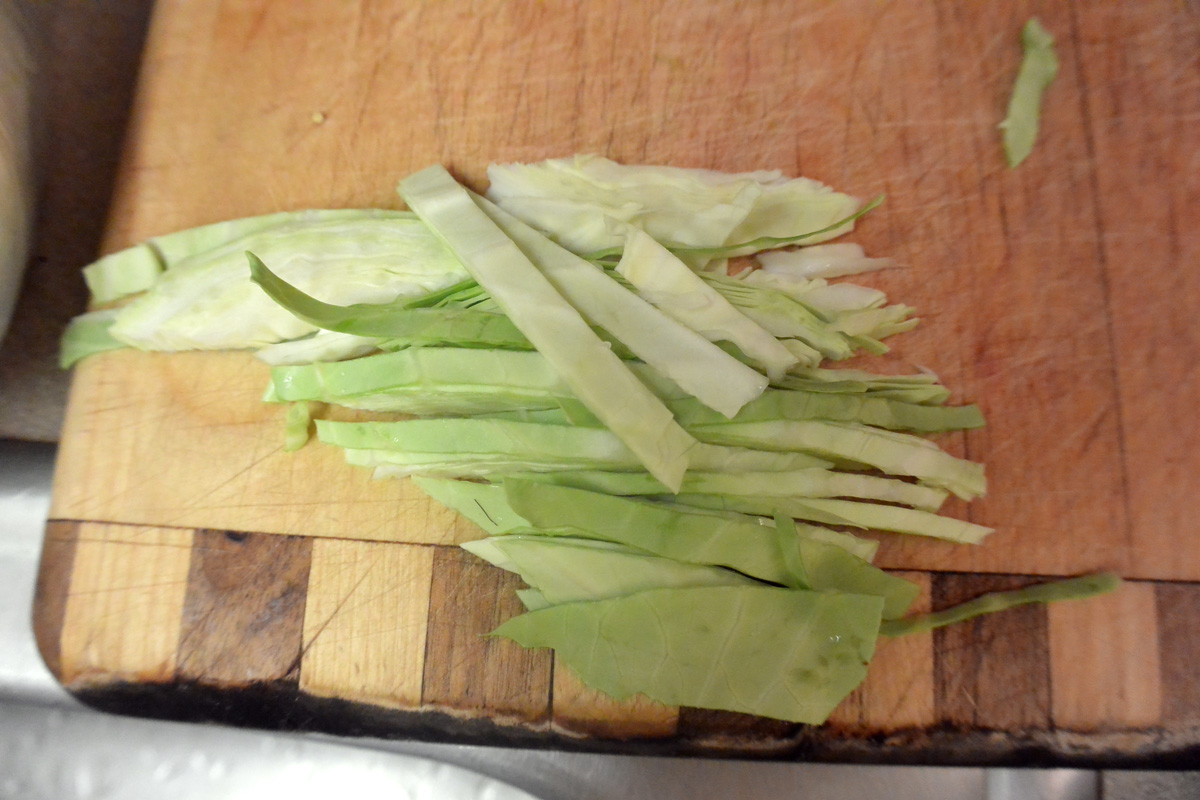
Shredded cabbage

Shredded cabbage

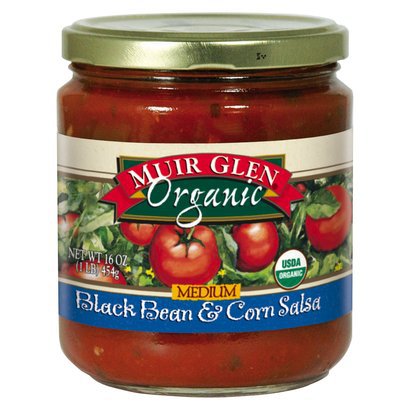
Black Bean and Corn Salsa

Black Bean and Corn Salsa

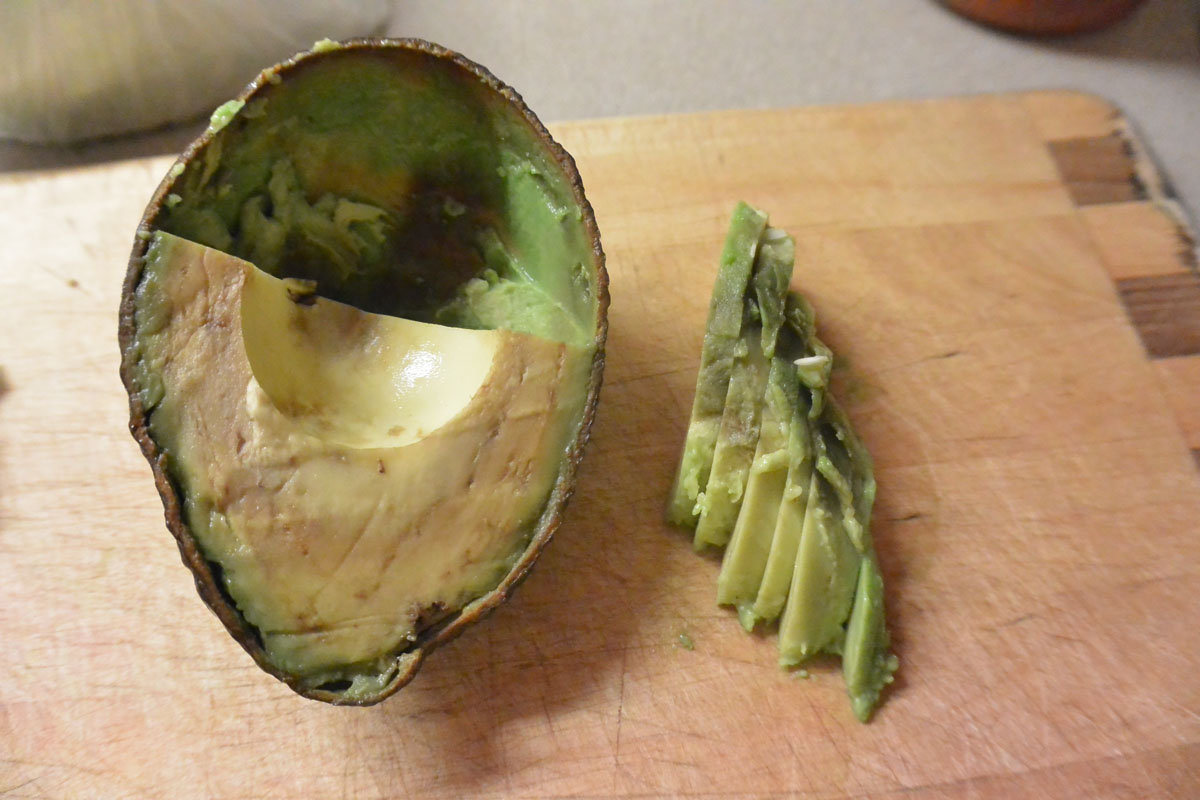
Avocado

Avocado

Assembling the tacos requires the following ingredients:

tortillas (of your choice, corn or flour, but they should be the large ones)

grilled fish

shredded cabbage

Muir Glen Organic Black Bean & Corn Salsa, medium hot

ripe avocado

light pepper ranch salad dressing

The fish can be used right off the grill, fresh and hot.  It can also be refrigerated once it is cooked and it is still good for a few days.

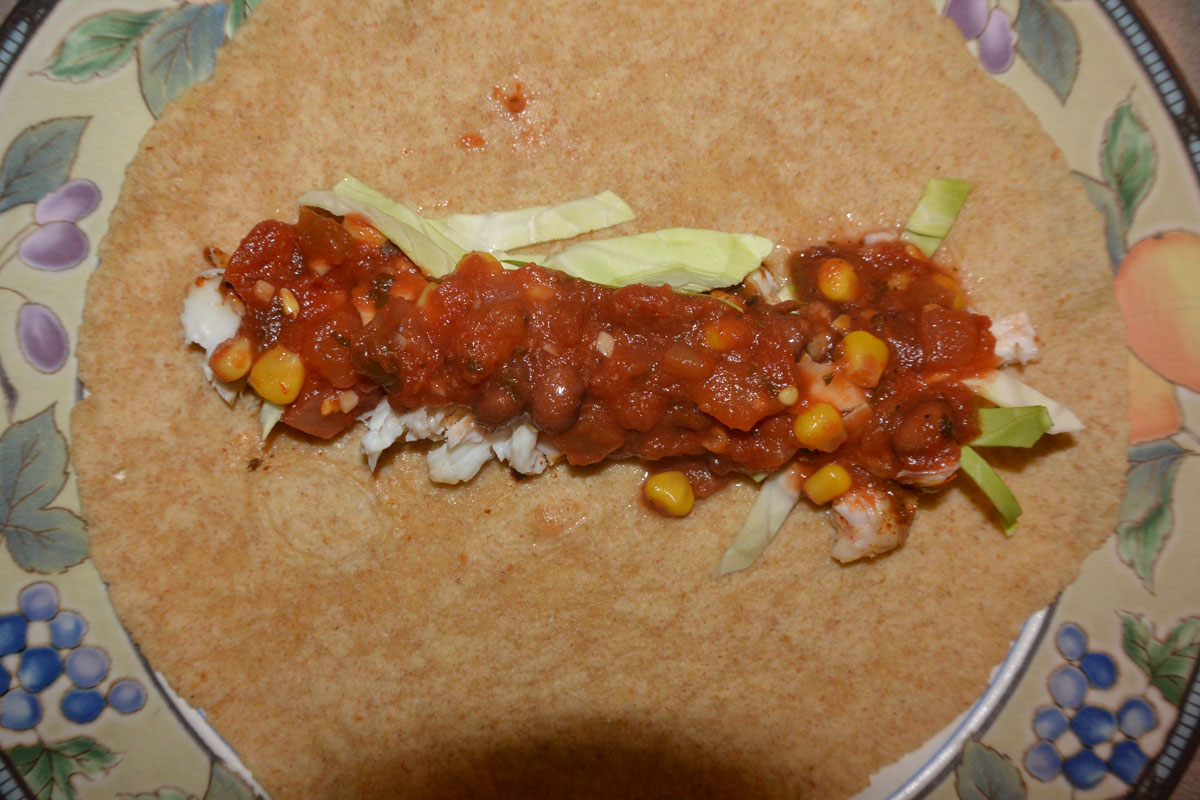
Tortilla with monkfish.  This was grilled with a fajita marinade.

Tortilla with monkfish. This was grilled with a fajita marinade.

Next comes the fresh, shredded cabbage.

Next comes the fresh, shredded cabbage.

Spoon some of the salsa over the fish and cabbage.

Spoon some of the salsa over the fish and cabbage.

Add some avocado slices to top it off.

Add some avocado slices to top it off.

Add a drizzle of light pepper ranch salad dressing on top.  This adds a little creamy sweetness to counter the heat of the salsa.  Then, wrap it up!


Black and White Bean, Black Eyed Peas, Corn and Pepper side dish:

This is my wife’s recipe, and she is the cook for this cold dish.

Ingredients:

grilled corn on the cob, four ears

two ripe Jersey tomatoes, chopped small

one large can of black beans, 1lb. 13oz., rinsed

one can of small white beans, 15.5oz., rinsed

one can of black eyed peas, 15.5oz., rinsed

two bell peppers, one green, one red, chopped in small pieces

six green onions, diced

one quarter cup of chopped cilantro

Ken’s Light Caesar dressing or red wine and vinegar dressing

We start by grilling the corn shucked and straight on the grill, to give it a nice char.  This enhances the flavor of the corn.  The corn is cut off the cob and placed in a large bowl.  The other ingredients are added.  Finally, we add a dressing of Ken’s Light Caesar dressing, or some other such as red wine vinegar dressing, to give it some zing.  Mix it all up and serve.

For a beverage to go with this meal, here are some suggestions:

Kona Brewing Company Longboard Lager, a malty lager which complements fish tacos, if only because of it’s Hawaiian heritage.  The Kona one buys on the mainland is brewed here, not in Hawai’i, but according to the Kona recipe.

Iced tea, can’t go wrong with this.

Milagro Farm Estate Grown Rosé of Sangiovese, a dry rosé which matches well with the spicy fish.  If you happen to live in San Diego, seek this one out.  If not, you’ll probably need to find another rosé, preferably dry and medium bodied.

Today was an “almost too good to be true” day.  No rain, blue sky with an artists display of cumulus clouds, and dry, moderate temperatures.  I had a good fourteen mile run today, at a very decent pace.  It was such a relief not to run in murderous heat and humidity.  I’m looking forward to enjoying a couple of these tacos for dinner this evening.

¡Buen Provecho! and happy running.

Summer Pasta Dinner for Runners

Summer on the Farm

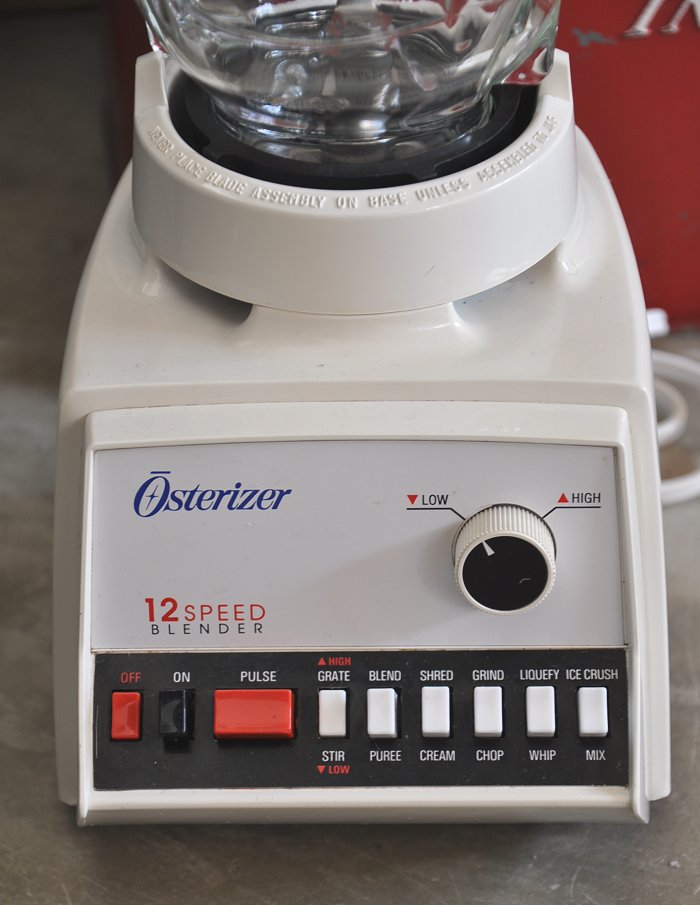
Here’s a suggestion for a nice pasta dinner for keeping healthy and refueling in the summer months. This took me about an hour to prepare, and I used a blender for the sauce.

oster


Menu:

Salad: mixed greens with tomato, mushrooms, avocado and raisins

Main Course: Organic Sprouted Whole Grain Penne Pasta with organic chicken sausage and tomato sauce

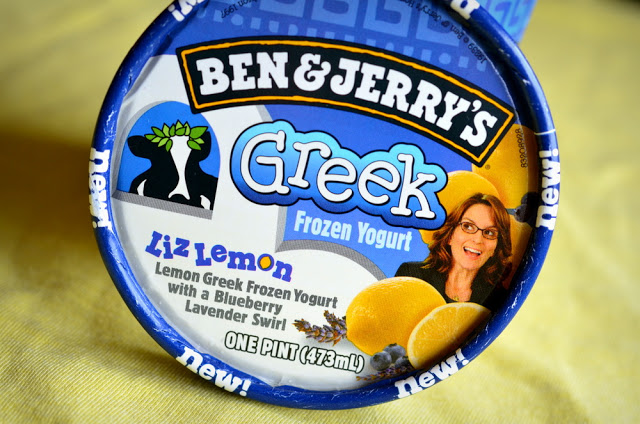
Desert: Ben and Jerry’s Liz Lemon Frozen Greek Yogurt with Blueberry Lavender Swirl.

Ingredients:

Salad: mixed organic greens (I like half spinach, half mixed spring greens)
Organic Tomato
Sliced organic mushrooms
1/4 avocado, diced. If you can find organic, go for it.
Organic raisins
Dressing of your choice. Honey mustard or Balsamic Vinegar and Olive Oil go well with this.

Pasta: organic sprouted whole grain penne pasta. The sprouted grain frees up natural sugars in
the grain, giving it a better flavor than typical whole grain pasta.

Organic Sprouted Whole Grain Penne Pasta

Organic Sprouted Whole Grain Penne Pasta

Sauce:  1 28 oz. can organic whole peeled tomatoes

1 6 oz. can organic tomato paste

organic Italian style chicken sausages, one 12 oz. package

spices to your preference.  I used home grown basil and spicy oregano, dried onion, dried pepper flakes, salt, ground black pepper, and

a touch of garlic powder.  I’m not a big fan of garlic.

Preparation:

Start with the sauce.  A blender is necessary for this step.  Heat the chicken sausages whole in a frying pan.  These usually come precooked, but the addition of a little browning on the skin makes for a tasty sausage.  Add a touch of olive oil or cooking oil spray to the pan, since they don’t have much fat.  Empty the can of tomatoes and the tomato paste into the blender.   Add the spices.  Blend.  You should make a good, thick puree with this method.  Once the sausages are browned, take them from the pan and cut them into half inch slices.  Add them back to the pan and pour in the sauce.  Simmer the sauce while you are making the rest of the meal.

The pasta:  boil water.  Simple, no?  Add the pasta and a pinch of salt.  Boil to preference, but be aware, there is a narrow range of done to al dente for this type of pasta.  Too much cooking and it turns to mush.  Drain.

Salad:  mix greens, tomatoes, sliced mushrooms, avocado and raisins together.  Add a dressing of your choice.

Sit down and enjoy your home made creation.  The salad has the nice touch of the creamy avocado, which I love in a salad.  The pasta was surprisingly tasty for whole wheat pasta.  The meal is relatively low in fat, made from mostly organic sources, and is easy to prepare.  The first time I made this my wife commented the sauce was too bland for her liking, so I spiced it up the second time.  The addition of spicy oregano is unique.  You can make yours as spicy or different as you like, since the sauce is basic and waiting to be customized.  For an accompanying beverage, try Victory Prima Pils, or a dry rose.  Or, just some iced tea.

As a desert in the summer, the Liz Lemon is a perfect blend of sweet and low calories.  I found it delicious.

Ben and Jerry's Greek Frozen Yogurt Liz Lemon with Blueberry Lavender Swirl

Summertime, and the livin’ is easy, but the running isn’t!

This feels like the summer of 2012 all over again.  We had a stretch of rainy days which seemed to go on forever, although it was really only about a 10 days or so.  I had two rather interesting rain-related experiences during this time.  Both were during my Monday run from my hospital in Camden, NJ, over the Ben Franklin bridge to Philadelphia, a loop down to the Race Street pier, then back over the bridge and back to the hospital.  It is a very nice six mile round trip, with the challenge of the bridge, but also with a pleasant breeze on the bridge and very nice views.

The first interesting experience occurred on my way back through Camden.  Dark rain clouds and the rain coming down to the east were illuminated by the setting sun to the west, and a beautiful, full-arc, sharply colored double rainbow could be seen as I was crossing Market Street.  I stopped a local man crossing the street who hadn’t noticed this wonder of nature and pointed it out.  He smiled broadly, and said “yeah, cool.”

The other incident was a little more worrisome.  I was doing the same run again.  It was overcast, but the rain seemed to be off to the east, and usually the direction of travel of the rain clouds is west to east.  As I was cresting the high point on the bridge, large raindrops started to splat the walkway.  I still felt this didn’t seem like much of a problem.  In fact, I was marveling at how the rain on the walkway created an outline of the old-fashioned style lamps along the railing.  My reverie was short lived.  Instead of moving east, the storm was heading right towards me.  I still had about a quarter of the bridge to go as the rain picked up and became torrential.  Worse, lightening was flashing around me.  I don’t know the risk of being on an enormous steel structure during a lightening storm, but my gut feeling was that it was not safe.  I scurried down the ending stairway of the bridge, three sets of wet stairs, to the street.  I made it shortly to a loading dock area on the Rutgers campus, and got out of the storm.  As I waited out the storm, several other runners behind me on the bridge kept running in the storm, and I watched them go by.  I felt a little wimpy, as if I should shake my fear and continue running.  But then, reason took hold and I waited a bit more.  Looking up at the sky, I could see swirling clouds which looked like they were attempting to make a tornado.  Fortunately, it never go to that.  With the storm, and the lightening, having moved on, the thunder now coming more than 10 seconds from the lightening, I ventured out and ran the last mile or so back.  It was still raining, and when I got to the hospital I made sure to allow a little drip time before going back in to change.

Now, though, the rain has been gone for several days and the heat has arrived.  As we all know, running in the heat can be brutal.  One’s body must acclimate to the heat.  This is a complex process, involving changes in the body’s blood volume, hormonal status, immunological changes, sweat composition and response, and other alterations.  All those intricate physiological changes have yet to occur in me.  I ran yesterday for a seven mile run, and today for a 12.5 miler.  While the starting temperatures don’t sound that brutal, around 79 degrees F, the high humidity of 90%, low to non-existent breeze, and sun made for very uncomfortable running.  Both days we started at 7:00 AM.  My friend Brandon, with whom I ran on Saturday, seemed to already have made that jump to summer running, as he was not nearly as affected as I was.  Perhaps it is his incredibly lean, thin body, or the fact that he runs normally more than fifty miles a week, but he cruised without dying.  I, on the other hand, felt like collapsing after a few miles.  Saturday, I mustered on, drinking water from the fountains along our route, and going a very diminished pace.  Sunday, I started out running with two other runners, planning to go 13.5 miles.  I carried a bottle of water with me in one of those handy runner’s bottles, with a strap for my hand, and a protruding enormous nipple-like spigot, allowing a drink on the run.  One of the guys in my group peeled off at four miles, saying he was never going to make the 13.  The other kept with me until his usual turnoff at my six mile mark.  So I was left alone for the rest of the run.  As I steadily, but at a considerably slower pace than normal, made my way around our standard Sunday loop, the sun got higher, cresting the trees and shining down on me.  Other runners came by in the opposite direction, looking pretty bedraggled, with the exception of one young guy.  He had on a gray army-style t-shirt and was running with a backpack.  He looked pretty tough in the heat.  I was drinking steadily to ward off dehydration, and used the amount of sweat on my hands as a guide.  If they were dry, I figured I had stopped sweating from not enough fluid, and took another gulp.  The sweat continued to drench me, and I could feel my feet getting soaked in my shoes.  At around ten miles, I stopped at a water fountain and had the good fortune of meeting a friend running in the other direction.  I hadn’t seen him in a long time, but still we stopped to talk far more than would be normal under milder circumstances.  As I headed for the last leg, I was running now at around a 9’30” to 10 minute per mile pace, not able to go any faster.  I switched sides on the road a few times to take advantage of the bit of shade I could find from the trees.  With two miles left to go, I made the decision to cut this run short, and headed back up the hill for only a one mile return to the start, thinking that lost mile would not be doing me much good anyway.  I made sure to finish strong, though, as I passed my fellow Sunday morning crew who had run shorter and were already hanging out at the Starbucks.  One always should look good at the start and end of a run.  In between, nobody is really watching.  I banged on the sign marking the end of the run, and wobbled over to get my backpack and my extra bottle of sports drink I had stowed for my recovery.  Sitting in the shade, bent over, calf muscles doing their quivering imitation of fireworks going off, I took off my shoes and socks, wrung the sweat from my socks, and slowly felt the heat dissipating.  Once I had cooled to a nearly presentable state, I made my way over to join my friends. I changed to dry clothes, and sitting outside, with a little breeze and in the shade, it didn’t seem so awful.  But, boy, running in the heat can be brutal.  I do look forward to that magical transformation of being acclimated.

Paleofantasy: a book report

Paleofantasy

What Evolution Really Tells Us About Sex, Diet and How We Live

by Marlene Zuk

Published Feb. 2013 by W.W.Norton & Co., 328 pages

paleofantasy


When I was in high school, first learning about genetics, things seemed fairly simple and straightforward.  Blue eyes, a recessive trait, required two genes, one from each parent, specifying blue eyes.  Otherwise, the eyes would be brown, being from a dominant gene.  Since then, with the explosion of scientific knowledge of molecular biology and the analysis of the entire human genome, the world of genetics and evolution has, well, evolved, to put it in the phrasing of Dr. Zuk, a professor of Ecology, Evolution and Behavior at the University of Minnesota.  But it is as if we have just dipped our toe in a vast and unexplored ocean, which was previously unknown.

I picked up this book at my favorite book shop in the U.S., Northshire Bookstore in Manchester, Vermont, while on a ski trip in February.  The title captured my interest.  There is a huge “Paleo” movement at present, based on the theory that our genes adapted to life of the paleolithic time, that is, from about 2.5 million years ago to about 10,000 years ago.  This covers a lot of time, from when earliest human-like creatures developed, to the development of modern homo sapiens.  A search on Amazon for books with paleo in the title yields 2,719 titles, very few of which have to do with actual paleontology.  They are almost all about eating paleo, living the paleo lifestyle, and there was even a paleo cookbook for your dog.  The concept is that humans evolved before the era of agriculture, caught their meals in bursts of speed chasing down animals, gathered vegetable food from nature, and walked and ran barefoot.  Thus, the argument goes, we are best suited for this type of food, and life, and that our genes are ill equipped to handle crops such as grains, non-meat sources of protein, and running long distances, especially in shoes.  There are also devotes to various concepts of how stone-agers lived in family units, or groups, how they coupled up and reproduced, and whether there was pairing for life versus multiple partner life.  The purpose of devoting oneself to a paleo lifestyle, then, is to be in harmony with ones nature and genes, to be healthier, leaner, fitter, sexier, have less immunological problems, and presumably, to be able to run injury free.

Dr. Zuk starts off with a brief description of human evolution.  She explains some of the complexity of the evolutionary process, that many human ancestor lineages were changing in different ways, that we share an enormous percent of our genome with earlier species right down to bacteria, and that evolutionary change is not always change for the good.  She points out some of the complexity of genes being favorable or unfavorable for survival.  For example, if a trait is unfavorable, and results in loss of that trait, other genes will be lost along with that  trait due to their being linked together.  She gives specific examples. She also documents that there was not just one paleolithic lifestyle; there were many different routes taken along very different paths.

Her second major point is that evolutionary change can happen quickly or slowly, and may occur without any type of survival pressure.  An argument of the paleo adherents is that our genes were fixed back in pre-modern times, and that the last 10,000 years is too short a time to allow for adaption to new foods, and new ways of living.  She rebuts this with specific examples of changes that have occurred in that relatively short period.  Blue eyes, mentioned above, came about in the last 10,000 years.  Lactose intolerance seems to have a lot to do with where and how one’s group survived, and is also very recent.  It has the complex nature of being caused by a lack of a gene to inhibit built in turning off of another gene which inhibits lactase production as one matures, lactase being the enzyme required to digest lactose.  She mainly discusses genetic changes which are changes in gene expression, as opposed to major gene alterations such as occur with mutations.  In other words, she’s not talking about how we got to be human, but rather how our genome is modified over time to adapt to our surroundings.

The following chapters deal with diet, food procuring methods, exercise or physical activity including running, sex, monogamy versus multiple partners, family structure, child raising, susceptibility to diseases, and how we protect ourselves from disease.  Her discussions of these topics are backed up with scientific studies, and she cites the literature from which she makes her arguments.  She also points out where the science does not support the claims made by paleo adherents, thus the “Paleofantasy” of the title.  In many ways, she does not try to say that the “paleo” approach to diet or exercise is harmful, just that it is not based on real scientific reasoning.  As with any devoted scientist, she includes a lengthy bibliography which she used to form her arguments, as well as a notes section and an index.

Her writing style was an interesting, and sometimes to me, annoying mix of sound scientific argument with a conversational tone that seemed unnecessary.  It was like watching a really good Nova TV show on a particular topic, and then having a few lines from the sitcom “Cheers” thrown in.  She uses the word “well” a lot, as I used it above in the first paragraph.  I enjoyed the humorous touches, though, and I think she would make a very entertaining teacher in the classroom.  The title of the book is clearly meant to titillate, listing sex as the first major topic, when it’s really primarily about diet.  She got most of her information regarding the paleo lifestyle from the internet and popular books, which makes sense, since it’s not a scientific discipline, but it does make comparisons of real research with what paleo advocates consider perfectly logical thinking a bit one-sided.  This is not meant to be a book for scholars, but for the lay public, and I think she has accomplished that very well without sacrificing the scientific complexity which makes this topic so interesting.

I learned a lot reading this book, about evolution and current thought about genes and molecular biology.  I think she makes very sound arguments that, while living a paleo lifestyle may not hurt you, you won’t necessarily be any better off for it.  She successfully defends her thesis, that the paleo movement is based on fantasy, not fact.  Reading the comments about her book online, there were obviously many adherents of the paleo life who were not only unconvinced by her arguments, but found her book essentially sacrilegious.  In fact, a number of commentators remarked that they would not read the book. For me, it was an exciting look at topics which are themselves changing rapidly as new research is done in the areas of evolution, genes, reproduction, disease, disease prevention, fitness and longevity.  I think anyone who is interested in these topics will find this book fascinating and a good read, as long as you can, well, ignore some of the style issues.

Vlad Averbukh, 29, a follower of the paleo diet, eats raw meat along the Hudson River in New York in 2010. Emmanuel Dunand/AFP/Getty Images

Vlad Averbukh, 29, a follower of the paleo diet, eats raw meat along the Hudson River in New York in 2010.
Emmanuel Dunand/AFP/Getty Images

Why I Didn’t Run in Hawai’i (part three, the final part)

Hawaiian Islands

Hawaiian Islands

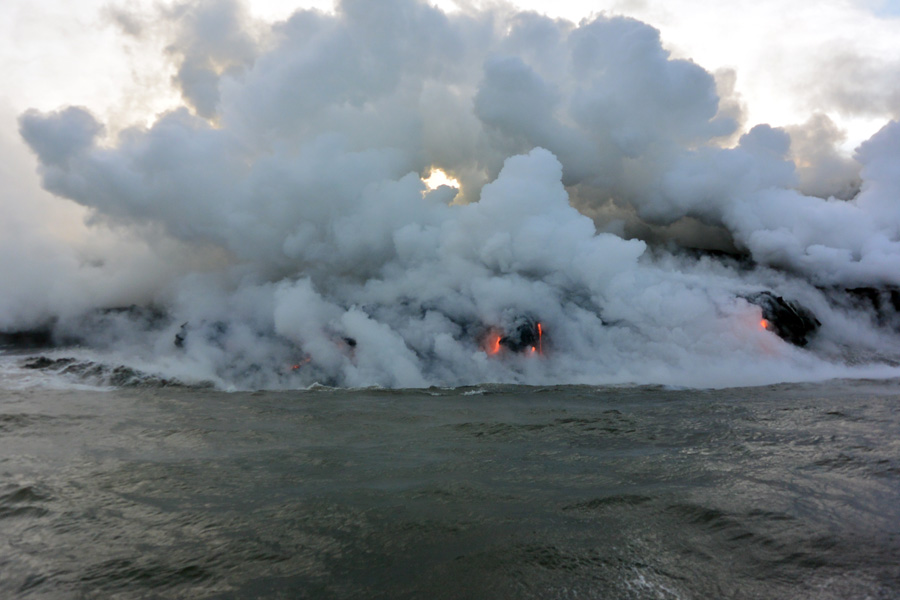
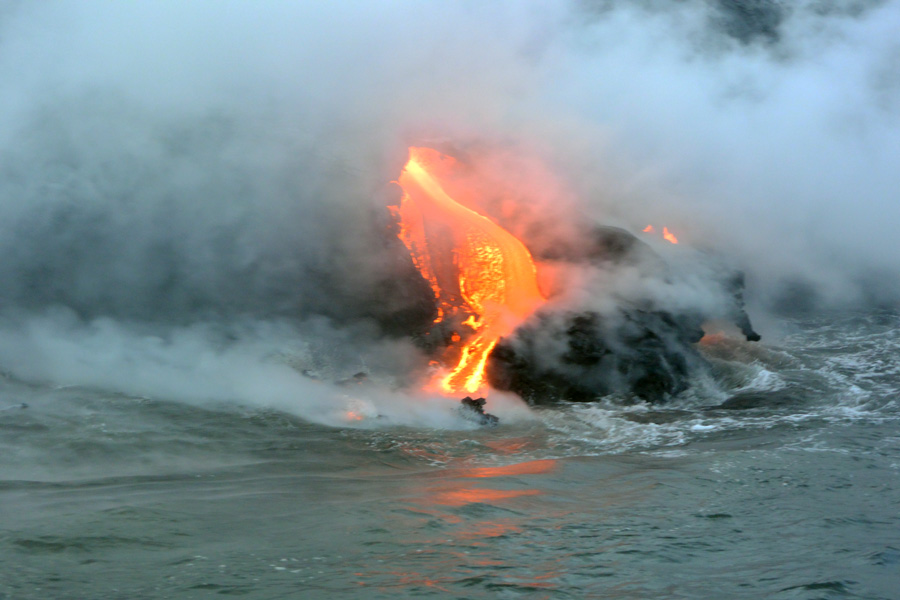
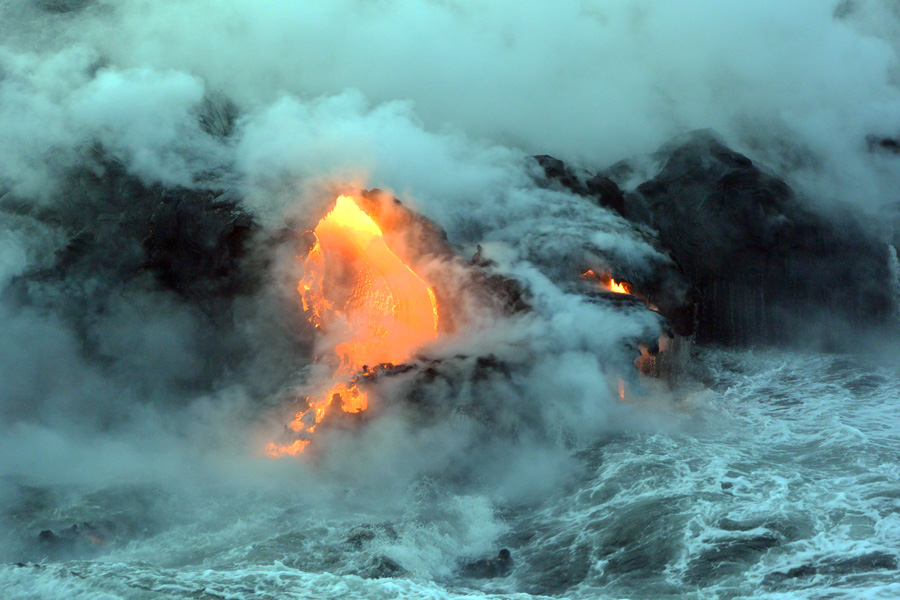
We finished our boat tour of the lava flow into the ocean, full of awe at the spectacle of being so close to flowing melted rock.  Rather than head back to Kona, which would be a two hour drive, then return again the next morning, we decided to spend the night at a bed and breakfast close to Volcano National Park, which would be our next big adventure on the big island.  This also meant skipping the Saturday morning run with the Big Island Running Company, which I had planned to do before realizing how tightly packed our itinerary would be once we got here.

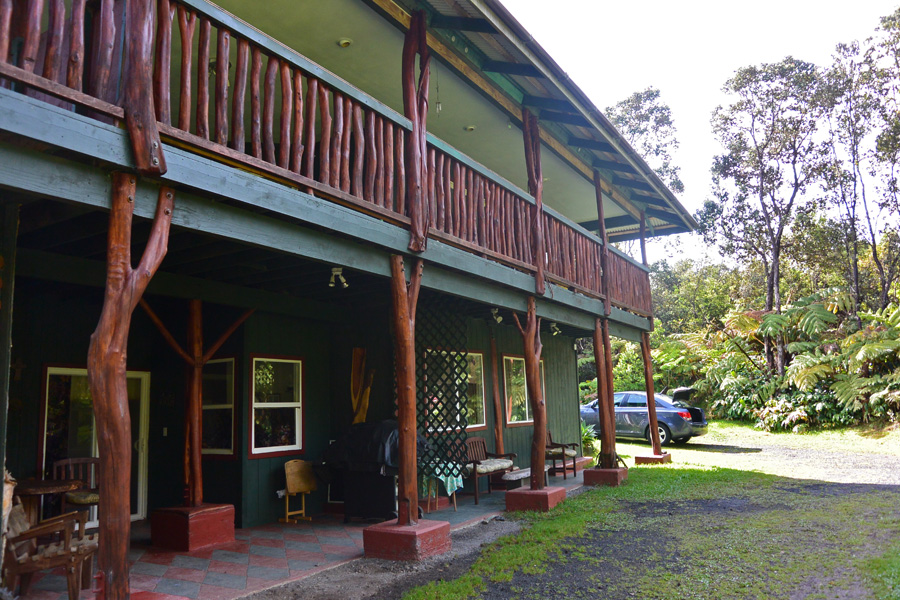
We stayed overnight at the Aloha Crater Lodge, in Volcano Village, close to the entrance to Volcano National Park.  This is a small Bed and Breakfast in a converted house within the rain forest, with very reasonable rates.  They have five rooms, each with room for three to four occupants, and the breakfast is provided in-room, with a coffee maker and a small refrigerator stocked with milk, juice, cereal and fruit.  Being in the rain forest as it is, the room was very humid, but the bed was nice and comfortable.  Close to the lodge there is a lava tube, which is a large cave-like tunnel created by the flow of lava.  They give tours daily of the lava tube, but we decided not to participate, since we would be seeing the same thing on our bike tour of the national park.

Aloha Crater Lodge

Aloha Crater Lodge

We arranged for a tour of Volcano National Park with BikeVolcano.com, a company which offers several different bicycle tours of the park, although not every tour every day.  They require a minimum number of people signed up to do a tour, and one needs to sign up at least 48 hours in advance.  They also will ride rain or shine, since it rains often on this side of the island.  We were able to sign up for their shorter tour, although we really wanted the longer one.

Like any other national park, there is a nominal fee to enter.  We drove up to the visitors center, and had some time before our tour started to look at the exhibits and browse the gift shop.  Hawai’i Volcanoes National Park extends from the summit of Mauna Loa to the sea, with Kilauea being the active volcano.  Our bike tour company pulled up with their trailer to the parking lot.

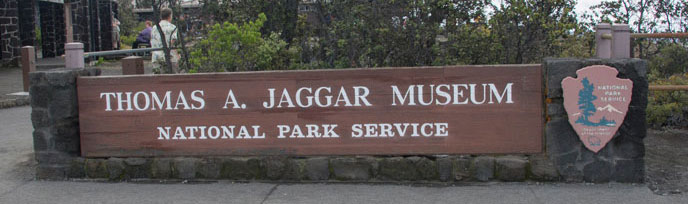
Jaggar_sign_crop688

Photo obtained from national park service web site.

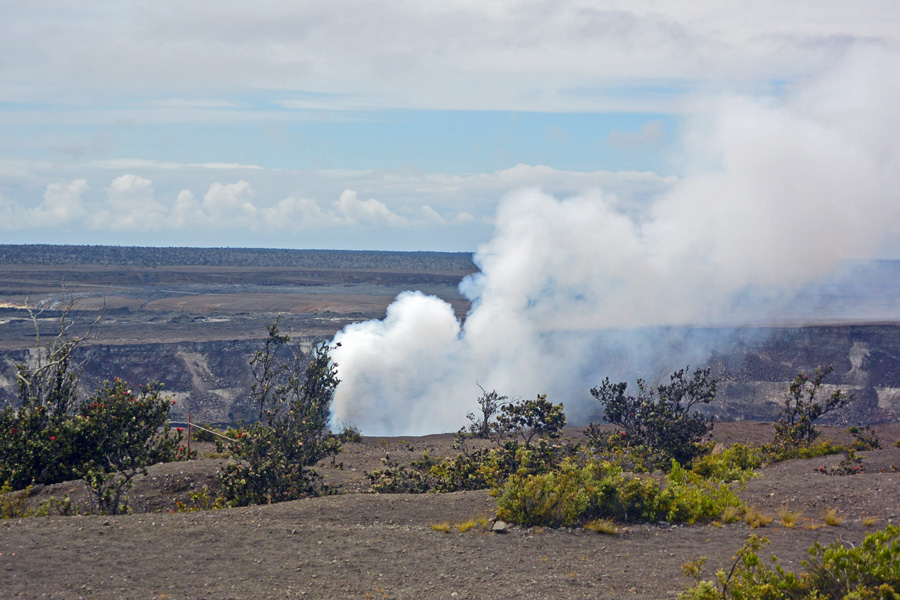
Naturally, the first order of business was for all the participants to sign a waver saying we wouldn’t hold them responsible if we fell into a volcano, or any other mishap.  We were driven up to the Jagger Museum, where we would see the giant caldera of Kilauea, which has its own name, the Halema’uma’u crater.  Thomas Jaggar was an M.I.T. geologist who started the study of volcanoes scientifically here in 1912, in response to the eruption of Mt. Etna in Italy in 1908, which claimed 125,000 lives.  The caldera is very wide, and has an enormous pool of lava churning in a central pit.  There is an impressive time-lapse video on the park website of the glow from Halema’uma’u as the sun sets, revealing the glow from the central lava lake.

vapors from Halema'uma'u

Vapors coming from the central pit of Halema’uma’u crater

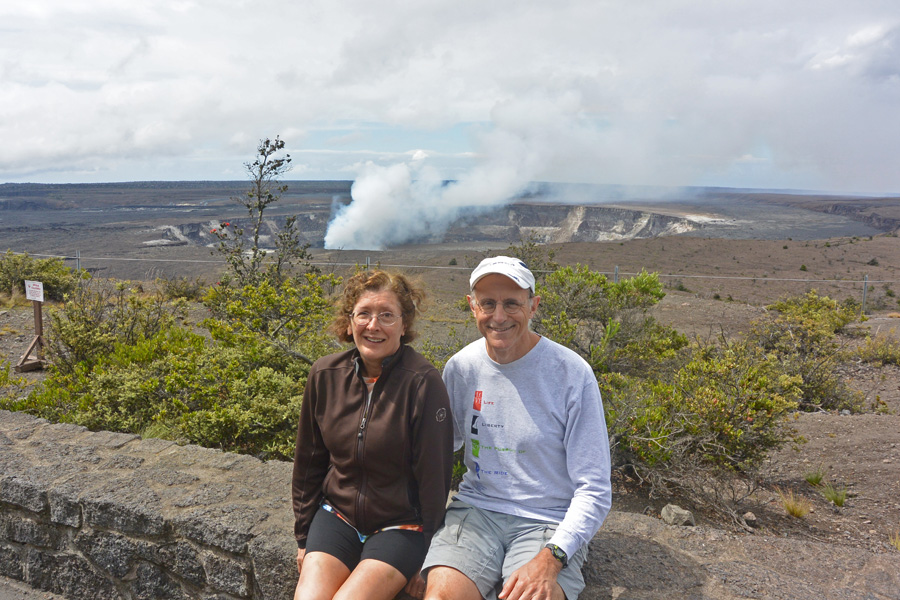
At the Jaggar museum, overlooking the Kilauea caldera.

At the Jaggar museum, overlooking the Kilauea caldera.

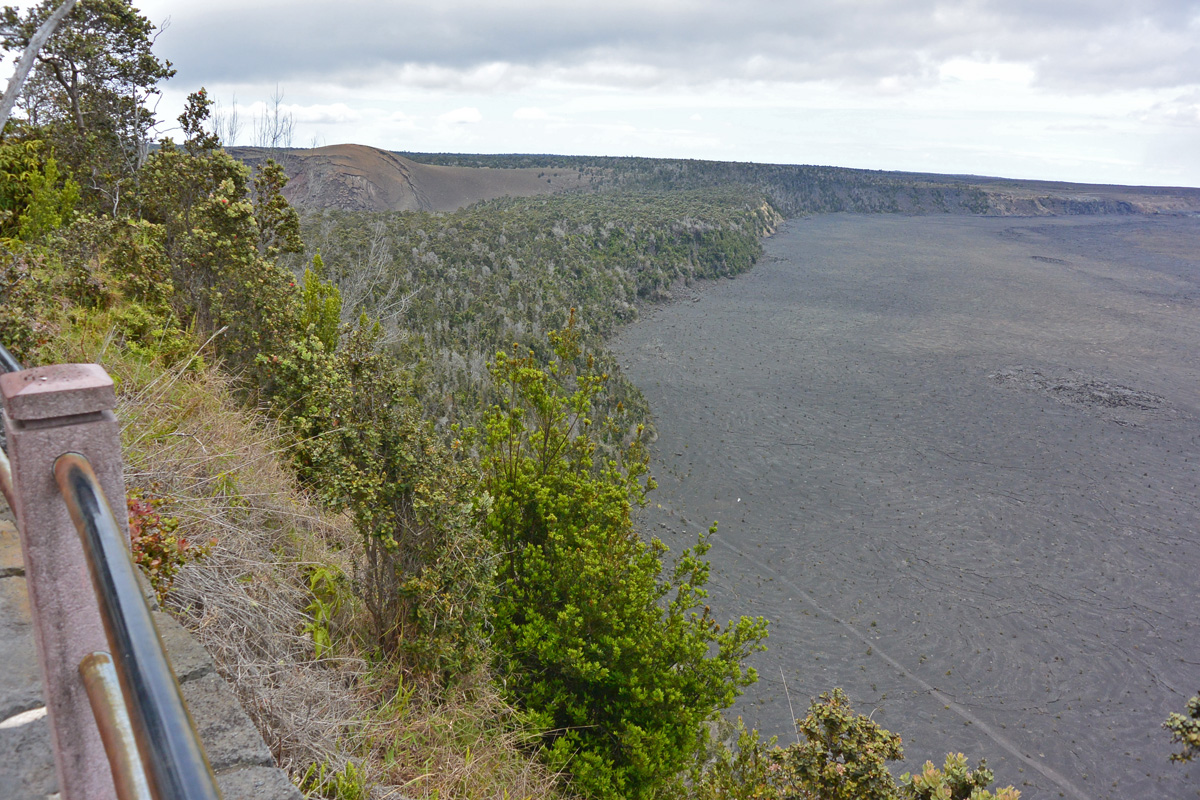
Along the edge of the caldera is a hiking trail.  The tiny white dot in the photo is a sign warning hikers to not go off the trail.

Along the edge of the caldera is a hiking trail. The tiny white dot in the photo is a sign warning hikers to not go off the trail.

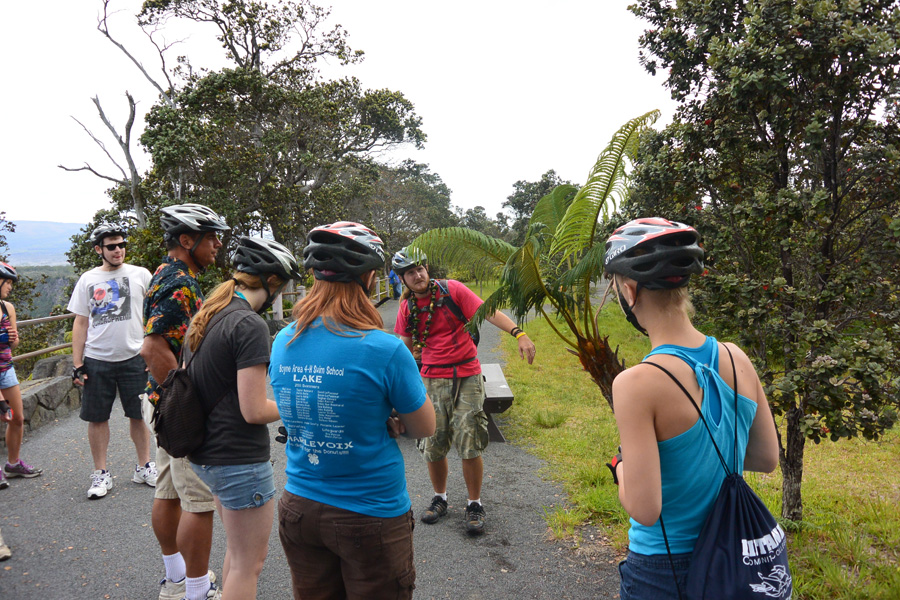
We had some time to peruse the exhibits on volcanology at the Jaggar Museum, learning about the difference between a shield type vs. a cone type of volcano, how volcano activity is monitored, how geologists collect lava samples (which can be tricky, and dangerous as we saw), and what makes up the airborne emissions from volcanoes  We were then directed to the parking lot and were assigned a bike.  The bikes were Sedona hybrid bikes, made by Giant.  They were adjustable to match our own frames, did not have toe clips, and were equipped with three front rings and seven gears in the rear.  They were set to the second ring in front, and their was a briefing from the tour guide regarding how to shift.  We would be riding on paths and roads around the park, and there were a few hills involved.  We got a chance to practice riding around in the parking lot before we set out.  Our guide was well equipped to give us our tour, as he was a graduate with a geology degree, and he had a special interest in volcanoes.  He also seemed to be very laid back, with long hair and a bright, easy-going demeanor.

Our guide in red, and fellow cyclists at one of the stops.

Our guide in red, and fellow cyclists at one of the stops.

We were taken by steam vents, down old roads partially destroyed by lava flows, and to other crater formations within the park.  One particularly interesting phenomenon is the lava tube.  These are long cave-like channels through the ground which are conduits for flowing lava.  They can be a few hundred yards long, or several miles.  They provide insulation for the flowing lava so it remains molten as it travels through the tube, eventually draining their contents out onto a lava field or into the ocean.  One of the most famous of these is the Thurston lava tube, named after the Honolulu newspaper owner who helped Jagger get his start studying volcanos, and who personally discovered this tube.

Looking into the Thurston Lava Tube.  Note the flat floor, from cooled lava, and the lava level marks on the side walls.

Looking into the Thurston Lava Tube. Note the flat floor, from cooled lava, and the lava level marks on the side walls.

We walked through a portion of this tube, about 100 yards, and exited up through a vent whole.   It is located within dense jungle growth, with steep crevices and sharp rocks all around.  We were told this tube goes on farther, but that section is closed to the public.  A side crater of Kilauea, Pu’u O’o, is the source of the lave we watched flow into the ocean, and it travels there through tubes like this one.

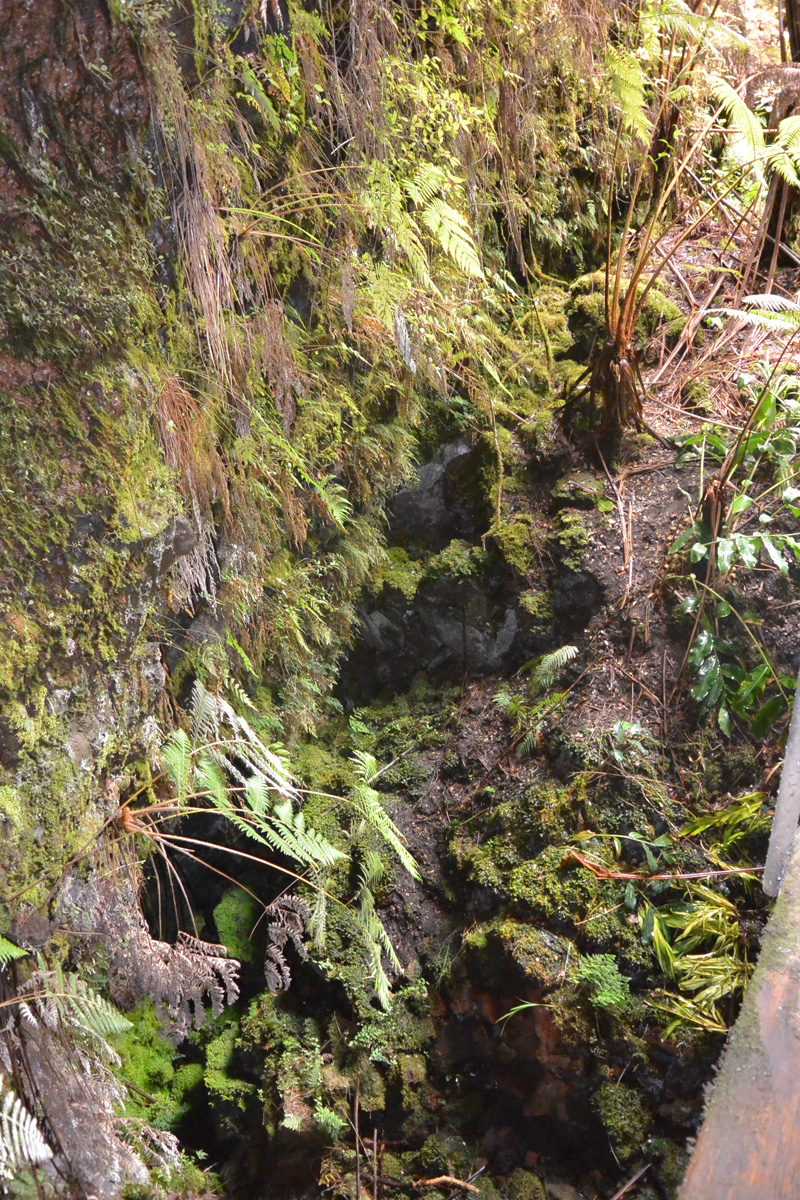
Typical of the ground around the lava tube, it is all crevices and rock with jungle-like overgrowth.

Typical of the ground around the lava tube, it is all crevices and rock with jungle-like overgrowth.

Discovering this lava tube originally would have taken some fearless exploration.  We also cycled to see a steam vent, where steam, not lava vapors, were coming up through a crevice in the ground.  Unlike the vapors from the lava, which contain all sorts of harmful airborne particles and gasses, this steam was just water vapor.  Interestingly, many people treated this crack in the earth like a fountain, and threw coins into it, I suppose, to curry favor with Pélé, the goddess of volcanoes, whose home is Kilauea.  It is considered tabu and a serious crime against Pélé to take anything such as volcanic rock away from Hawai’i.  A popular story told to us tourists is that the main post office in Hilo has a collection of rocks sent back by visitors who took them away, then suffered Pélé’s wrath.

We finished our tour on bikes looking at several other impressive craters, such as the “Ever-Smoking” Crater, with its numerous vents of smoke rising, and the Kilauea Iki crater, near the main caldera of Kilauea, where an eruption in 1959 reach heights of 580 meters (1900 feet) occurred.  A USGS film documenting the eruption was made, and is available in four parts on YouTube.

At a stop along the way, on our bike tour of the Hawaiian Volcano National Park

At a stop along the way, on our bike tour of the Hawaiian Volcano National Park

After finishing our bike tour, we headed back to the gift shop, naturally, where I picked up a refrigerator magnet showing lava flowing into the ocean, and a book on volcanoes, called “Volcano Watching, Revised 2010 Edition”.  It is short, but filled with well-written explanations about the science of volcanoes.  We then headed back to our car for the two hour drive back to Kona, along the southern perimeter of Hawai’i.  We stopped for lunch at a well known bakery and restaurant called Punalu’u Bake Shop.  It is known for its sweet breads, and for excellent sandwiches.  We also stopped along the road at an old cemetery, which had grave stones present from the late 1800’s forward.  The grave sites were notable for many above ground or partially buried stone containers of the caskets, presumably due to the difficulty of digging into rock.  Since there were a number of family members visiting relative’s graves here I did not take any photos.

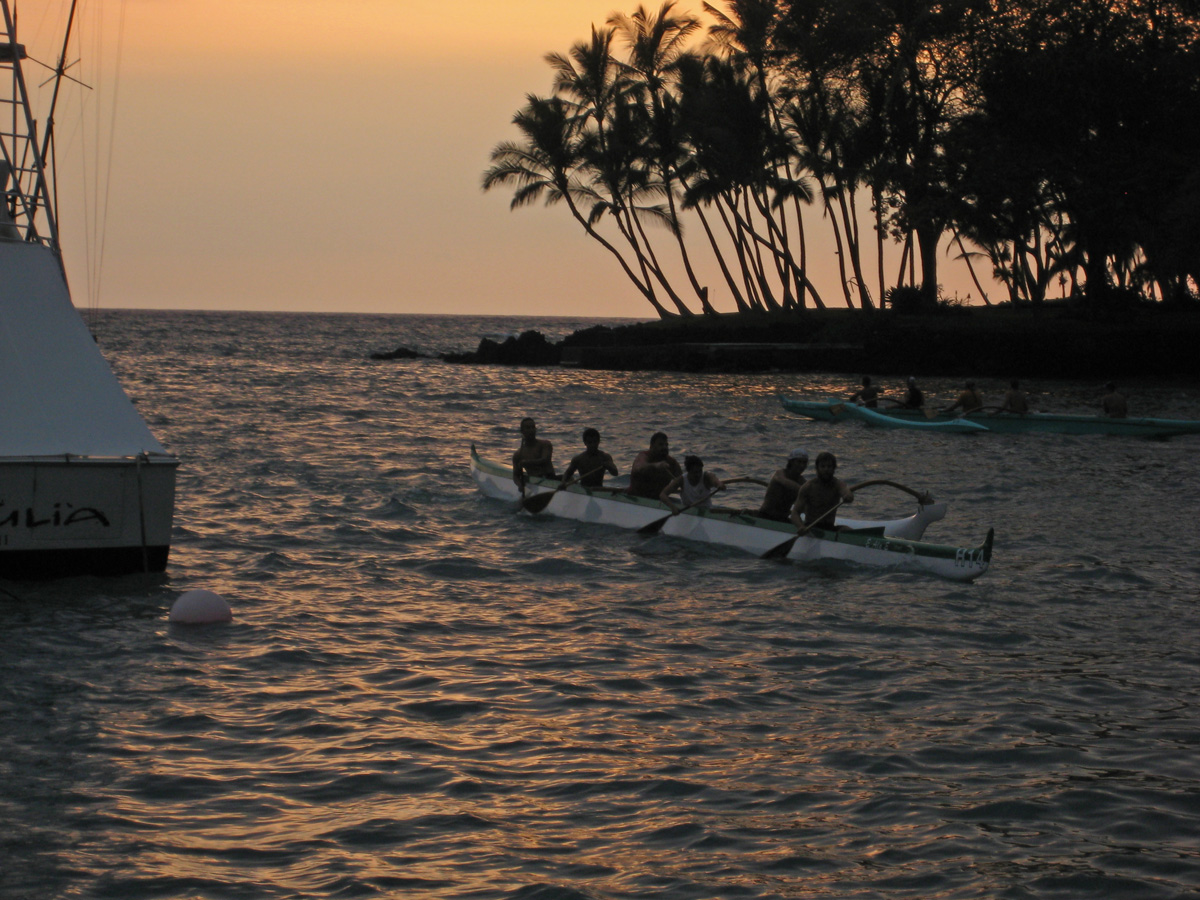
Arriving back in Kona, we went to our hotel, for a bit of rest before our repeat trip to see the amazing dancing manta rays.  Sea Paradise, our manta ray tour company, has a guarantee (with asterisk) which states one gets a second opportunity for no extra charge if manta rays are not seen.  We were determined not to allow the letdown of the first trip discourage us.  Again, we headed back to the check-in office to sign the usual release forms, and to get our wet suits.  We then drove back to Keauhou Bay, waiting for the boat to load.  We had a beautiful sunset and also watched canoe racers practicing turns around a buoy.

Canoe racers practicing in Keauhou Bay.

Canoe racers practicing in Keauhou Bay.

The drill getting into the boat was the same as last time.  We had to take off our footwear and place them in a container before boarding the boat.  We had a different crew this time, but they were just as energetic and confident as the last crew.  The captain, a young handsome guy who appeared to really enjoy his job, was back at the helm.  As we motored out to the viewing area, we were treated to the now familiar talk on manta rays, what they eat, how they are attracted to the plankton, and how the plankton are drawn to the lights.  We were offered tea or juice on the way out, and masks and snorkels were handed out.  Once at the viewing area, we pulled on our wet suits and prepared for the dip into the ocean.  I was a bit concerned that this would be another hour spent breathing through a snorkel in the dark, with nothing to show for it.  We marched down the ladder into the ocean, Kathleen and I, along with about twenty five other people.  This time, I was stationed at the end of the long floating device with the attached lights, next to one of the crew at the very end who helped keep the float in the proper spot.  I started my vigil.  Yes, the plankton, true to their nature, were amassing under the light.  I could see some fish swimming around in the deeper water, and under them were large lava rocks.  Time was passing.  Not wanting to miss the first glimpse of the undersea marvels, I kept my head down, listening to my breathing sounds as my breath passed through the tube.  One becomes consciously aware of one’s breathing in this setting, and instead of it being automatic, one starts to think about it.  I found myself needing to actively initiate inhalation, then exhalation.  Still, the plankton swam about but no manta showed his or her wide wings.  The crew had moved the barge around to the front of the boat, perhaps hoping, as I sometimes do while fishing, that by changing location we’ll get lucky.  I started to look for ways to distract myself, since I was getting cold, and my right shoulder, injured the week before in a fall in San Diego, was starting to hurt.    I started to name the plankton.  There’s Susie, Fred and George, there goes Samantha and Robert, and look, it’s Kealea and Hunahuna, native Hawai’ian plankton.  I followed the path of my little friends as they swirled and scurried about.  I noticed people had left their posts at the barge, and had made their way back to the boat.  Apparently, I was one of the last to hold out hope of seeing a manta that night, along with Kathleen, who, no doubt, was also determined not to give up.  The two of us, though, came to the same conclusion, no mantas tonight.  We swam around to the stern, but as we swam we noticed, no, not mantas, but a huge school of needle fish which were swimming all around us right at the surface of the water.  They made the trip worthwhile.  They have iridescent colors, swim within inches of one’s face and arms, but never come in contact.  They were quite a marvel, and we stayed in the water a bit longer to enjoy them.  We then got back in the boat, stripped off our wetsuits, gave back our masks and snorkels, and sat down for the return to the dock.  The hot cocoa provided on the boat was very welcome, as I was shivering.  We were disappointed, but not overly so.  Again, you can’t command these creatures, you can only try to lure them, and I know our crew did the best they could for us.  After getting back to our car and changing back to clothes, we drove back to our hotel.

The following morning was our last in Hawai’i.  Unlike many trips, the flight out doesn’t leave until late, in our case, 10:00 PM.  So we still had a full day to enjoy just wandering around Kona, not needing to get anywhere.  Kathleen got her henna tattoo freshened up.  I went for a swim in the cove in front of our hotel, with a rented mask, which cost only $5 at the beach side equipment rental.  I saw myriad numbers of incredibly colored fish, with patterns one might think were made up by Dr. Seuss.  In the afternoon, we went looking for a bookstore, the Kona Bay Bookstore, which was difficult to find by walking, as it was tucked into a semi-industrial area, as we later found.  Instead, we found ourselves at the Kona Brewing Company, where they give tours of their brewery and a free beer tasting.  The last tour that day was at 3:00 PM, and they had two spots left.  We signed up.  The brewery, which was started as a very small operation by a father and son in 1995, has grown to major proportions.  The brewery in Kona now only produces kegs, no bottled beer, and distributes it only to the other Hawai’ian islands.  They also sell beer for growlers (two liter bottles one brings to get filled) at their brewery and there is a restaurant on premises, which looked very busy while we were there.  They have partnered with breweries in Oregon, Washington and New Hampshire to produce the beer in bottles sold in the U.S. mainland and other countries.  After our tour, our group sat around two large round tables in the restaurant.  Fortunately, the tables had umbrellas, since it was raining, although we hardly noticed.  We had a great afternoon, sampling five of their various brews including a coffee stout made with Kona coffee, and chatting with our other tour mates.

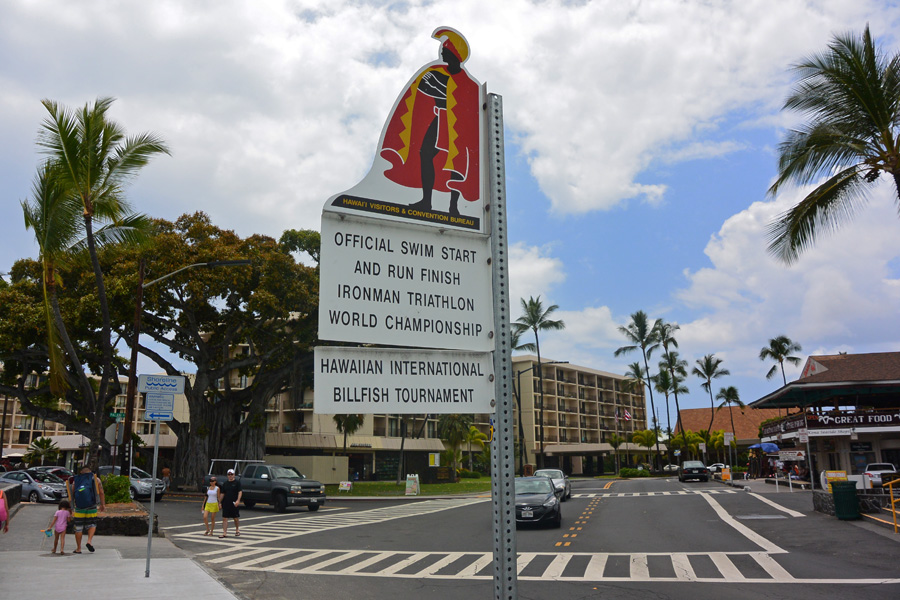
Across from our hotel, the start and finish of the Kona Ironman Triathlon Championships.

Across from our hotel, the start and finish of the Kona Ironman Triathlon Championships.

Hawai’i has attracted numerous famous visitors, from all over the world.  Mark Twain traveled as a correspondent to Hawai’i, known then as the Sandwich Islands to non-Hawai’ians, and recorded his thoughts in letters back to the mainland.  Herman Melville, Robert Louis Stevenson, Amelia Earhart, and I’m sure, many other famous people, in the era before modern airfare (not to dismiss Amelia Earhart’s accomplishments), traveled the long journey by steamship to visit the Hawai’ian Islands.  Today, it is still a long trip to get here, but definitely worth the effort.

We left Hawai’i that night, having had an incredible adventure and a lot of fun.  I would enjoy going back to do many of the things we didn’t get to do on this trip, such as see sea turtles, do some volcano hiking, and maybe, just maybe, see a manta ray.  I also might go for a few more runs on my return.  We found the local people of Hawai’i to be very friendly and helpful, and they take very seriously the ecology and care of their island.

Aloha Nō!

Hawai'ian sunset, Keauhou Bay.

Hawai’ian sunset, Keauhou Bay.

Why I Didn’t Run in Hawai’i (part two)

Hawaiian Islands

Hawaiian Islands

When I last wrote of this trip, we had returned from an unproductive trip waiting in vain to see manta rays.  This was the first reason I didn’t get more running in while in Hawai’i.  The Big Island Running Company, the running store in Kona, has group runs Tuesday and Thursday at 5 PM, and Saturday at 6:30 AM.  I had plans to do the Thursday run, but in order to get to our manta ray trip, I had to skip it.   Their usual run is about a six mile run, typically around an 8:30 pace.  The guy in the shop told me an option was to run with him and his friends for a five mile warm up, then hill repeats, and a five mile cool down.  I laughed, and said that normally I would take him up on it, but being on vacation I didn’t want to work that hard.  It was not an issue anyway, since we needed to get to our manta ray trip.

The next morning, we were heading to the other side of Hawai’i for a zip line tour.  There are a number of companies running zip lines in Hawai’i.  We selected Skyline Eco-Adventures, because we would be able to zip over waterfalls, and because they were the original zip line company in the U.S., at least according to their web site.  They also have a commitment to being “carbon neutral”, and ecologically friendly, which are all good things.  They are located on the other side of Hawai’i from Kona, near Hilo, so we would need to rise early in order to drive the two hours to get to the start on time.  Fortunately, our breakfast buffet started at 6 AM, and we were there a few minutes after that, fueling up for our adventure.  There are just a few ways to drive around the island.  There’s the southern route, which is the long way to get to Hilo.  There’s Saddle Road, which is the shortest route from Kona to Hilo, but a crazy drive.  We were heading to Akaka Falls State Park, which is north of Hilo.  So we took the northern route around the island, through Waimea.

View of Mauna Kea, with observatories visible at the summit, along route 190 heading toward Waimea.

View of Mauna Kea, with observatories visible at the summit, along route 190 heading toward Waimea.

Waimea is home of the Parker Ranch, which is a cattle ranching operation started in 1847 by John Palmer Parker.  Early on, the ranch covered 250,00 acres, and grew at one point to 500,000 acres.  It is now run by a trust, but still is an active cattle ranching company.  Also in Waimea are the support facilities for two of the large telescopes atop Mauna Kea, the Keck Observatory and the Canada-France-Hawaii Telescope.  We stopped in Waimea for a coffee at Starbucks.  While it seemed practically sacrilegious to buy Starbucks in the home of Kona coffee, I was pleased to see a long line of locals waiting to buy coffee, recognizing, probably, the high cost of the local product.  As we drove eastward along the northern part of Hawai’i, the climate changes significantly, going from arid conditions on the west of the island, to the rain forests of the eastern side.  We had some rain and fog along this part of the drive.  As we got to the turnoff for Akaka Falls, though, the rain stopped and the sun was peeking out.  We turned off route 19 to Honomu Road, to the staging office of our zip line company.

Office of Skyline Eco-Advenures, near Akaka Falls State Park in Hawai'i

Office of Skyline Eco-Advenures, near Akaka Falls State Park in Hawai’i

The office is a small, humble one, part of an old building with the other half unoccupied.  They seemed very professional and confident, though, so we were not concerned.  They have a large tackle box in the office which they call their lock box, and in which one can place items like keys and wallets.  It would be unfortunate if items like that slipped out of one’s pocket while zipping a few hundred feet above a gorge.  Of course, a clever thief could make off with the whole box, but fortunately, that didn’t happen.  The first thing, of course, was to sign the waver holding them blameless for any fate that should befall us.  Before heading out, our group of eleven intrepid explorers were fitted with our harnesses.  This set of thick nylon straps is the method by which we would be suspended from the zip cable.  A few warnings were given.  Don’t let your fingers get up to the contraption which has the wheels that zip along the cable.  The fingers will go missing.  Make sure any items one carries are secured to your person.  We were provided with a water bottle (very nice one, by the way, a 700 cc BPA-free bottle with a screw cap, which we attached by a carabiner to our harness.  Given the warmth and humidity, the water would be needed.
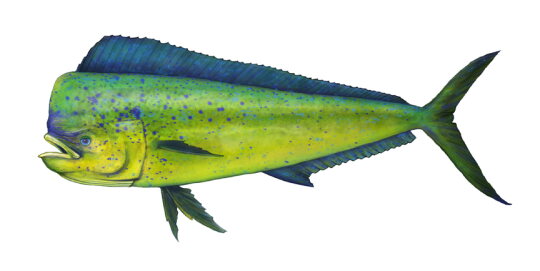
Kat, strapped in to her harness.

Kat, strapped in to her harness.

We then piled into a large van for our trip to the starting point.  The drive there was an adventure itself.  It was primarily over rough dirt roads which climbed through old banana and sugar cane fields.  While the bananas are still a viable crop, the sugar cane production is down significantly from it’s peak in the late 1960’s.  We had two guides, which is necessary for zip line tours, since you need one to get you going and the other to stop you at the other end.  Both of our guides were graduates of agriculture programs in college, and were able to provide us with a wonderful amount of information about the local flora, both native and non-native, and give us samples of local berries and flowers that could be plucked and eaten.  Our first zip line was a training line, to get us used to the action.

The training zip line, a little zip before moving on to the long ones.

The training zip line, a little zip before moving on to the long ones.

That done, we headed on to the next line.  Each zip line was longer than the last, and higher above the ground.  Along the way we got to sample some of the local banana crop, which are primarily the Williams and Apple type.  These, until recently, could not be shipped to the mainland due to fruit flies which might travel with them.  We were able to pluck them from the tree.  They are smaller, and quite a bit sweeter, than bananas back home.

Observing the banana trees along the zip line route.

Observing the banana trees along the zip line route.

We learned how to control our position on the zip line.  Rotating the clamp holding us to the rollers to the left would cause us to rotate to the right, and vice versa.  That way, we could get a look at all the great views under us as we went zipping by.   We crossed one set of waterfalls which was very beautiful.

A smaller falls.  The big one was yet to come.

A smaller falls. The big one was yet to come.  Kat goes zipping along the cable.

We also found that stretching out flat allows for a faster ride.  Between each zip line, there were seven in all, we walked from station to station, examining interesting plants and tasting the odd berry or flower with the urging of our guides.

Kat and Frank, clearly enjoying the zip experience!

Kat and Frank, clearly enjoying the zip experience!

When we got to the last of the zip lines, we needed to climb a tall, tower-like structure to start.  This was the longest ride, about 3300 feet, and it would take us over Akaka falls.

The tower for the last zip.

The tower for the last zip.

Kat preparing to take off over Akaka Falls.

Kat preparing to take off over Akaka Falls.

This would be a long ride, and would have some nice views in the middle.  One wouldn’t want to progress too slowly, though, and get hung up midway along the cable.  That has happened, according to our guides, and they had to use a special device to go out along the cable and rescue the poor lug.  So the word was, keep your speed up, enjoy the view, and we’ll see you on the other side.  I readied my camera to capture a picture of the falls as I went over it.  Dangling from a cable, twisting, wanting to keep my speed up, I wasn’t sure if I would capture much of a photo.  As it turns out, I was able to get a pretty terrific shot of the falls.

Akaka Falls as seen from the zip line.

Akaka Falls as seen from the zip line.

We had a fun group, and everyone was fearless from the start.  I would not have minded continuing on for several more zips, but unfortunately we had come to the end.  We boarded the van for the ride back to the office.

Our intrepid group of zip liners.

Our fearless group of zip liners.

Heliconia bihai, or Macaw flower, non-native to Hawaii, but introduced long ago, before the reign of King Kamehameha I

I think this is Heliconia bihai, or Macaw flower, non-native to Hawaii, but introduced long ago, before the reign of King Kamehameha I

After leaving Skyline Eco-Adventure office, having retrieved our valuables from the secure lock box, we headed off toward Hilo, the county seat of the island of Hawai’i, and the oldest city of the Hawaiian Islands.  On the way, we took a scenic detour along the Old Mamalahoa Highway, and found a beautiful view of Onomea Bay.

Onomea Bay seen from the Old Mamalahoa Highway.

Onomea Bay seen from the Old Mamalahoa Highway.

The dirt path down to the bay was accompanied by these signs:

DSC_0259a

We chose not to venture too far down the path, not out of fear, but because we were heading to our next adventure, the boat ride to see molten lava falling into the sea.  We stopped in Hilo for lunch, and found a delightful small cafe called the Puka Puka Kitchen, apparently a favorite of the locals.  After lunch, we walked around town a bit to familiarize ourselves with Hilo.  It is very much a working community, as opposed to Kona which is very much tourist oriented.  The University of Hawai’i is here, as are the Tsunami Museum, and the headquarters for the Mauna Loa Macadamia Nut Corporation.  We then headed south, to the southeast point of Hawai’i, at Isaac Hale park, to meet up with our boat which would take us to see flowing lava.  The drive was not short, but went through some older communities, with a few papaya plantations along the way.  We stopped at Pāhoa, which seems to be where all the hippies from the sixties found a place to their liking.  It probably hasn’t changed much in the last 40 or so years.  I got some prepared mahi mahi to-go at the local supermarket, for dinner later, and some Maui Bikini Blonde lager, in cans.  We made it to Isaac Hale Park with time to spare.  This is a park near the water, where there is a small beach, and grassy picnic areas with rest room facilities.  A local motorcycle club was wrapping up a get together when we arrived, and other families were enjoying the barbecue grills and playground equipment.  We had made reservations with See Lava, a tour boat company we found in “101 Things To Do”, the big island edition.  We were surprised when our boat pulled up into the parking lot, on a big trailer.  The boat was not small, and was an open air boat with school bus style seats, and two big outboard engines in the rear.  They warn you ahead of time, expect the ocean to be rough!  Once we had signed, again, the obligatory waver that we would not hold them responsible for any mishap, we were allowed on board, which meant climbing up a rickety ten foot ladder, like a painter might use.  My wife and I took seats towards the rear, which, we were told, would be a little less rough than sitting towards the front.  The truck hauling the boat maneuvered it back towards the boat ramp at Isaac Hale park.  Several small children were swimming where the boat was to be launched.  They must have been through this exercise before, since the truck driver just kept heading to the ramp, and the children swam to the side as the boat slipped into the water.  Our engines were started, and we were on our way.

Expect the ocean to be rough was an understatement.  For the next 45 minutes, our craft pounded along through the waves, with a shudder and a spray of sea water on everyone with each crash over a wave.  The fellows managing the boat seemed perfectly comfortable, though, and there was island and volcano themed music coming through the on-board, water-resistant speakers.  They had advised everyone to fix feet under the bars, and hold on to something for the trip.  It turned out the advice was unnecessary, since not doing so would get you bounced out of the boat.  As we approached the viewing area, a sense of awe came over us, as we could see billows of steam rising from where the cliffs met the ocean.  Getting even closer, we could start to see the glow of the lava.

Getting close to the billowing vapor from the lava hitting the ocean water

Getting close to the billowing vapor from the lava hitting the ocean water

The source of the lava is the volcano Kilauea, which has been erupting continuously since 1983.  The lava rises and falls, and we were fortunate to see it now, while it is at a high point of flow.  It didn’t only flow directly into the ocean.  It has caused some serious damage to small towns in the path of the lave flow, completely destroying one subdivision called Royal Gardens, and cutting off access to a town called Kalapana.  Many homes and businesses are buried under 80 feet of lava.

Getting closer to the lava, one could start to hear the hiss and snap of the steam

Partial view of the boat that would bring us closer to the lava flow

We really started to move in closer to the action

We really started to move in closer to the action

The closer we got, the more the water was churning,reacting to the flow of molten rock

The closer we got, the more the water was churning,reacting to the flow of molten rock

In some areas the lava flowed like a river, in others, it fell as if from a lava faucet

In some areas the lava flowed like a river, in others, it fell as if from a lava faucet

As the lava flowed into the ocean, big chunks of solid rock form which were crackling and popping as they floated around us, trapped air keeping them afloat.  The crew hauled a bucket of sea water into the boat so we could feel how hot it was.  Indeed, it was very hot, almost scalding.

We were reminded by the crew to put down our cameras and just look at this marvel

We were reminded by the crew to put down our cameras and just look at this marvel

After spending about forty five minutes observing the lava flow it was time to head back.  Looking high on the overlying shelf we could see about fifty or so people who had hiked out to the cliff edge to observe this phenomenon from high up.  They were taking a risk, as the shelf of lava which forms from the flow periodically breaks off, and a few hundred acres can go crashing into the water.  Of course, if that were to occur while our boat was nearby, we would probably be boiled alive, too, but, fortunately for us all, we lived to talk about it.  This current lava flow reaching the ocean has been active since January of this year.  It could redirect, or turn off at any time.  The US Geological Survey keeps very detailed records of it’s activity, and updates are published on a daily basis.

After a smashing, wave crashing ride back to Isaac Hale Beach, we were hauled back up on land by a waiting boat trailer, the driver of which expertly collected the boat out of the water without a hitch (bit of nautical wordplay, there).  We then, with shaky legs, had to descend that same aluminum ladder we used to climb in to the boat.

Our next adventure was to be a tour of the Volcano National Park by bicycle, the next morning.  Since we were already on the side of the island with the National Park, it didn’t make sense to drive all the way back to Kona for the night, only to drive back here again the next morning.  We found overnight lodging in a small house turned bed and breakfast, called the Aloha Crater Lodge, located in Volcano, Hawai’i.  That will start part III of our big island tour.

Uncorking Croatia

The Blog of WINES OF CROATIA

RunnersOnTheGo.com

To help enrich the lives of others, we developed RunnersOnTheGo.com to help runners save money on races, running stores, and much more. We also provide the specific local information that makes your travel for business, vacation, or racing as rewarding as possible.

getsetandgo

Travel Blog of a Budget Traveler sharing stories on travel, books & Vegetarian Food

Marc Hemingway

Trying to keep track of my life (and my life on track)

Mid-Life, Mid-Level, Masters Running

Exploring ideas about running to contribute to a more enjoyable pursuit for the mid-level masters runner

therunningtherapist

"One foot in front of the other and one thought at a time"

WordPress.com News

The latest news on WordPress.com and the WordPress community.

retireediary

The Diary of a Retiree